网址:http://m.1010jiajiao.com/timu3_id_2860690[举报]

When I was growing up in America, I was ashamed of my mother’s Chinese English. Because of her English, she was often treated unfairly. People in department stores, at banks, and at restaurants did not take her seriously, pretended not to understand her, or even acted as if they did not hear her.
My mother has realized the disadvantages of her English as well. When I was fifteen, she used to have me call people on phone to pretend I was she. I was forced to ask for information or even to yell at people who had been rude to her. One time I had to call her stockbroker. I said in a voice that was not very convincing, “This is Mrs. Tan.” And my mother was standing beside me, whispering loudly, “Why he doesn’t send me the cheek. It’s already two weeks late.”
And then, in perfect English I said: “I’m getting rather anxious .You agreed to send the check two weeks ago, but it hasn’t arrived.” Then she talked more loudly. “What does he want? I’ll come to New York and say it in front of his boss.” And so I turned to the stockbroker again, “I can’t accept any more excuses. If I don’t receive the check immediately, I have to speak to your manager when I am in New York next week.”
The next week we ended up in New York. While I was sitting there red-faced, my mother, the real Mrs. Tan, was shouting to his boss in her broken English. When I was a teenager, my mother’s broken English embarrassed me. But now, I see it differently. To me, my mother’s English is perfectly clear, perfectly natural. It is my mother tongue. Her language, as I hear it, is clear and direct. It was the language that helped me form the way I saw things, expressed ideas, and made sense of the world.
【小题1】Why was the author’s mother poorly treated?
| A.She couldn’t speak English well. |
| B.Her English was very good. |
| C.She was not clearly heard. |
| D.She was not very polite. |
| A.She was good at pretending. |
| B.She was rude to the stockbroker. |
| C.She was ready to help her mother. |
| D.She was unwilling to phone for her mother |
| A.It confuses her. |
| B.It embarrasses her. |
| C.It helps her understand the world. |
| D.It helps her forgive rude people. |
| A.Chinese English is clear and natural to native speakers. |
| B.Chinese English may bring inconvenience in America. |
| C.Chinese English has a very bad name in America. |
| D.Chinese English is impolite to native speakers. |
| A.Great Mother | B.A Chance |
| C.Mother’s Chinese English | D.Perfect English |
现在网上购物很流行,假如你的朋友想在网上买一款MP4, 但她不知如何操作,请你根据表格中的提示写一篇短文, 向他介绍网上购物的益处,购买MP4的过程及网上购物的不利因素。
要求:1.文中谈论网上购物的益处和不利因素均不少于两点。
2.语言规范,80词左右。文章的题目和开头已经给出,不计入总数。
| Advantages | 1… 2… |
| Process | look through the shopping website choose the thing you want fill in the form (information of credit card, address and so on click “Enter” get the thing by mail |
| Disadvantages | 1… 2… |
Shopping Online
Nowadays shopping online is very popular… 查看习题详情和答案>>
| broadcast1/'br?:dkɑ:st||?br?d?kæst/n[C] a programme on the radio or on television: a radio news broadcast | live broadcast ( =" a" programme that you see or hear at the same time as the events are happening) broadcast2 v past tense and past participle, broadcast 1 [ I,T] to send out radio or television programmes: The interview was broadcast live across Europe. 2 [T] to tell something to a lot of people: There was no need to broadcast the fact that he lost his job. broadcaster /?br??dkɑ?st? || ?br??dkæst?r/ n [C] | curious/?kj??ri?s || 'kjur-/ adj 1 wanting to know about something: When I mentioned her name everyone was curious. | [ +about] I’m incurious about this book she's supposed to be writing. |curious to see/hear/know etc: Mandy was curious to hear what Peter had to say himself.—opposite INCURIOUS 2 strange or unusual: a curious noise coming from the cellar | curious that It's very curious that she left without saying goodbye. curl1 /k?:l|| k?rl/ n 1[C] a small mass of hair |
| flask / flɑ:sk || flæsk/n [C] I BrE a special type of bottle that you use to keep liquids either hot or cold, for example when travelling 2 a flat bottle usually used to carry alcohol 3 a glass bottle with a narrow top, used in a LABORATORY flat1/ flæt / adj flatter, flattest 1? SURFACE? smooth and level, without raised or hollow areas, and not sloping or curving: a flat-bottomed boat |a perfectly flat sandy beach | flat as a | pollute / p?'lu:t/ v [T] 1 to make air, water, soil etc dangerously dirty and not suitable for people to use: beaches polluted by raw sewage | industrial emissions that pollute the air 2 pollute sb’s mind to give someone immoral thoughts and spoil their character: fears that Lawrence's novels would pollute young minds--polluted adj: polluted rivers--polluter n [C] pollution / p??lu:?n /n [U] 1 the process of making |
【小题1】The pronunciation of the word "broadcast" is ____ or/?br?d?kæst /.
| A./'br?:dkɑ:st/ | B./'br?ud'sɑ:st/ | C./bræd'k?st/ | D./'bru:dkɑ:st/ |
| A.pollute | B.pollution | C.curious | D.curiously |


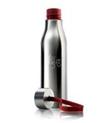
| A. | B. | C. | D. |
| A.to tell something to a lot of people | B.wanting to know about something |
| C.a programme on the radio or on TV | D.to make air. water, soil, etc dirty |
| A.a magazine | B.a dictionary |
| C.a newspaper | D.an advertisement |
目前,我们的家乡——茂名市正在实施“城乡清洁工程” (cleaning project).请你根据以下信息,给某英文报写一 篇短文,就清洁卫生和食品安全两个方面谈谈你的看法和建议。
写作要求:
句子结构准确,信息内容完整,篇章结构连贯。
全文要有80个词左右,文章幵头部分己给出,不计入总词数。
要接着所给的内容写,不要逐字翻译,可适当发挥。 提示词:unsafe adj.不安全的harm危害rubbish bin垃圾桶
Presently, a cleaning project is carried out in our hometown, Maoming city. It is necessary for us to_____________________________ _____
_______________________________________________________________________________
_______________________________________________________________________________
_______________________________________________________________________________
_______________________________________________________________________________
__________________________________________________________________________
假设你是一名记者,请根据以下提示,用英语给China Daily 写一篇关于2010年11月15日下午2点30分,上海静安区一高楼发生特大火灾新闻报道。字数80个词左右。注意:部分内容已为你写好,不计入总词数。
| Place of fire | between the tenth floor and the twelfth floor. |
| People in the apartment building | still some retired teachers, be surrounded(v.围困),big fire. |
| Number of the dead and the injured | 58,killed, 70 , injured 0ver 50, missing (adj.失踪的). by Nov.19th. |
| Time of stopping the fire | over 4 hours. |
| Cause of the fire | some careless construction(建筑) workers. |
| Comment | a big fire in a century in Shanghai. |
An especially big fire broke out(爆发) in a 28-storey high-rise apartment building in Jingan District, Shanghai.
________________________________________________________________________________________________________________________________________________________________________________________________________________________________________________________________________________________________________________________________________ 查看习题详情和答案>>