网址:http://m.1010jiajiao.com/timu3_id_2858936[举报]
On the first day of my sixth grade, I saw one little girl called Amy on the school bus. “ Don’t talk to her ,” said Lauren, who sat beside me, “ or they will make fun of you .”
Amy had many physical(身体上的) differences – lots of reasons for other kids to make fun of her. Her eyes weren’t straight. Her glasses were too big. And she had really ugly teeth.
Every day as we drove to and from school, kids would insult Amy, “ God, what a strange face! Stop looking at me!”
I had to be in silence. After all, I didn’t want them to treat me in the same way.
But while I was insulting her, my heart ached(痛) for the girl. I could see that she was so ashamed(羞耻的) and alone. Then I wanted to stand up for her. I just didn’t know how to stop my schoolmates until the night of our class skating party.
Our whole class was there. Amy was there, too. Amy didn’t know how to skate, but I could see how much she wanted to have fun like the rest of us. So I skated over to her and took her by the hand. She just smiled, and was very excited.
The next morning there was much news about Amy and me skating together. But nobody laughed at her or me. And they didn’t for the rest of the year. I never heard from Amy again after the school year. But I’ve always hoped that I changed her life for the better.
( )56. What grade was the writer in when he first met Amy?
A. Grade 1. B. Grade 2 C. Grade 5 D. Grade 6
( )57. What did Amy look like?
A. She was beautiful. B. She was ugly. C. She was fat. D. She was serious
( )58. The underlined word “ insult” has the similar meaning to “________”
A. laugh at B. look after C. wake up D. talk with
( )59. What did the writer do on their class skating party?
A. He taught Amy to skate. B. He introduced Amy to others.
C. He drove Amy out of the party. D. He said sorry to Amy.
( )60. What happened after the party?
A. Kids began to talk with Amy. B. Amy left the school.
C. Kids no longer laughed at Amy D. Amy’s life has changed a lot.
查看习题详情和答案>>her," said Lauren, who sat beside me, "or they will make fun of you."
Amy had many physical differences-lots of reasons for other kids to make fun of her. Her eyes
weren't straight. Her glasses were too big. And she had really u
 gly teeth.
Every day as we drove to and from school, kids would insult Amy, "God, what a strange face! Stop
looking at me!"
I had to be in silence. After all, I didn't want them to treat me in the same way.
But while I was insulting her, my heart ached for the girl. I could see that she was so ashamed
(感到羞耻的) and alone. Then I wanted to stand up for her. I just didn't know how to stop my
schoolmates until the night of our class skating party.
Our whole class was there. Amy was there, too. Amy didn't know how to skate, but I could see
how much she wanted to have fun like the rest of us. So I skated over to her and took her by the hand.
She just smiled, and was very excited.
The next morning there was much news about Amy and me skating together. But nobody laughed at
her or me. And they didn't for the rest of the year. I never heard from Amy again after the school year.
But I've always hoped that I changed her life for the better.
A. Grade 1.
B
 . Grade 2.
C. Grade 5.
D. Grade 6.
2. What did Amy look like?
A. She was beautiful.
B. She was ugly.
C. She was fat.
D. She was serious.
3. The underlined word "insult" has the similar meaning to " _______".
A. laugh at
B. look after
C. wake up
D. talk with
4. What did he do on their class skating party?
A. He taught Amy to skate.
B. He introduced Amy to others.
C. He drove Amy out of the party.
D. He said sorry to Amy.
5. What happened after the party?
A. Kids began to talk with Amy.
B. Amy left the school.
C. Kids no longer laughed at Amy.
D. Amy's life changed for the worse.
say what they mean at work, Robert Phipps, a UK body language expert, tells you how to understand it.
If someone has the same idea as yours, they'll often have the same posture (姿势) as yours. But if a
person's body and feet are turned away from you even though they're looking at you, it means they'd rather be
moving the way their feet are pointing.
Most people cross their arms if they have different ideas. So even if someone says they agree with you,
if they then cross their arms they really don't. So try to find out what's the matter with them or draw them out
by handing them something to look at or asking them to do something, such as writing something down.
If you're training someone, it's useful to know how their mind works. If a person's eyes move up and to
the left while you're talking to them, they think of information actively, if the eyes only move left they think of
sounds, but eyes moving to the right and down shows they learn through their feelings.
When people are lying, they don't often use their hands naturally but make a lot of hand-to-face gesture
(手势). Hands or fingers covering the mouth means what they are saying is not true.
Tilting (倾斜) the head to the side shows and interest in what's being said. When people drop their heads,
they are showing they don't agree with you. Using a hand to support (支撑) your head means you're feeling
tired.
B. not everyone can speak the same language
C. sometimes people aren't going to talk with each other
D. sometimes what we say is different from what we mean
B. he has the same idea
C. he isn't telling the truth
D. he is thinking actively
B. His head.
C. His hands.
D. His feet.
B. Try to find out what his real idea is.
C. Ask him to read something instead.
D. Let him have a rest for a while.
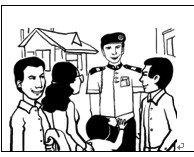
Each day I took the same route to work and passed by a security guard (保安). 1 greeted everyone walking by and made small talk with many of the passers-by and wishing them well. His simple “hello” made people feel 2 . His cheerful smile became a part of my day. When he was absent, many people noticed it, and I felt a little bit empty.
The first few times, I didn’t say hello back to him when he greeted me. I was 3 in my own world. On Monday the security guard asked me:“How was your weekend?” I told him about my visit to California, to see my mother, who had colon cancer. I 4 how I visited her each month. “The time with my mother is so precious(珍贵的), 5 I know that each time may be the last.”
He listened like a close friend I’d known for years. He felt my 6 and my love. He shared how he had lost his father to cancer two years before. He said, “I understand what you are going through. My father passed away while I was serving in Germany. Because of some reasons I was unable to fly back in time. I was unable to say goodbye to him. I wish I could have been with him, given him a hug, and told him I loved him. You are really lucky to have the gift of 7 .”
As I walked away, I realized I did not even know his name. The following day, on my way to work, I said: “After we spent all that time 8 yesterday, I still don’t know your name.” He answered, “Gary.” I responded back, “I’m Deborah.”
After that, we talked and shared stories about our weekends, dreams and families.
Later, Gary got 9 a new job and moved away. It’s been several years since I last spoke to him, yet the memory feels like yesterday. Gary reached out to me, 10 me and made my morning the best part of the day. I experienced the beauty of friendship and love.
In the business of life, we often forget to wish a stranger hello although how easy it is, and how great and lasting a 11 it can make. When you say hello to a stranger you become like a pebble(鹅卵石) thrown into a pond. With each ripple (波纹)you create, you spread love that continues to 12 . Make a point of saying hello to a stranger today. You will give the gift that keeps on giving.
1. A.She B.They C.He D.I
2. A.nervous B.funny C.special D.surprised
3. A.lost B.left C.missed D.dropped
4. A.wondered B.shared C.realized D.found
5. A.because B.so C.and D.but
6. A.weakness B.illness C.sorriness D.sadness
7. A.god B.time C.nature D.friendship
8. A.thinking B.calling C.crying D.talking
9. A.offered B.afforded C.invited D.chosen
10. A.moved B.touched C.told D. helped
11. A.progress B.sense C.trouble D.difference
12. A.receive B.send C.give D.create
查看习题详情和答案>>
Each day I took the same route to work and passed by a security guard (保安). 35 greeted everyone walking by and made small talk with many of the passers-by and wishing them well. His simple “hello” made people feel 36 . His cheerful smile became a part of my day. When he was absent, many people noticed it, and I felt a little bit empty.
The first few times, I didn’t say hello back to him when he greeted me. I was 37 in my own world. On Monday the security guard asked me:“How was your weekend?” I told him about my visit to California, to see my mother, who had colon cancer. I 38 how I visited her each month. “The time with my mother is so precious(珍贵的), 39 I know that each time may be the last.”
He listened like a close friend I’d known for years. He felt my 40 and my love. He shared how he had lost his father to cancer two years before. He said, “I understand what you are going through. My father passed away while I was serving in Germany. Because of some reasons I was unable to fly back in time. I was unable to say goodbye to him. I wish I could have been with him, given him a hug, and told him I loved him. You are really lucky to have the gift of 41 .”
As I walked away, I realized I did not even know his name. The following day, on my way to work, I said: “After we spent all that time 42 yesterday, I still don’t know your name.” He answered, “Gary.” I responded back, “I’m Deborah.”
After that, we talked and shared stories about our weekends, dreams and families.
Later, Gary got 43 a new job and moved away. It’s been several years since I last spoke to him, yet the memory feels like yesterday. Gary reached out to me, 44 me and made my morning the best part of the day. I experienced the beauty of friendship and love.
In the business of life, we often forget to wish a stranger hello although how easy it is, and how great and lasting a 45 it can make. When you say hello to a stranger you become like a pebble(鹅卵石) thrown into a pond. With each ripple (波纹)you create, you spread love that continues to 46 . Make a point of saying hello to a stranger today. You will give the gift that keeps on giving.
35. A. She B. They C. He D. I
36. A. nervous B. funny C. special D. surprised
37. A. lost B. left C. missed D. dropped
38. A. wondered B. shared C. realized D. found
39. A. because B. so C. and D. but
40. A. weakness B. illness C. sorriness D. sadness
41. A. god B. time C. nature D. friendship
42. A. thinking B. calling C. crying D. talking
43. A. offered B. afforded C. invited D. chosen
44. A. moved B. touched C. told D. helped
45. A. progress B. sense C. trouble D. difference
46. A. receive B. send C. give D. create
查看习题详情和答案>>