网址:http://m.1010jiajiao.com/timu3_id_2684728[举报]
How often do you use your car? Can you use your car less often? Do you know the following facts in the UK?
·About 50% of all car journeys are just for fun.
·Over 80% people go to work by car.
·25% car journeys are under two miles.
·70% car journeys are under five miles.
WALKING & CYCLING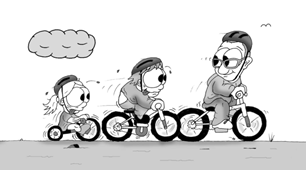
Instead of using the car for short journeys, why not walk or ride a bicycle? Walking is the most popular form of exercise—it’s healthy and it can save money. If you work nearby, try walking or cycling instead of driving. Walking your children to school gives them valuable road experience.
BUSES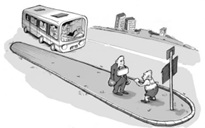
Bus companies are using new buses: some run on new fuelswhich produce less pollution; some have easier access(通路)for disabled and old people. There are special traffic lanes (行车道)to make bus journeys easier. So do something to help solve the pollution problem----let the bus take you to work and your children to school.
TRAINS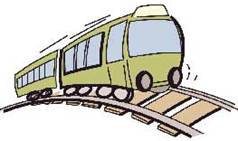
All car journeys, long or short, can be hard work. For some trips, it is wiser to take the train. Leave your car at home and walk, cycle or take a bus to and from the station. Train travel is fast, safe and comfortable. Train tickets are not always expensive.
【小题1】How many of car journeys are just for fun in the UK?
| A.25%. | B.About 50%. |
| C.70%. | D.Over 80%. |
| A.walking to school | B.traveling by train |
| C.taking new fuel buses | D.having car journeys for fun |
| A.Tiring. | B.Exciting. |
| C.Terrible. | D.Comfortable. |
·About 50% of all car journeys are just for fun.
·Over 80% people go to work by car.
·25% car journeys are under two miles.
·70% car journeys are under five miles.
WALKING & CYCLING

Instead of using the car for short journeys, why not walk or ride a bicycle? Walking is the most popular form of exercise—it’s healthy and it can save money. If you work nearby, try walking or cycling instead of driving. Walking your children to school gives them valuable road experience.
BUSES
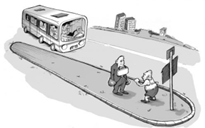
Bus companies are using new buses: some run on new fuelswhich produce less pollution; some have easier access(通路)for disabled and old people. There are special traffic lanes (行车道)to make bus journeys easier. So do something to help solve the pollution problem----let the bus take you to work and your children to school.
TRAINS
All car journeys, long or short, can be hard work. For some trips, it is wiser to take the train. Leave your car at home and walk, cycle or take a bus to and from the station. Train travel is fast, safe and comfortable. Train tickets are not always expensive.
小题1:How many of car journeys are just for fun in the UK?
| A.25%. | B.About 50%. |
| C.70%. | D.Over 80%. |
| A.walking to school | B.traveling by train |
| C.taking new fuel buses | D.having car journeys for fun |
| A.Tiring. | B.Exciting. |
| C.Terrible. | D.Comfortable. |
| |||||||||||||||||||||||||||||||||||||||||||||


阅读下面短文,按要求完成各题.
A Bike RideWhy are you doing it? Why did you do it? Everyone asks the same question and I give a different answer every time: adventure(冒险), travel, time for thought, solitude(独处), challenge, curiosity(好奇), historical research, freedom, fun…all are true and good enough reasons. But why go round the world? And why on a bicycle?
For many years I was the headmistress of a private school for girls in the south of England. In January 1983, when I was fifty years old, I was on holiday with two friends in India. One day I looked out of the bus window and saw a cyclist, a solitary European man, riding across the Great Thar Desert. And I was filled with envy. I wanted to be out there myself on that road on a bicycle, alone and free, feeling the reality of India, not looking at it through a pane of glasses. I was not athletic. I was not young. I wasn't a keen cyclist and I didn't even have a bike. I had no idea how to mend a puncture. I hated camping, picnics and discomfort. In fact, my qualifications for a long cycle ride were very poor. But it was the bicycle which had immediate appeal(吸引力).
根据短文内容回答问题.
1.What does “it” in the first line mean?
2.What was the writer then?
3.Why did she begin to travel by bike?
4.When did she begin to like a bike ride?
5.The writer knew the European man, didn't she?
查看习题详情和答案>>阅读理解:阅读短文,然后根据内容回答下列问题。
Why are you doing it? Why did you do it? Everyone asks the same question and I give a different answer every time:adventure(冒险), travel, time for thought, solitude(独处), challenge(挑战), curiosity(好奇), historical research, freedom, fun…all are true and good enough reasons.But why go round the world? And why on a bicycle?
For many years I was the headmistress of a private school for girls in the south of England.In January 1983, when I was fifty years old, I was on holiday with two friends in India.One day I looked out of the bus window and saw a cyclist, a solitary European man, riding across the Great Thar Desert.And I was filled with envy.I wanted to be out there myself on that road on a bicycle, alone and free, feeling the reality of India, not looking at it through a pane of glass.I was not athletic.I was not young.I wasn't a keen cyclist and I didn't even have a bike.I had no idea how to mend a puncture.I hated camping, picnics and discomfort.In fact, my qualifications for a long cycle ride were very poor.But it was the bicycle which had immediate appeal.
1.What does“it”in the first line mean?
___________________________________
2.What was the writer then?
___________________________________
3.Why did she begin to travel by bike?
___________________________________
4.When did she begin to like a bike ride?
___________________________________
5.The writer knew the European man, didn't she?
___________________________________