网址:http://m.1010jiajiao.com/timu3_id_2664281[举报]
A rabbit is running into his hole. You may ask, “What happened?”
Well, when a rabbit sees something dangerous, it runs away. Its tail moves up and down as it runs. When other rabbits see this tail moving up and down, they ran, too. They know there is danger. The rabbit has told them something without making a sound. It has given them a signal.
Many other animals use this kind of language. When a bee finds some food, it goes back to his home. It can’t tell the other bees where the food is by speaking to them, but it does dance in the air. This tells the bees where the food is.
But animals say things by making sounds. A dog barks, for examples, when a stranger comes near. A cat purrs(发出呼噜呼噜的声音) when pleased. Some birds make several different sounds, each with its own meaning.
But human beings have something that no animals have---- a large number of words about things, actions, feelings or ideas. We are able to give each other information to tell or inform other people what is in our mind or how we feel. By writing words down we can remind ourselves of the things that have happened, or send messages to people far away. No animals can do this. No animals has the wonderful power of language.
No one knows how man learned to make words. Somehow he learned to make them. As centuries went by, he made more and more new words. This is what we mean by language.
People in different countries made different kinds of words. Today there are about fifteen hundred different languages in the world. A very large English dictionary, for examples, contains four or five hundred thousand words. But we don’t know all these. The words we know are called vocabulary. We should try to make our vocabulary larger. Read as many books as possible. When we met a new word, look it up in the dictionary. A dictionary is the most useful book.
【小题1】What’s the meaning of the underlined word?
| A.标语 | B.信号 | C.唱片 | D.图像 |
| A.by giving signals | B.by making different sounds |
| C.by purring | D.by barking |
| A.give the others information |
| B.express their actions and feelings with words |
| C.tell others how they feel |
| D.make different sounds, each with its own meaning. |
| A.all the words that we know | B.more and more words we use |
| C.all the words we need | D.the dictionary which contains thousands of words |
| A.Make more and more new words |
| B.look up some new words in a dictionary |
| C.learn more language |
| D.Try to read as many books as possible |
A rabbit is running into his hole. You may ask, “What happened?”
Well, when a rabbit sees something dangerous, it runs away. Its tail moves up and down as it runs. When other rabbits see this tail moving up and down, they ran, too. They know there is danger. The rabbit has told them something without making a sound. It has given them a signal.
Many other animals use this kind of language. When a bee finds some food, it goes back to his home. It can’t tell the other bees where the food is by speaking to them, but it does dance in the air. This tells the bees where the food is.
But animals say things by making sounds. A dog barks, for examples, when a stranger comes near. A cat purrs(发出呼噜呼噜的声音) when pleased. Some birds make several different sounds, each with its own meaning.
But human beings have something that no animals have---- a large number of words about things, actions, feelings or ideas. We are able to give each other information to tell or inform other people what is in our mind or how we feel. By writing words down we can remind ourselves of the things that have happened, or send messages to people far away. No animals can do this. No animals has the wonderful power of language.
No one knows how man learned to make words. Somehow he learned to make them. As centuries went by, he made more and more new words. This is what we mean by language.
People in different countries made different kinds of words. Today there are about fifteen hundred different languages in the world. A very large English dictionary, for examples, contains four or five hundred thousand words. But we don’t know all these. The words we know are called vocabulary. We should try to make our vocabulary larger. Read as many books as possible. When we met a new word, look it up in the dictionary. A dictionary is the most useful book.
【小题1】What’s the meaning of the underlined word?
| A.标语 | B.信号 | C.唱片 | D.图像 |
| A.by giving signals | B.by making different sounds |
| C.by purring | D.by barking |
| A.give the others information |
| B.express their actions and feelings with words |
| C.tell others how they feel |
| D.make different sounds, each with its own meaning. |
| A.all the words that we know | B.more and more words we use |
| C.all the words we need | D.the dictionary which contains thousands of words |
| A.Make more and more new words |
| B.look up some new words in a dictionary |
| C.learn more language |
| D.Try to read as many books as possible |
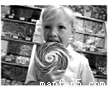
A six-year-old British girl, Mollie Price, is opening up her third candy store. She is said to be one of Britain’s youngest bosses. Her stores are called “Mollie’s.” She sells both British and American candy. The girl would like to open more candy stores. “It might sound crazy, but believe me,” Mollie says.
“It was Mollie’s idea to open up the shop. It is Mollie who runs the candy stores,” her mother Becky, her “business partner” says.
Her mother says all the stores are put together and stocked(进货)by Mollie. Mollie works in one of the stores every Saturday, then gets up early Sunday to go to the company’s product supplier(供应商). She asks her friends to test the sweets to decide which ones are good. She’s good at smart marketing. For example, if the weather is really cold, she sells the Mr Whippy ice cream cheaper than when it’s hot outside.
“Children have the best ideas. I tell my mum what I think and she always says I have good ideas. It’s just because I know what other children like,” Mollie says.
1.What’s Mollie’s plan for the future?
A.Become Britain’s youngest boss. B.Open more candy stores.
C.Work as a product supplier. D.Make the best ice cream products.
2.How does Mollie know which kinds of candy are good?
A.Her mother decides it
B.She has her friends test the candy.
C.She goes to the market to research
D.She asks the company’s product supplier.
3.The prices of some ice cream products in Mollie’s stores change according to _______.
A.the number of the products B.her friend’s idea
C.the weather D.the dates
4.According to the passage, what’s the key(关键)to Mollie’s success?
A.She works hard and she is good at smart marketing.
B.The company’s supplier makes good products.
C.She would like to open more candy stores.
D.Her mother always has good ideas.
5. According to the passage, Mollie is a/an________ girl.
A.kind B.honest C.smart D.polite
查看习题详情和答案>>
A kind of little cars may take the place of today’s big ones many years later. If everyone drives such cars in the future, there will be less pollution in the air. There will also be more space for parking in cities, and the streets will be less crowded.
The little cars of the future will cost less. Driving will be safer, too, since these little cars can go only 65 kilometers an hour. The cars of the future will be fine for going around a city, but they will not be useful for a long way. Little cars will go 450 kilometers before they need to stop for more gasoline (汽油). If big cars are still used with the small ones, two kinds of roads will be needed in the future. Some roads will be needed for the big, faster cars and other roads will be needed for the small, slower ones.
1..There is much pollution in the air today because _____.
|
A.people drive big cars |
|
B.people drive little cars |
|
C.small cars will go 450 kilometers before they need to stop for more gasoline |
|
D.the usual size of cars today is too small |
2..The usual size of cars today is _____.
|
A.much smaller than the future one |
B.as big as the future ones |
|
C.as small as the future ones |
D.bigger than the future ones |
3..Two kinds of roads will be needed in the future because _____.
|
A.there will be too many cars in the future |
|
B.more and more people will go to cities |
|
C.big cars run faster and little cars run slower |
|
D.it looks more beautiful to have two kinds of roads |
查看习题详情和答案>>
A rabbit is running into his hole. You may ask, “What happened?”
Well, when a rabbit sees something dangerous, it runs away. Its tail moves up and down as it runs. When other rabbits see this tail moving up and down, they ran, too. They know there is danger. The rabbit has told them something without making a sound. It has given them a signal.
Many other animals use this kind of language. When a bee finds some food, it goes back to his home. It can’t tell the other bees where the food is by speaking to them, but it does dance in the air. This tells the bees where the food is.
But animals say things by making sounds. A dog barks, for examples, when a stranger comes near. A cat purrs(发出呼噜呼噜的声音) when pleased. Some birds make several different sounds, each with its own meaning.
But human beings have something that no animals have---- a large number of words about things, actions, feelings or ideas. We are able to give each other information to tell or inform other people what is in our mind or how we feel. By writing words down we can remind ourselves of the things that have happened, or send messages to people far away. No animals can do this. No animals has the wonderful power of language.
No one knows how man learned to make words. Somehow he learned to make them. As centuries went by, he made more and more new words. This is what we mean by language.
People in different countries made different kinds of words. Today there are about fifteen hundred different languages in the world. A very large English dictionary, for examples, contains four or five hundred thousand words. But we don’t know all these. The words we know are called vocabulary. We should try to make our vocabulary larger. Read as many books as possible. When we met a new word, look it up in the dictionary. A dictionary is the most useful book.
1.What’s the meaning of the underlined word?
|
A.标语 |
B.信号 |
C.唱片 |
D.图像 |
2.A dog can tell something__________.
|
A.by giving signals |
B.by making different sounds |
|
C.by purring |
D.by barking |
3.It has been proved that no animals are able to_________.
|
A.give the others information |
|
B.express their actions and feelings with words |
|
C.tell others how they feel |
|
D.make different sounds, each with its own meaning. |
4.Generally speaking, what we mean by “vocabulary” is_______.
|
A.all the words that we know |
B.more and more words we use |
|
C.all the words we need |
D.the dictionary which contains thousands of words |
5.What must we do in order to make our vocabulary larger?
|
A.Make more and more new words |
|
B.look up some new words in a dictionary |
|
C.learn more language |
|
D.Try to read as many books as possible |
查看习题详情和答案>>