网址:http://m.1010jiajiao.com/timu3_id_2616222[举报]
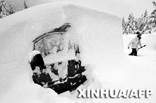
Europeans are being dug out from heavy snow after a week of very cold weather. The snowstorm is the harshest to hit Europe. Airports were shut down. And schools have been closed for a week.
Until Wednesday, at least 400 people across Europe had died because of the cold temperature. Several countries have said a state of emergency. In Ukraine, temperatures dropped as low as -33℉.
Although the situation is bad, at least one country is hoping the weather will last a little longer. In the Netherlands, the government is preparing for the country’s “11 Cities Tour”. The 125-mile ice-skating marathon will be held along a network which joins 11 towns and cities together in Friesland Province.
The ice along the way must be inches thick for the event. Up to 2 million people are thought to cheer on the race’s 16,000 competitors.
On Wednesday, Dutch soldiers joined in the preparations. They cleaned snow along the way. This will be the 16th time that the event has taken place since the first race in 1909. Dutch General Hans said his soldiers were happy to lend a hand. “We want to do our bit for this national party.” he said.
【小题1】What is “11 Cities Tour”?
| A.It’s a 125-mile ice skating marathon. |
| B.It’s a 11-mile ice skating marathon. |
| C.It’s a 16000-mile ice skating marathon. |
| D.It’s a 33-mile ice skating marathon. |
| A.Thousands of people across Europe died because of the weather. |
| B.The ice should be less than 6 inches thick for the event. |
| C.No country is glad to see the cold weather. |
| D.The first “11 Cities Tour” began in 1909. |
| A.French soldiers | B.Dutch soldiers |
| C.Ukrainian soldiers | D.American soldiers |
| A.safest | B.most enjoyable | C.most serious | D.happiest |
| A.the hard situation Europe faces |
| B.the European cold weather |
| C.preparations for a national party |
| D.the coldest season in Europe |
There are hundreds of funny and strange expressions in the English language. A lot of them include country names or nationalities. Take these examples:
The Dutch(丹麦人)are the target of most English expressions about nationalities. Why are there so many jokes about the Dutch in English? And what do these expressions mean? In the 17th and early 18th centuries, there were three wars between the British and the Dutch, and Dutch became a bad word. So double Dutch means something that has no meaning or is impossible to understand. A Dutch uncle is someone who gives much stronger advice than they need to. There are later expressions, which are funnier and kinder, like to go Dutch, which is nowadays a popular expression. It means to pay for your part of a bill. This often happens when a group of friends have a meal together, and each person pays for the food they ate. I’m a Dutchman is another commonly used expression. This means not being able to believe something.
An expression with a similar meaning to double Dutch is it’s all Greek to me, which means I don’t understand. The expression was made famous in Shakespeare’s play Julius Caesar although the expression is actually hundreds of years older.
If you take French leave, you are not present or leave somewhere without permission. For example, you could take French leave from a classroom or the place where you work. This expression is from the 18th century when French people left parties without saying goodbye to the host or hostess.
There are Chinese whispers, which mean confused(令人困惑的)messages. This describes the fact that a message can often change as it is passed from person to person. This expression comes from the First World War when foreigners were often confused by Chinese language.
Many people find English expressions confusing, but now that you know about some of them, you can easily have fun finding out many more funny English expressions.
【小题1】Are there many jokes about the Dutch in English?
【小题2】When did Dutch become a bad word?
【小题3】What does “French leave” mean?
【小题4】Which three expressions mentioned above have similar meanings?
【小题5】What do the funny and strange expressions in the passage have in common?
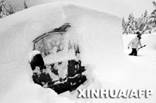
Europeans are being dug out from heavy snow after a week of very cold weather. The snowstorm is the harshest to hit Europe. Airports were shut down. And schools have been closed for a week.
Until Wednesday, at least 400 people across Europe had died because of the cold temperature. Several countries have said a state of emergency. In Ukraine, temperatures dropped as low as -33℉.
Although the situation is bad, at least one country is hoping the weather will last a little longer. In the Netherlands, the government is preparing for the country’s “11 Cities Tour”. The 125-mile ice-skating marathon will be held along a network which joins 11 towns and cities together in Friesland Province.
The ice along the way must be inches thick for the event. Up to 2 million people are thought to cheer on the race’s 16,000 competitors.
On Wednesday, Dutch soldiers joined in the preparations. They cleaned snow along the way. This will be the 16th time that the event has taken place since the first race in 1909. Dutch General Hans said his soldiers were happy to lend a hand. “We want to do our bit for this national party.” he said.
1.What is “11 Cities Tour”?
A. It’s a 125-mile ice skating marathon.
B. It’s a 11-mile ice skating marathon.
C. It’s a 16000-mile ice skating marathon.
D. It’s a 33-mile ice skating marathon.
2.Which of the following statements is TRUE according to the passage?
A. Thousands of people across Europe died because of the weather.
B. The ice should be less than 6 inches thick for the event.
C. No country is glad to see the cold weather.
D. The first “11 Cities Tour” began in 1909.
3.Who helped clean snow along the way?
A. French soldiers B. Dutch soldiers
C. Ukrainian soldiers D. American soldiers
4.The underlined word “harshest” means _______ in the passage.
A. safest B. most enjoyable C. most serious D. happiest
5.The passage is mainly about______.
A. the hard situation Europe faces
B. the European cold weather
C. preparations for a national party
D. the coldest season in Europe
查看习题详情和答案>>
There are hundreds of funny and strange expressions in the English language. A lot of them include country names or nationalities. Take these examples:
The Dutch(丹麦人)are the target of most English expressions about nationalities. Why are there so many jokes about the Dutch in English? And what do these expressions mean? In the 17th and early 18th centuries, there were three wars between the British and the Dutch, and Dutch became a bad word. So double Dutch means something that has no meaning or is impossible to understand. A Dutch uncle is someone who gives much stronger advice than they need to. There are later expressions, which are funnier and kinder, like to go Dutch, which is nowadays a popular expression. It means to pay for your part of a bill. This often happens when a group of friends have a meal together, and each person pays for the food they ate. I’m a Dutchman is another commonly used expression. This means not being able to believe something.
An expression with a similar meaning to double Dutch is it’s all Greek to me, which means I don’t understand. The expression was made famous in Shakespeare’s play Julius Caesar although the expression is actually hundreds of years older.
If you take French leave, you are not present or leave somewhere without permission. For example, you could take French leave from a classroom or the place where you work. This expression is from the 18th century when French people left parties without saying goodbye to the host or hostess.
There are Chinese whispers, which mean confused(令人困惑的)messages. This describes the fact that a message can often change as it is passed from person to person. This expression comes from the First World War when foreigners were often confused by Chinese language.
Many people find English expressions confusing, but now that you know about some of them, you can easily have fun finding out many more funny English expressions.
1.Are there many jokes about the Dutch in English?
2.When did Dutch become a bad word?
3.What does “French leave” mean?
4.Which three expressions mentioned above have similar meanings?
5.What do the funny and strange expressions in the passage have in common?
查看习题详情和答案>>
There are hundreds of funny and strange expressions in the English language. A lot of them include country names or nationalities. Take these examples:
The Dutch(丹麦人)are the target of most English expressions about nationalities. Why are there so many jokes about the Dutch in English? And what do these expressions mean? In the 17th and early 18th centuries, there were three wars between the British and the Dutch, and Dutch became a bad word. So double Dutch means something that has no meaning or is impossible to understand. A Dutch uncle is someone who gives much stronger advice than they need to. There are later expressions, which are funnier and kinder, like to go Dutch, which is nowadays a popular expression. It means to pay for your part of a bill. This often happens when a group of friends have a meal together, and each person pays for the food they ate. I’m a Dutchman is another commonly used expression. This means not being able to believe something.
An expression with a similar meaning to double Dutch is it’s all Greek to me, which means I don’t understand. The expression was made famous in Shakespeare’s play Julius Caesar although the expression is actually hundreds of years older.
If you take French leave, you are not present or leave somewhere without permission. For example, you could take French leave from a classroom or the place where you work. This expression is from the 18th century when French people left parties without saying goodbye to the host or hostess.
There are Chinese whispers, which mean confused(令人困惑的)messages. This describes the fact that a message can often change as it is passed from person to person. This expression comes from the First World War when foreigners were often confused by Chinese language.
Many people find English expressions confusing, but now that you know about some of them, you can easily have fun finding out many more funny English expressions.
- 1.
Are there many jokes about the Dutch in English?
- 2.
When did Dutch become a bad word?
- 3.
What does “French leave” mean?
- 4.
Which three expressions mentioned above have similar meanings?
- 5.
What do the funny and strange expressions in the passage have in common?