网址:http://m.1010jiajiao.com/timu3_id_2564058[举报]
Romanian-born German writer Herta Mueller won the 2009 Nobel Prize in literature yesterday, honored for work that "with the concentration of poetry and the frankness of prose, describes the landscape of the dispossessed(被流放者)," the Swedish Academy said.
The 56-year-old author, who immigrated to Germany from Romania in 1987, first gained public attention in 1982 with a collection of short stories titled Niederungen, or Lowlands in English, which was promptly censored(审查通过) by her government.
In 1984 an uncensored version was smuggled to Germany where it was published and her work describing life in a small, German-speaking village in Romania was popular with the readers there. That work was followed by Oppressive Tango in Romania.
"The Romanian national press was very critical of these works while, outside of Romania, the German press received them very positively," the Academy said. "Because Mueller had publicly criticized the dictatorship(独裁) in Romania, she was prohibited from publishing in her own country.” In 1987 she immigrated to Germany with her husband two years before dictator Nicolae Ceausescu was toppled from power.
Mueller's parents were members of the German-speaking minority in Romania and father served in the Waffen SS during World War II. After the war ended, many German Romanians were deported(放逐) to the Soviet Union in 1945, including her mother, who spent five years in a work camp in what is now Ukraine.
Most of her works are in German, but some works have been translated into English, French and Spanish, including The Passport, The Land of Green Plums, Traveling on One Leg and The Appointment.
Mueller has given guest lectures at universities, colleges and other venues in Paderborn, Warwick, Hamburg, Swansea, Gainsville (Florida), Kassel, Gottingen, Tubingen and Zurich among other places. She lives in Berlin. Since 1995 she has served as a member of Deutsche Akademie fur Sprache und Dichtung, in Darmstadt."
Mueller is the 12th woman to win the literature prize. Recent female winners include Austria's Elfriede Jelinek in 2004 and British writer Doris Lessing in 2007.
The award includes a $1.4 million prize and will be handed out on December 10
1.Herta Mueller was awarded Nobel Prize in literature because of____________.
A.her public criticism upon the dictatorship in Romania
B.her works with the concentration of poetry and the frankness of prose
C.her works describing the life of the dispossessed in Germany
D.the popularity of her works with the readers in the German-speaking village
2.Which of the following statements is mentioned by the author?
A.German Romanians were treated unfairly in Germany in the 1940s.
B.Her parents were dispossessed to Ukraine after the World War II.
C.Her first work was published in Germany in the early 1980s.
D.Her works were all translated into versions in different languages.
3.It can be inferred from the fourth paragraph that _____.
A.people then in Romania had the right to say whatever was true.
B.Herta Mueller left her home country after the dictatorship was ended.
C.Herta Mueller immigrated to Germany together with her parents.
D.Romanian citizens lived a hard life without democracy in the 1980s.
4.According to the passage, which of the following works has an English version?
A.Lowlands in English B.Oppressive Tango in Romania.
C.Traveling on One Leg D.The Land of Green Plums
5.What is the passage mainly about?
A.Mueller made great contribution to literature through hard work
B.Mueller won the Nobel Prize for her great literature works.
C.Mueller gained great popularity by describing dictatorship.
D.Mueller was treated badly in Romania and immigrated to Germany.
查看习题详情和答案>>
Our boat floated on between walls of forest. It was too thick to allow us a view of the land we were passing through, though we knew from the map that our river must from time to time be passing through chains of hills which crossed the jungle plains. Nowhere did we find a place where we could have landed: where the jungle did not actually spread right down into the river, banks of soft mud prevented us form going ashore. In any case, what would we have gained by landing? The country was full of snakes and other dangerous creatures and the jungle was so thick that one would be able to advance slowly, cutting one’s way with knives the whole way. So we stayed in the boat, hoping that when we reached the sea, a friendly fisherman would pick us up and take us to civilization.
As for water, there was a choice. We could drink the muddy river water, or die of thirst. We drank the water. Men who have just escaped from what appeared to be certain death lost all worries about such small things as diseases caused by dirty water. In fact, none of us suffered from any illness as a result.
One day we passed another village, but fortunately nobody saw us. We did not wish to risk being taken prisoners a second time: we might not be so lucky as to escape in a stolen boat again.
It can be inferred from the passage that the only thing they could see in a boat was _______.
A. walls B. chains of hills C. tall trees D. vast land
From the passage, we can learn that _______.
A. the country was a civilized society B. the country was a tropical jungle country
C. they found a place where they could land D. they were on a journey home
According to the passage, what happened to the people in the boat at last?
A. They were arrested. B. They managed to escape to safety.
C. They were saved by some villagers D. The passage doesn’t mention it.
The best title for this passage might be _______.
A. The Problem of Landing B. An Adventure
C. An Entirely New Experience D. Escape
查看习题详情和答案>>
请阅读下列应用文及相关信息,并按照要求匹配信息。请在答题卡上将对应题号的相应选项字母涂黑。
以下是旅游景点的信息:
A. Agra Fort
 Near the gardens of the Taj Mahal stands
the important 16th-century Mughal monument known as the Red Fort of Agra. This
powerful fortress of red sandstone encompasses, within its 2.5-km-long
enclosure walls, the imperial city of the Mughal rulers. It comprises many
fairy-tale palaces, such as the Jahangir Palace and the Khas Mahal, built by
Shah Jahan; audience halls, such as the Diwan-i-Khas; and two very beautiful
mosques.
Near the gardens of the Taj Mahal stands
the important 16th-century Mughal monument known as the Red Fort of Agra. This
powerful fortress of red sandstone encompasses, within its 2.5-km-long
enclosure walls, the imperial city of the Mughal rulers. It comprises many
fairy-tale palaces, such as the Jahangir Palace and the Khas Mahal, built by
Shah Jahan; audience halls, such as the Diwan-i-Khas; and two very beautiful
mosques.
B. Taj Mahal
 Taj Mahal is regarded as one of the eight wonders of the world,
and some Western historians have noted that its architectural beauty has never
been surpassed. The Taj is the most beautiful monument built by the Mughals,
the Muslim rulers of India. Taj Mahal is built entirely of white marble. It was
constructed over a period of twenty-two years, employing twenty thousand
workers. It was completed in 1648 C.E. at a cost of 32 Million Rupees.
Taj Mahal is regarded as one of the eight wonders of the world,
and some Western historians have noted that its architectural beauty has never
been surpassed. The Taj is the most beautiful monument built by the Mughals,
the Muslim rulers of India. Taj Mahal is built entirely of white marble. It was
constructed over a period of twenty-two years, employing twenty thousand
workers. It was completed in 1648 C.E. at a cost of 32 Million Rupees.
C. Keoladeo National Park
 This former duck-hunting reserve of the
Maharajas is one of the major wintering areas for large numbers of aquatic
birds from Afghanistan, Turkmenistan, China and Siberia. Some 364 species of
birds, including the rare Siberian crane, have been recorded in the park.
This former duck-hunting reserve of the
Maharajas is one of the major wintering areas for large numbers of aquatic
birds from Afghanistan, Turkmenistan, China and Siberia. Some 364 species of
birds, including the rare Siberian crane, have been recorded in the park.
 This tomb, built in 1570, is of
particular cultural significance as it was the first garden-tomb on the Indian
subcontinent. It inspired several major architectural innovations, culminating
in the construction of the Taj Mahal. The gardens also contain the
red-and-white sandstone and black-and-yellow marble tomb of Humayun’s wife and
the tomb of Humayun’s barber.
This tomb, built in 1570, is of
particular cultural significance as it was the first garden-tomb on the Indian
subcontinent. It inspired several major architectural innovations, culminating
in the construction of the Taj Mahal. The gardens also contain the
red-and-white sandstone and black-and-yellow marble tomb of Humayun’s wife and
the tomb of Humayun’s barber.
E. Grand Canyon National Park
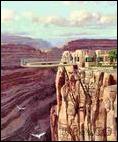 The Grand Canyon is perhaps the most
awesome sight in the United States--and one of the wonders of the world. Much
of the park's beauty is related to its geology and ecology. Schmidt explores
the shape of the land, its plants and animals, and its human history. A
fascinating book that everyone visiting the Grand Canyon should read. The
Skywalk at Grand Canyon West is really exciting.
The Grand Canyon is perhaps the most
awesome sight in the United States--and one of the wonders of the world. Much
of the park's beauty is related to its geology and ecology. Schmidt explores
the shape of the land, its plants and animals, and its human history. A
fascinating book that everyone visiting the Grand Canyon should read. The
Skywalk at Grand Canyon West is really exciting.
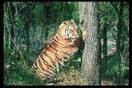 The Sundarbans covers 10,000 sq. km of
land and water (more than half of it in India, the rest in Bangladesh) in the
Ganges delta. It contains the world's largest area of mangrove forests. A
number of rare or endangered species live in the park, including tigers,
aquatic mammals, birds and reptiles.
The Sundarbans covers 10,000 sq. km of
land and water (more than half of it in India, the rest in Bangladesh) in the
Ganges delta. It contains the world's largest area of mangrove forests. A
number of rare or endangered species live in the park, including tigers,
aquatic mammals, birds and reptiles.
请阅读以下旅游者的信息,然后匹配旅游者和他/她拟旅游的景点。
56. Carina is fond of art and likes travelling very much. In order to take part in the following exhibition, she wants to take some photos of birds from all over the world, especially the rare Siberian crane. In the meanwhile, she doesn’t want to spend too much money.
57. Daisy’s major is biology. She is interested in studies of tigers in India. Before graduation, she needs to write an essay on the tiger. She hears that it is one of the largest tiger populations of any of India’s parks. And so she wants to go there to do some research.
58. Alexander is a college student of Physics. He learns that this canyon is a gift from past generations that goes beyond what we experience. He is looking forward to going there and experiencing the Skywalk in the park.
59. Sammy majors in history. He will visit it again this summer. He says it’s built entirely of white Marble and is one of the eight wonders of the world. Its beauty is beyond description, particularly at dawn and sunset. It seems to glow in the light of the full moon. On a foggy morning, the visitors experience it as if suspended when viewed from across the Jamuna river.
60. Nancy comes from the history department. Last summer she visited the ancient markets of Agra and this year she wants to visit it again. Not long ago she said: “Arriving at the Delhi airport, we representatives were warmly received. Our tirdness flew in seconds by the traditional welcome that we got at the hotel’s reception.” The next day they visited the famous tomb.
查看习题详情和答案>>
Trees are useful to man in three very important ways: they provide him with wood and other products, they give him shade, and they help to prevent drought and floods.
Unfortunately, in many parts of the world man has not realized that the third of these services is the most important. In his eagerness to draw quick profit from the trees, he has cut them down in large numbers, only to find that without them he has lost the best friends he had.
Two thousand years ago a rich and powerful country cut down its trees to build warships, with which to gain itself an empire. It gained the empire but, without its trees, its soil became hard and poor. When the empire fell to pieces, the country found itself faced by floods and starvation.
Even though a government realizes the importance of a plentiful supply of trees, it is difficult for it to persuade the villager to see this. The villager wants wood to cook his food with, and he can earn money by making charcoal(木炭) or selling wood to the townsman(城市居民). He is usually too lazy or too careless to plant and look after trees. So unless the government has a good system of control, or can educate the people, the forests will slowly disappear.
This does not only mean that the villager’s sons and grandsons have fewer trees. The results are even more serious. For where there are trees their roots break the soil up—allowing the rain to sink in and also hold the soil, thus preventing it being washed away easily, but where there are no trees, the soil becomes hard and poor. The rain falls on hard ground and flows away on the surface, causing floods and carrying away with it the rich topsoil, in which crops grow so well. When all the topsoil is gone, nothing remains but a worthless desert.
The purpose that the writer wrote this article is to ______.
A. tell people the use of wood
B. tell people the function of tree roots
C. warn that man mustn’t destroy forests any more
D. explain how trees help to prevent drought and floods
In the writer’s opinion, _____, or the forests will slowly disappear.
A. measures must be taken
B. people shouldn’t draw benefit from the tree
C. government must realize the serious results
D. unless trees never be cut down
According to the article we know it is _____ to prevent the forests from slowly disappearing.
A. necessary but impossible
B. necessary but difficult
C. impossible and unimportant
D. difficult and impossible
In the last two paragraphs the writer wanted to make it clear that _____ .
A. where there are no trees, the soil becomes poor but soft
B. where there are many trees, there are more floods
C. where there are no trees, the land might become desert slowly
D. floods will make the land become desert
查看习题详情和答案>>of the land in that district covered with trees and grass.
|
A.Two fifth;is |
B.Two fifth;are |
|
C.Two fifths;is |
D.Two fifths;are? |
查看习题详情和答案>>