网址:http://m.1010jiajiao.com/timu3_id_2553799[举报]
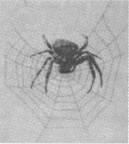 To many web-building spiders, most of whom are nearly blind, the web is their essential window on the world: their means of communicating, capturing prey(猎物), meeting mates and protecting themselves. A web-building spider without its web is like a men cast away on an island of solid rock,totally out of touch and destined to
starve to death.
So important is the web to an orb-web spider's survival that the animal will continue to construct new webs daily even if it is being starved. For 16 days the starving spider builds completely normal webs. Then, as the animal gets scrawnier(憔悴的), it constructs a wider-meshed web using fewer strands(线). Such webs would only trap larger prey, which is more economical from the perspective of a starving spider.
The spider stores energy by recycling web protein. It simply eats its own web each evening and reuses it to produce new silk. In studies with radioactively,labeled materials, it was found that 95 percent of web protein reappears in the next day' web. Most of the energy needed for web-building is used in walking over the strands as they are laid down.
Scientists are impressed by the adaptability of the spider's highly preprogrammed brain, which is larger for its size than the brain of any other invertebrate(无脊推动物).If web-building is interrupted, or if some of the existing strands are destroyed,the spider simply goes back to see where the web is left off and then finishes building a normal web. One spider will finish building the incomplete web of another.
Which of the following best expresses the main ideas of the passage?
A. Secrets of Spiders' Adaptability B. Importance of Webs to Spiders
C. Secrets of the Spiders' Life D. Spiders' Highly Preprogrammed Brain
According to the passage, which of the following statements is TRUE?
A. Most spiders will stop conducting webs when hungry.
B. One Web-building spider usually conducts one web.
C. Web-building spiders will probably die without their webs.
D. Web-building spiders have good eyesight.
A spider conducts a wider-meshed web when____________.
A. it is 16 days old B. it is getting weaker
C. it has fewer wends D. it hunts for food
A spider's ability to finish an incomplete web proves that___________.
A. it has a highly preprogrammed brain B. it reuses its web protein to reproduce new silk
C. the web is everything for a spider D. it is able to rebuild a destroyed web
查看习题详情和答案>>

To many web-building spiders, most of whom are nearly blind, the web is their essential window on the world: their means of communicating, capturing prey(猎物), meeting mates and protecting themselves. A web-building spider without its web is like a men cast away on an island of solid rock,totally out of touch and destined to starve to death.
So important is the web to an orb-web spider's survival that the animal will continue to construct new webs daily even if it is being starved. For 16 days the starving spider builds completely normal webs. Then, as the animal gets scrawnier(憔悴的), it constructs a wider-meshed web using fewer strands(线). Such webs would only trap larger prey, which is more economical from the perspective of a starving spider.
The spider stores energy by recycling web protein. It simply eats its own web each evening and reuses it to produce new silk. In studies with radioactively,labeled materials, it was found that 95 percent of web protein reappears in the next day' web. Most of the energy needed for web-building is used in walking over the strands as they are laid down.
Scientists are impressed by the adaptability of the spider's highly preprogrammed brain, which is larger for its size than the brain of any other invertebrate(无脊推动物).If web-building is interrupted, or if some of the existing strands are destroyed,the spider simply goes back to see where the web is left off and then finishes building a normal web. One spider will finish building the incomplete web of another.
64. Which of the following best expresses the main ides of the passage?
A. Secrets of Spiders' Adaptability B. Importance of Webs to Spiders
C. Secrets of the Spiders' Life D. Spiders' Highly Preprogrammed Brain
65.According to the passage, which of the following statements is TRUE?
A. Mast spiders will stop conducting webs when hungry
B. One Web-building spider usually conducts one web
C. Web-building spiders will probably die without their webs.
D. Web-building spiders have good eyesight.
66. A spider conducts a wider-meshed web when_
A. it is 16 days old B. it is getting weaker C. it has fewer strands D. it hunts for food
67. A spider's ability to finish an incomplete web proves that_
A. it has a highly preprogrammed brain B. it reuses its web protein to reproduce new silk
C. the web is everything for a spider D. it is able to rebuild a destroyed web
查看习题详情和答案>>To many web-building spiders, most of whom are nearly blind, the web is their essential window on the world: their means of communicating, capturing prey(猎物), meeting mates and protecting themselves. A web-building spider without its web is like a men cast away on an island of solid rock,totally out of touch and destined to

starve to death.
So important is the web to an orb-web spider's survival that the animal will continue to construct new webs daily even if it is being starved. For 16 days the starving spider builds completely normal webs. Then, as the animal gets scrawnier(憔悴的), it constructs a wider-meshed web using fewer strands(线). Such webs would only trap larger prey, which is more economical from the perspective of a starving spider.
The spider stores energy by recycling web protein. It simply eats its own web each evening and reuses it to produce new silk. In studies with radioactively,labeled materials, it was found that 95 percent of web protein reappears in the next day' web. Most of the energy needed for web-building is used in walking over the strands as they are laid down.
Scientists are impressed by the adaptability of the spider's highly preprogrammed brain, which is larger for its size than the brain of any other invertebrate(无脊推动物).If web-building is interrupted, or if some of the existing strands are destroyed,the spider simply goes back to see where the web is left off and then finishes building a normal web. One spider will finish building the incomplete web of another.
- 1.
Which of the following best expresses the main ideas of the passage?
- A.Secrets of Spiders' Adaptability
- B.Importance of Webs to Spiders
- C.Secrets of the Spiders' Life
- D.Spiders' Highly Preprogrammed Brain
- A.
- 2.
According to the passage, which of the following statements is TRUE?
- A.Most spiders will stop conducting webs when hungry
- B.One Web-building spider usually conducts one web
- C.Web-building spiders will probably die without their webs.
- D.Web-building spiders have good eyesight
- A.
- 3.
A spider conducts a wider-meshed web when______.
- A.it is 16 days old
- B.it is getting weaker
- C.it has fewer wends
- D.it hunts for food
- A.
- 4.
A spider's ability to finish an incomplete web proves that______.
- A.it has a highly preprogrammed brain
- B.it reuses its web protein to reproduce new silk
- C.the web is everything for a spider
- D.it is able to rebuild a destroyed web
- A.
Some plants get so hungry they eat flies, spiders, and even small frogs. What’s more amazing is that these plants occur naturally (in special environment) in every state. In fact, they’re found on every continent except Antarctica.
You’ve probably seen a Venus’ flytrap. It’s often sold in museum gift stores, department stores, and even supermarkets. A small plant, it grows 6 to 8 inches tall in a container. At the end of its stalks(茎)are specially modified leaves that act like traps. Inside each trap is a lining of tiny trigger(触发) hairs. When an insect lands on them, the trap suddenly shut. Over the course of a week or so, the plant feeds on its catch.
The Venus’ flytrap is just one of more than 500 species of meat-eating plants, says Barry Meyers-Rice, the editor of the International Carnivorous Plant Society’s Newsletter. Note: Despite any science –fiction stories you might have read, no meat-eating plant does any danger to humans.
Dr. Meyers-Rice says a plant is meat-eating, only if it does all four of the following: “attract, kill, digest, and absorb” some forms of insects, including flies, butterflies, and moths. Meat-eating plants look and act like other green plants ---well, most of the time.
All green plants make sugar through a process called photosynthesis(光合作用). Plants use the sugar to make food. What makes “meat-eating” plants different is their bug-catching leaves. They need insects for one reason: nitrogen(氮). Nitrogen is a nutrient that they can’t obtain any other way. Why almost all green plants on our planet get nitrogen from the soil “Meat-eating” plants can’t. They live in places where nutrients are hard or almost impossible to get from the soil because of its acidity(酸度). So they’ve come to rely on getting nitrogen from insects and small animals. In fact, nutrient-rich soil is poisonous to “meat-eating” plants. Never fertilize(施肥)them! But don’t worry, either, if they never seem to catch any insects. They can survive, but they’ll grow very slowly.
【小题1】According to the passage, carnivorous plants .
| A.only grow in wild field | B.are rare to see |
| C.are as common as flies | D.cannot grow on Antarctica |
| A.its numerous long stalks | B.a container where it grows |
| C.its insect-catching leaves | D.the lining of tiny trigger hairs |
| A.carnivorous plants are dangerous |
| B.carnivorous plants are fictional |
| C.carnivorous plants occasionally eat books |
| D.carnivorous plants are harmless to humans |
| A.Carnivorous plants cannot grow in acid soil. |
| B.Carnivorous plants can grow in nutrient-poor soil. |
| C.Carnivorous plants will die if they cannot catch any insects |
| D.Carnivorous plants can get nitrogen from nutrient-rich soil. |
Some plants get so hungry they eat flies, spiders, and even small frogs. What’s more amazing is that these plants occur naturally (in special environment) in every state. In fact, they’re found on every continent except Antarctica.
You’ve probably seen a Venus’ flytrap. It’s often sold in museum gift stores, department stores, and even supermarkets. A small plant, it grows 6 to 8 inches tall in a container. At the end of its stalks(茎)are specially modified leaves that act like traps. Inside each trap is a lining of tiny trigger(触发) hairs. When an insect lands on them, the trap suddenly shut. Over the course of a week or so, the plant feeds on its catch.
The Venus’ flytrap is just one of more than 500 species of meat-eating plants, says Barry Meyers-Rice, the editor of the International Carnivorous Plant Society’s Newsletter. Note: Despite any science –fiction stories you might have read, no meat-eating plant does any danger to humans.
Dr. Meyers-Rice says a plant is meat-eating, only if it does all four of the following: “attract, kill, digest, and absorb” some forms of insects, including flies, butterflies, and moths. Meat-eating plants look and act like other green plants ---well, most of the time.
All green plants make sugar through a process called photosynthesis(光合作用). Plants use the sugar to make food. What makes “meat-eating” plants different is their bug-catching leaves. They need insects for one reason: nitrogen(氮). Nitrogen is a nutrient that they can’t obtain any other way. Why almost all green plants on our planet get nitrogen from the soil “Meat-eating” plants can’t. They live in places where nutrients are hard or almost impossible to get from the soil because of its acidity(酸度). So they’ve come to rely on getting nitrogen from insects and small animals. In fact, nutrient-rich soil is poisonous to “meat-eating” plants. Never fertilize(施肥)them! But don’t worry, either, if they never seem to catch any insects. They can survive, but they’ll grow very slowly.
1.According to the passage, carnivorous plants .
|
A.only grow in wild field |
B.are rare to see |
|
C.are as common as flies |
D.cannot grow on Antarctica |
2.Venus’ flytrap preys on insects by .
|
A.its numerous long stalks |
B.a container where it grows |
|
C.its insect-catching leaves |
D.the lining of tiny trigger hairs |
3.We can conclude from the third paragraph that_____.
|
A.carnivorous plants are dangerous |
|
B.carnivorous plants are fictional |
|
C.carnivorous plants occasionally eat books |
|
D.carnivorous plants are harmless to humans |
4.In the eyes of the author, which of the following statements is TRUE?
|
A.Carnivorous plants cannot grow in acid soil. |
|
B.Carnivorous plants can grow in nutrient-poor soil. |
|
C.Carnivorous plants will die if they cannot catch any insects |
|
D.Carnivorous plants can get nitrogen from nutrient-rich soil. |
查看习题详情和答案>>