网址:http://m.1010jiajiao.com/timu3_id_2474995[举报]
阅读理解
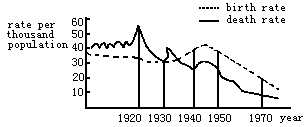
1.There was a rapid increase in death rate ________, since ________ it has fallen steadily.
[ ]
A.1920 and also in 1945; 1950
B.1920 and also in 1932; 1945
C.1920 and also in 1930; 1942
D.1920 and also in 1930; 1945
2.Before 1920 the birth rate was ________.
[ ]
A.about 38
B.about 40 per thousand
C.about 38 per hundred
D.about 38 per thousand
3.From 1930 to 1945 the birth rate ________.
[ ]
A.had increased about 20 per thousand
B.had risen rapidly and reached about 52 per thousand
C.had reached about 42 per thousand
D.had risen and fallen two times
4.Based on the graph (图示) it can be inferred that ________.
[ ]
A.from 1918 to 1945 birth rate changed more greatly than death rate
B.with the increase of birth rate, death rate rose rapidly too
C.birth control measures are more effective(有效) since 1945
D.both birth rate and death rate almost stayed at the same level between 1900 and 1920
查看习题详情和答案>>.
IV. 阅读理解
Amelia Earhart was born in Atchison, Kansas, on July 24,1897. In those days, airplanes were not nearly as common as they are today. Earhart was 12 years old before she ever saw an airplane, and she did not take her first flight until 1920. America Earhart was so thrilled by her first airplane ride that she quickly began to take flying lessons.
Her first instructor was Neta Snook, one of the first women to graduate from the Curtiss School of Aviation(飞行).Earhart borrowed mone from her mother to buy a two-seat plane. She got her US flying licence in December 1921, and in 1923, Earhart received her international pilot’s license—only the 16th woman to do so.
Amelia Earhart wasn’t afraid to break down barriers. After flying across the Atlantic as a passenger in 1928, Amelia Earhart’s next goal was to complete a transatlantic crossing(??横跨大西洋)alone. In 1927, Charles Lindbergh became the first person to make a solo nonstop flight across the Atlantic. In 1932, exactly five years after Lindbergh’s flight, Earhart became the first woman to repeat the feat(壮举).
She decided that her next trip would be to fly around the world. In March 1937, she flew to Hawaii with fellow pilot Paul Mantz to begin this flight. Earhart lost control of the plane on takeoff, however, and the plane had to be sent to the factory for repairs.
In June, she went to Miami to again begin a flight around the world, this time with Fred Noonan as her navigator(领航员).The pair made it to New Guinea in 21 days, even though Earhart was tired and ill. During the next leg of the trip, they departed New Guinea for Howland Island, a tiny island in the middle of the Pacific Ocean. July 2, 1937, was the last time Earhart and Noonan communicated with a nearby Coast Guard ship. They were never heard from again.
56.What would be the best title for the passage?
A Amelia Earhart’s Last Flight
B Amelia Earhart—the First woman to Fly Around the World
C Amelia Earhart’s Life Story
D Amelia Earhart—a Woman pilot of Great Courage
57. What can we infer from the second paragraph?
A Amelia Earhart first took her flying cource before 1920
B Amelia Earhart’s mother supported her taking flight career
C Neta Snook was Amelia Earhart’s only instructor
D Amelia Earhart also graduated from the Curtiss School of Aviation.
58. The underlined sentence in the third paragraph suggests that________
A women were not allowed to fly a plane alone at that time
B a transatlantic crossing was not a great challenge for pilots at that time
C Amelia Earhart wanted to achieve as much as men pilots do
D Amelia Earhart wasn’t afraid to fly together with men pilots
59. What happened to Amelia Earhart in the end?
A She probably got lost and died
B She successfully complete her flight around the world
C She lost control of the plane and was saved by a Coast Guard ship
D She became ill during the trip and gave it up on Howland Island.
查看习题详情和答案>>
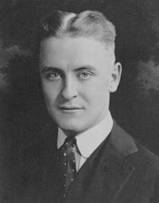 F. Scott Fitzgerald, born on September 24, 1896, an
American novelist, was once a student of St. Paul Academy, the Newman School and attended Princeton. University for a short while. In 1917 he joined the
army and was posted in Alabama, where he met his future wife Zelda Sayre. Then
he had to make some money to impress her.
F. Scott Fitzgerald, born on September 24, 1896, an
American novelist, was once a student of St. Paul Academy, the Newman School and attended Princeton. University for a short while. In 1917 he joined the
army and was posted in Alabama, where he met his future wife Zelda Sayre. Then
he had to make some money to impress her.
His life with her was full of great happiness, as he wrote in his diary:“ My own happiness in the past often approached such joy that I could share it even with the person dearest to me but had to walk it away in quiet streets and take down parts of it in my diary.”
This side of paradise, his first novel, was published in 1920. Encouraged by its success, Fitzgerald began to devote more time to his writing. Then he continued with the novel the Beautiful and Damned (1922), a collection of short stories Thales of the Jazz Age (1922), and a play The Vegetable (1923). But his greatest success was The Great Gatsby, published in 1925, which quick brought him praise from the literary world. Yet it failed to give him the needed financial security. Then, in 1926, he published another collection of short stories All the Sad Young Men.
However, Fitzgerald’s problems with his wife Zelda affected his writing. During the 1920s he tried to reorder his life, but failed. By 1930, his wife had her first breakdown and went to a Swiss clinic. During this period he completed novels Tender Is the Night in 1934 and The Love of the Last Tycoon in 1940. while his wife was in hospital in the United States, he got totally addicted to alcohol. Sheila Graham, his dear friend, helped him fight his alcoholism.
1.How many novels written by Fitzgerald are mentioned in the passage?
A. 5 B. 6 C. 7 D. 8
2.Which of the following is the correct order to describe Fitzgerald’s life according to the passage?
a. He became addicted to drinking.
b. He studied at St. Paul Academy.
c. He published his first novel This Side of Paradise.
d. The Great Gatsby won high praise.
e. He failed to reorder his life.
f. He joined the army and met Zelda.
A. f-c-e-a-b-d B. b-e-a-f-c-d C. f-d-e-c-b-a D. b-f-c-d-e-a
3.We can infer from the passage that Fitzgerald .
A. had made some money when he met Zelda in Alabama.
B. was well educated and well off before he served in the army
C. would have completed more works if his wife hadn’t broken down
D. helped his friend get rid of drinking while his wife was in hospital
4.The passage is probably followed by a concluding paragraph about .
A. Zelda’s personal life
B. Zelda’s illness and treatment
C. Fitzgerald’s friendship with Graham
D. Fitzgerald’s contributions to the literary world
查看习题详情和答案>>
One of the greatest contributions to the first Oxford English Dictionary was also one of its most unusual. In 1879, Oxford University in England asked Prof. James Murray to serve as editor for what was to be the most ambitious dictionary in the history of the English language. It would include every English word possible and would give not only the definition but also the history of the word and quotations (引文)showing how it was used.
This was a huge task. So Murrary had to find volunteers from Britain, the United States, and the British colonies to search every newspaper, magazine, and book ever written in English. Hundreds of volunteers responded, including William Chester Minor. Dr. Minor was an American Surgeon who had served in the Civil War and was now living in England. He gave his address as “Broadmoor, Crowthorne, Berkshire,” 50 miles from Oxford.
Minor joined the army of volunteers sending words and quotations to Murray. Over the next years, he became one of the staff’s most valued contributors.
But he was also a mystery. In spite of many invitations, he would always decline to visit Oxford. So in 1897, Murray finally decided to travel to Crowthorne himself. When he arrived, he found Minor locked in a book-lined cell at the Broadmoor Asylum for the Criminally insane.
Murray and Minor became friends, sharing their love of words. Minor continued contributing to the dictionary, sending in more than 10,000 submissions in 20 years. Murray continued to visit Minor regularly, sometimes taking walks with him around the asylum grounds.
In 1910, Minor left Broadmoor for an asylum in his native America. Murray was at the port to wave goodbye to his remarkable friend.
Minor died in 1920, seven years before the first edition of the Oxford English Dictionary was completed. The 12 volumes defined 414,825 words, and thousands of them were contributions from a very scholarly and devoted asylum patient.
【小题1】According to the text, the first Oxford English Dictionary _________.
| A.came out before minor died |
| B.was edited by an American volunteer |
| C.included the English words invented by Murray |
| D.was intended to be the most ambitious English dictionary |
| A.He helped Murray to find hundreds of volunteers. |
| B.He sent newspapers, magazines and books to Murray. |
| C.He provided a great number of words and quotations |
| D.he went to England to work with Murray. |
| A.He was shut in an asylum |
| B.He lived far from Oxford |
| C.He was busy writing a book |
| D.He disliked traveling |
| A.they both served in the Civil War. |
| B.They had a common interest in words |
| C.Minor recovered with the help of Murray |
| D.Murray went to America regularly to visit Minor |
| A.Brave and determined | B.Cautious and friendly |
| C.Considerate and optimistic | D.Unusual and scholarly |
| A.The history of the English language. |
| B.The friendship between Murray and Minor |
| C.Minor and the first Oxford English Dictionary |
| D.Broadmoor Asylum and is patients |
One of the greatest contributors to the first Oxford English Dictionary was also one of its most unusual. In 1879, Oxford University in England asked Prof. James Murray to serve as editor for what was to be the most ambitious dictionary in the history of the English language. It would include every English word possible and would give not only the definition but also the history of the word and quotations(引文) showing how it was used.
This was a huge task, so Murray had to find volunteers from Britain, the United States, and the British colonies to search every newspaper, magazine, and book ever written in English. Hundreds of volunteers responded, including William Chester Minor. Dr. Minor was an American surgeon who had served in the Civil War and was now living in England. He gave his address as “Broadmoor, Crowthorne, Berkshire,” 50 miles from Oxford.
Minor joined the army of volunteers sending words and quotations to Murray. Over the next 17 years, he became one of the staff’s most valued contributors.
But he was also a mystery. In spite of many invitations, he would always decline to visit Oxford. So in 1897, Murray finally decided to travel to Crowthorne himself. When he arrived, he found Minor locked in a book-lined cell at the Broadmoor Asylum(精神病院) for the Criminally Insane.
Murray and Minor became friends, sharing their love of words. Minor continued contributing to the dictionary, sending in more than 10,000 submissions in 20 years. Murray continued to visit Minor regularly, sometimes taking walks with him around the asylum grounds.
In 1910, Minor left Broadmoor for an asylum in his native America. Murray was at the port to wave goodbye to his remarkable friend.
Minor died in 1920, seven years before the first edition of the Oxford English Dictionary was completed. The 12 volunteers defined 414,825 words, and thousands of them were contributions from a very scholarly and devoted asylum patient.
1.According to the text, the first Oxford English Dictionary ____.
A. came out before Minor died
B. was edited by an American volunteer
C. included the English words invented by Murray
D. was intended to be the most ambitious English dictionary
2.How did Dr. Minor contribute to the dictionary?
A. He helped Murray to find hundreds of volunteers.
B. He sent newspapers, magazines and books to Murray.
C. He provided a great number of words and quotations.
D. He went to England to work with Murray.
3.Which of the following best describes Dr. Minor?
A. Brave and determined. B. Cautious and friendly.
C. Considerate and optimistic. D. Unusual and scholarly.
4.What does the text mainly talk about?
A. The history of the English language.
B. The friendship between Murray and Minor.
C. Minor and the first Oxford English Dictionary.
D. Broadmoor Asylum and its patients.
查看习题详情和答案>>