网址:http://m.1010jiajiao.com/timu3_id_2472898[举报]
about the term at all - which is unlikely. After all, everyone in my family used the word quite naturally,
and we understood each other. So far as I knew, it was a word like any other word - like bath, or
chocolate, or homework. But it was my homework which led to my discovery that grinnies was a
word not known outside my family.
My last report card had said that I was a "C" student in English, and my parents, both teachers,
decided that no child of theirs would be just an average student of anything. So nightly I spelled words
aloud and answered questions about the fine points of grammar. I wrote and rewrote and rewrote every
composition until I convinced my mother that I could make no more improvements. And the hard work
paid off. One day the teacher returned compositions, and there it was - a big fat, bright red "A" on the
top of my paper. Naturally, I was delighted, but I didn't know I was attracting attention until the teacher
spoke sharply, "Helen, what are you doing?"
Called suddenly out of my happy thoughts, I said "Oh, I've got the grinnies!" The teacher and my
classmates burst into laughter, and then I understood that grinnies were used inside my family. Other
people were not so lucky.
And it is really lucky to have the grinnies, an uncontrollable, natural state of great pleasure. Grinnies
are shown on the outside by sparkling eyes and a wide, wide smile - not just any smile, but one that
shows the teeth and stretches the mouth to its limits. A person experiencing the grinnies appears to be
all mouth. On the inside grinnies are characterized by a feeling of joyful anxiety. Grinnies usually last just
a few seconds, but they can come and go. Sometimes, when life seems just perfect, I have occasional
attacks of the grinnies for a whole day.
The term originated in my mother's family. Her younger sister, Rose, who had deep dimples (酒窝),
often expressed her pleasure with such a grin that the dimples appeared to become permanent. When
Rose was about four, she started explaining her funny look by saying, "I have the grinnies". The term
caught on, and it has been an important word in our family now for two generations.
The occasion doesn't matter. Anything can bring on the grinnies - just so long as one feels great
delight. When my brother finally rode his bicycle - without training wheels - from our house to the corner
and back, he came home with the grinnies. When I was little, my mother's announcement that we would
have homemade ice cream for dessert always gave me the grinnies. My father had the grinnies when I
was chosen to make a speech at the end-of-school-year ceremony. Grinnies can be brought on by a
good meal, a sense of pride, a new friend, a telephone call from someone special, an achievement. Or
sometimes one gets the grinnies for no reason at all: just a sudden sense of happiness can bring on a
case. Whatever brings them on, an attack of the grinnies is among life's greatest pleasures.
In fact, now that I look back on the experience, I feel sorry for my seventh-grade teacher. I think it's
a pity that she didn't know the word grinnies. It's such a useful term for saying, "I'm really, really pleased!"
B. equaled "grinnies" to bath or chocolate in meaning
C. got to know "grinnies" was used only inside her family
D. discovered the word "grinnies" through her mother
B. listening to her English teacher attentively
C. too happy to notice what's happening around her
D. busy rewriting and improving her compositions
B. her aunt
C. her brother
D. her father
B. should not have laughed at her
C. doesn't have any luck to meet her parent
D. has no idea of what "grinnies" is
B. Examples.
C. Comparison and contrast.
D. Process.
My Way to Success
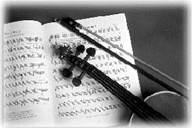
From the day I signed up for the Naumburg Competition, everything changed. I had made a decision to start again, to save my life, and that meant a 360-degree turnaround.
I kept on practicing. An enormous amount of work had to be done in two months. I went from not practicing at all to thirteen hours a day.
I spent two weeks just playing scales. If I thought I sounded bad before, now I sounded worse than awful.
At the time I lived on 72nd Street, close to West End Avenue. I had an apartment with a window the size of a shoebox. I didn't do mylaundry. I left my apartment only to walk to Juilliard─and not onBroadway like everyone else. I walked up Amsterdam Avenue because I didn't want to see anybody, didn't want to run into anybody, didn't want anyone to ask what I was doing.
I stopped going to classes and became a hermit. I even talked Miss DeLay into giving my lesson at night.
My eating habits were awful. I lived on fried sausages, a pint of peanut butter/chocolate ice cream, and a gallon of Coca-Cola every day. That's all I ate for eight weeks.
I was nuts. I was completely obsessed with getting back into shape, with doing well in this competition. If I could, people would know I was still on earth. Not to count me out; to stop asking, “Whatever happened to Nadja?”
The last week before the Naumburg auditions, I couldn't touch the violin. I had worked and worked and worked and worked and then I just couldn't work anymore.
I certainly could have used it. I wasn't as prepared as I should have been. But I simply had to say, “Nadja, you've dedicated yourself to this thing. Ready or not, do your best.”
Fifty violinists from around the world auditioned for the competition on May 25, 26, and 27, 1981. Those that made it past thepreliminaries would go on to the semifinals. Those that passed that stage would go to the finals. In years past, one violinist was chosen as winner and two received second and third place.
On May 26, the day of my audition, I went to the Merkin Concert Hall at 67th Street and Broadway. I waited, played for twenty minutes, and went home. I couldn't tell whether the preliminary judges were impressed or not. I'd find out the next evening.
Maybe subconsciously I was trying to keep busy; that night, when I fried the sausages, I accidentally set my apartment on fire. I grabbed my cat and my violin, and ran out the door. The fire was put out, but everything in my place was wrecked.
Fortunately, the phone was okay and on the evening of May 27, I had the news from Lucy Rowan Mann of Naumburg. Thirteen of us had made it.
Talk about mixed emotions. I was thrilled to be among the thirteen; a group that included established violinists, some of whom had already made records. But it also meant I had to play the next day in the semifinals of the competition.
Everyone entering the competition had been given two lists of concertos. One was a list of standard repertory pieces. The other list was twentieth-century repertory. For our big competition piece, we were to choose from each list and play a movement from one in the semifinals, and a movement from the other in the finals─if we made it that far.
From the standard repertory list, I chose the Tchaikovsky Concerto. I had been playing the Tchaik for three years, so it was a good piece for me.
From the twentieth-century list, I chose the Prokofiev G minor Concerto. I had never played it onstage before.
My goal had been just passing the auditions, but now my thought pattern began to change. If I wanted a sliver of a chance of advancing again, my brain said, “Play your strong piece first.”
Logically, I should play the Tchaikovsky in the semifinals just to make it to the next stage. Who cared if that left me with a piece I probably wouldn't play as well in the finals of the competition? It'd be a miracle to get that far.
There wouldn't be more than seven violinists chosen for the final round, and if I were in the top seven of an international group, that was plenty good enough.
The semifinals were held on May 28 in Merkin Concert Hall. You were to play for thirty minutes: your big piece first, then the judges would ask to hear another.
There was a panel of eight judges. They had a piece of paper with my choices of the Tchaikovsky and the Prokofiev in front of them. “Which would you like to play?” they asked.
I said meekly, “Prokofiev.”
My brain and all the logic in the world had said, “Play your strong piece.” My heart said, “Go for it all. Play your weak piece now, save Tchaikovsky for the finals.”
Maybe I don't listen to logic so easily after all.
My good friend, the pianist Sandra Rivers, had been chosen as accompanist for the competition. She knew I was nervous. There had been a very short time to prepare; I was sure there'd be memory slips, that I'd blank out in the middle and the judges would throw me out. My hands were like ice.
The first eight measures of the Prokofiev don't have accompaniment. The violin starts the piece alone. So I started playing.
I got through the first movement and Sandra said later my face was as white as snow. She said I was so tense, I was beyond shaking. Just a solid brick.
It was the best I'd ever played it. No memory slips at all. Technically, musically, it was there.
I finished it thinking, “Have I sold my soul for this? Is the devil going to visit me at midnight? How come it went so well?”
I didn't know why, but often I do my best under the worst of circumstances. I don't know if it's guts or a determination not to disappoint people. Who knows what it is, but it came through for me, and I thank God for that.
As the first movement ended, the judges said, “Thank you.” Then they asked for the Carmen Fantasy.
I turned and asked Sandy for an A, to retune, and later she said the blood was just rushing back into my face.
I whispered, “Sandy, I made it. I did it.”
“Yeah,” she whispered back, kiddingly, “too bad you didn't screw up. Maybe next time.”
At that point I didn't care if I did make the finals because I had played the Prokofiev so well. I was so proud of myself for coming through.
I needed a shot in the arm; that afternoon I got evicted. While I was at Merkin, my moped had blown up. For my landlord, that was the last straw.
What good news. I was completely broke and didn't have the next month's rent anyway. The landlord wanted me out that day. I said, “Please, can I have two days. I might get into the finals, can I please go through this first?”
I talked him into it, and got back to my place in time for the phone call. “Congratulations, Nadja,”“they said. “You have made the finals.”
I had achieved the ridiculously unlikely, and I had saved my best piece. Yet part of me was sorry. I wanted it to be over already. In the three days from the preliminaries to the semifinals, I lost eight pounds. I was so tired of the pressure.
There was a fellow who advanced to the finals with me, an old, good friend since Pre-College. Competition against friends is inevitable in music, but I never saw competition push a friendship out the window so quickly. By the day of the finals, I hated him and he hated me. Pressure was that intense.
The finals were held on May 29 at Carnegie Hall and open to the public. I was the fourth violinist of the morning, then there was a lunch break, and three more violinists in the afternoon.
I played my Tchaikovsky, Saint-Sa‘ns’s Havanaise, and Ravel's Tzigane for the judges: managers, famous violinists, teachers, and critics. I went on stage at five past eleven and finished at noon. Those fifty-five minutes seemed like three days.
I was so relieved when I finished playing; I was finished! It's impossible to say how happy I was to see the dressing room. I went out for lunch with my friends. It was like coming back from the grave. We laughed and joked and watched TV.
As I returned to Carnegie Hall to hear the other violinists, I realized I'd made a big mistake: they might ask for recalls. A recall is when they can't decide between two people and they want you to play again. It's been done; it's done all the time in competitions. No way was I in shape to go onstage and play again.
In the late afternoon, the competition was over. Everybody had finished playing. Quite luckily─no recalls.
The judges deliberated for an hour. The tension in the air was unbelievable. All the violinists were sitting with their little circle of friends. I had my few friends around me, but no one was saying much now.
Finally, the Naumburg Foundation president Robert Mann came on stage.
“It's always so difficult to choose ...” he began.
“Every year we hold this competition,” Robert Mann said. “And in the past, we've awarded three prizes. This year we've elected to only have one prize, the first prize.”
My heart sank. Nothing for me. Not even Miss Congeniality.
“We have found,” Mann went on, “that second place usually brings great dismay to the artist because they feel like a loser. We don't want anyone here to feel like a loser. Every finalist will receive five hundred dollars except the winner, who will receive three thousand dollars.”
And then he repeated how difficult it was to choose, how well everyone had played ...dah, dah, dah.
I was looking down at the floor.
“The winner is ...”
And he said my name.
A friend next to me said, “Nadja, I think you won!”
I went numb. My friends pulled me up and pointed me toward the stage. It was a long walk because I had slipped into a seat in the back. Sitting up in front was my old friend. I would have to walk right past him and I was dreading it, but before I could, he got up and stopped me.
He threw his arms around me and I threw my arms around him. I kept telling him how sorry I was. I was holding him and started to cry, saying, “I'm sorry, I'm sorry, I'm sorry.” I didn't want to lose, but I really didn't want him to lose either. And he was holding me and saying, “Don't be sorry. I'm so proud of you.” It was over, and we would be friends again.
I took my bow, then ran to Juilliard. Ten blocks uptown, one block west, to give Miss DeLay the news. She could be proud of me now, too.
Suddenly, everything was clear. Playing the violin is what I'd do with my life. Heaven handed me a prize: “You've been through a lot, kid. Here's an international competition.”
Everything had changed when I prepared for the Naumburg, and now everything changed again. I made my first recording. Between September 1981 and May 1982, I played a hundred concerts in America, made one trip to Europe, then two months of summer festivals. And people asked me back.
There was a great deal of anxiety playing in Europe for the first time. But I was able to rely on my self-confidence to pull me through.
Self-confidence onstage doesn't mean a lack of nerves backstage. The stakes had increased. This wasn't practice anymore, this was my life. I'd stare into a dressing-room mirror and say, “Nadja, people have bought tickets, hired baby-sitters, you've got to calm down; go out there and prove yourself.”
Every night I'd prove myself again. My life work had truly begun
- 1.
In a gesture to prepare for the competition, Nadja did all the following except _________
- A.preoccupying herself in practice
- B.trying to carry out her deeds secretly
- C.abandoning going to school for classes
- D.consuming the best food to get enough energy
- A.
- 2.
How many violinists does the passage mention advanced to the finals?
- A.Four
- B.Five
- C.Six
- D.Seven
- A.
- 3.
After Nadja finished playing at the finals, she went out for a while and when she came back to hear the other violinists she realized she had made a mistake because _________
- A.she forgot that there was going to be a recall
- B.she didn’t get hold of the permission to leave
- C.chances were that she had to replay and she was off guard
- D.there was another play she had to take part in in the afternoon
- A.
Life is filled with challenges. As we get older we 36 realize that those challenges to the very things than 37 us and make us who we are ,it is the same with the challenges that come with 38 .
When we are fared with a challenge, we usually have two 39 . we can try to beat it off, or we can decide that the thing 40 the challenge isn’t worth the 41 and call it quits. Although there are certainly 42 when calling it quits it the right thing to do, in most 43 all that is needed is 44 and communicable.
When we are communed to something, it means that no matter how 45 or how uncomfortable something is ,we will always choose to 46 it trough instead of running away from it. Communication is making a 47 for discussion and talking about how you feel as opposed to just saying what the other person did wrong. 48 you can say to a friend, “I got my feelings hurt.” 49 “You hurt my feelings,” you are going to be able solve the problem much faster.
In dealing with many challenges that friendship will bring to you, try to see them for 50 they me: small hurdles you need to jump or 51 on your way through life. Nothing is so big that it is 52 to get over, and hurt only 53 to make us stronger. It s all part of growing up, it 54 to everyone, and some day you will 55 all of this and say, “Hard as it was, it make me who I am today. And that a good thing.”
36.A.seem to B.come to C.hope to D.try to
37.A.design B.promote C.direct D.shape
38.A.confidence B.pressure C.friendship D.difficulty
39.A.opportunities B.expectations C.choices D.aspects
40.A.demanding B.deserving C.predicting D.presenting
41.A.comment B.loss C.trouble D.expense
42.A.spans B.times C.dates D.ages
43.A.cases B.fields C.parts D.occasions
44.A.assessment B.commitment C.encouragement D.adjustment
45.A.doubtful B.shameful C.harmful D.painful
46.A.keep B.control C.face D.catch
47.A.space B.plan C.topic D.room
48.A.If B.As C.While D.Unless
49.A.other than B.rather than C.or rather D.or else
50.A.what B.who C.where D.which
51.A.pass by B.come across C.get through D.run over
52.A.unnecessary B.necessary C.impossible D.possible
53.A.serves B.means C.aims D.attempts
54.A.opens B.appeals C.goes D.happens
55.A.lock down on B.look back on C.look forward to D.look up to
查看习题详情和答案>>When you think of snowy winter festivals, Sapporo in Japan probably is the first place that comes to mind. In the winter in Japan, there are winter festivals every year in the snowy north that drew great crowds and offer lots of attractions to everyone.
The big one is the Sapporo Snow Festival which is held every year in February on Japan’s snow –covered northern island, Hokkaido. The Sapporo Snow Festival was the first of its kind held in Japan, and it is still the biggest. Every year, 2 million snow lovers gather in Sapporo, the biggest city in Hokkaido, to enjoy the Snow Festival in the first 2 weeks of February. At the festival, there are hundreds of snow sculptures(雕刻品) made by artists from all over the world. Some are a couple of buildings. There are ice sculptures too, and ice bars where you can go and have a cold beer.
The Sapporo Snow Festival was started in the 1950s by a group of high school kids. Bored and shut-in by the cold winter, they began to have competitions making snow sculptures. Every year, more kids joined in, and now the festival draws now artists from 15 different countries. There are also musical performances, light shows, snow slides and big snowballs fights.
Every major area has its own snow festival. One of the most popular is the Iwate Snow Festival. It’s held in the small town of Shizukuishi in early or mid-February. Iwate is also famous for its yearly firework displays, where people can watch the colors reflect off the snow. In Iwate you can see traditional Japanese musicians and dancers perform on floats(彩车).
If you want a truly unique winter festival experience, northern Japan is a great place to go. Just make sure you wear warm clothes!
What do we know about the Sapporo Snow Festival?
A. It is the only snow festival in Japan.
B. It has the longest history and is the biggest in Japan.
C. It is held every two years in Sapporo.
D. It has the highest snow sculptures in the world.
When is the Sapporo Snow Festival held in Japan?
A. In mid-February B. From January to February
C. In the first half of February D. In the last ten days of February
What did high school kids start the Sapporo Snow Festival for at first?
A. To attract more travelers around the world
B. To enjoy musical performances
C. To draw snow artists from other countries
D. To have fun outdoors in the cold winter
Which of the following statements is NOT true about the Iwate Snow Festival?
A. It’s held in the small town of Shizukuishi.
B. There are hundreds of snow sculptures there.
C. People can see traditional Japanese musicians there.
D. Its firework displays are very popular.
查看习题详情和答案>>I fell in love with England because it was quaint (古雅)— all those little houses, looking terri??bly old-fashioned but nice, like dolls’ houses. I loved the countryside and the pubs, and I loved London. I’ve slightly changed my mind after seventeen years because I think it’s an ugly town now.
Things have changed. For everybody, England meant gentlemen, fair play, and good man??ners. The fair play is going, unfortunately, and so are the gentlemanly attitudes and good man??ners — people shut doors heavily in your face and politeness is disappearing.
I regret that there are so few comfortable meeting places. You’re forced to live indoors. In Paris I go out much more, to restaurants and nightclubs. To meet friends here it usually has to be in a pub, and it can be difficult to go there alone as a woman. The cafes are not terribly nice.
As a woman, I feel unsafe here. I spend a bomb on taxis because I will not take public trans??port after 10 p. m. I used to use it, but now I’m afraid.
The idea of family seems to be more or less non-existent in England. My family is well united and that’s typically French. In Middlesex I had a neighbour who is 82 now. His family only lived two miles away, but I took him to France for Christmas once because he was always alone.
56. The writer doesn’t like London because she ______.
A. is not used to the life there now
B. has lived there for seventeen years
C. prefers to live in an old-fashioned house
D. has to be polite to everyone she meets there
57. Where do people usually meet their friends in England?
A. In a cafe. B. In a restaurant. C. In a nightclub. D. In a pub.
58. The underlined part “it” (in Para. 4) refers to______.
A. a taxi B. the money C. a bomb D. public transport
59. The writer took her neighbour to France for Christmas because he ______.
A. felt lonely in England B. had never been to France
C. was from a typical French family D. didn't like the British idea of family
查看习题详情和答案>>