网址:http://m.1010jiajiao.com/timu3_id_2414513[举报]
鱼,我所欲也;熊掌,亦我所欲也。二者不可得兼,舍鱼而取熊掌者也。生,亦我所欲也;义,亦我所欲也。二者不可得兼,舍生而取义者也。生亦我所欲,所欲有甚于生者,故不为苟得也;死亦我所恶,所恶有甚于死者,故患有所不辟也。如使人之所欲莫甚于生,则凡可以得生者何不用也?使人之所恶莫甚于死者,则凡可以辟患者何不为也?由是则生而有不用也,由是则可以辟患而有不为也。是故所欲有甚于生者,所恶有甚于死者。非独贤者有是心也,人皆有之,贤者能勿丧耳。
【小题1】指出文中的通假字并解释。(2分)
通 解释
【小题2】下列画线词的意义完全相同的一项是( )(2分)
A.屋舍俨然 舍鱼而取熊掌者也
B.故患有所不辟也 且人患志之不立
C.非独贤者有是心也 是进亦忧,退亦忧
D同舍生皆被绮绣 是故所欲有甚于生者
【小题3】根据文段内容填空。(4分)
⑴选段中,作者将 比作鱼,将 比作熊掌,提出了他的主张:当二者不能两全时,应
⑵孟子说:“富贵不能淫,贫贱不能移,威武不能屈,此之谓“大丈夫”与文段中的“ ”这个词含义相同。
【小题4】翻译下面的文言语句。(4分)
(1) 由是则生而有不用也,由是则可以辟患而有不为也。
(2)非独贤者有是心也,人皆有之,贤者能勿丧耳。
【小题5】孟子认为“非独贤者有是心也,人皆有之,贤者能勿丧耳。”请举出你所了解的一位“贤者”,并写出他的一句表明其气节的名句。(2分) 查看习题详情和答案>>
1.对人们来说乘地铁游无锡更加容易了。
2.我想先去三阳广场。那里是无锡的市中心。有许多大型购物中心和一个青年中心。
3.然后,我会去南禅寺(Nanchan Temple)。那里可以尝到全国各地的美食。
4.最后,我想去清名路,那里有个博物馆。里面有30,000件艺术品。
5.说说自己的希望。
注意:
1. 出行计划须包括所给的内容要点,要求语句通顺、意思连贯。
2. 第5要点的内容须用2-3句话展开合理想象,作适当发挥。
3. 出行计划的开头已在答题卡上给出,不计入总词数。
Wuxi Underground Line 1 will be in use in June, 2014.
A、听句子根据所听句子的内容和所提的问题,选择符合题意的图画回答问题。每小题听一遍。(本题共5小题,每小题1分,共5分)
1.How will the boy go to school?
A.
B.
C.
2.What was Mrs Green doing at this time yesterday?
A.
B.
C.
3.What is the boy going to be when he grows up?
A.
B.
C.
4.What did Julia buy for her teacher?
A.
B.
C.
5.What happened to the boy?
A.
B.
C.
B、听对话 根据所听对话的内容回答每段对话后面的问题,在所给的三个选项中选出一个最佳答案。每段对话听两遍。(本题共10小题,每小题1分,共10分)
听第1段对话,回答第6小题。
6.What's the time now?
A.8∶15.
B.8∶20.
C.8∶25.
听第2段对话,回答第7小题。
7.How many e-mails has Mike got this week?
A.Eleven.
B.Twelve.
C.Thirteen.
听第3段对话,回答第8小题。
8.What kind of food might Tina often eat?
A.Vegetables.
B.Junk food.
C.Fish and chips.
听第4段对话,回答第9小题。
9.Where can the two speakers be?
A.In a restaurant.
B.At a drugstore.
C.At a bookstore.
听第5段对话,回答第10小题。
10.Who has been to the most countries?
A.Jack Read.
B.Mr Read.
C.Mrs Read.
听第6段对话,回答第11~12小题。
11.Who will do the housework?
A.Jie and Mary.
B.Tom and Mary.
C.Mary herself.
12.Why would Tom like Mary to come to his house?
A.He wants Mary to help him with English.
B.He wants Mary to do housework for him.
C.He wants Mary to help him treat(接待)his Chinese friend Jie.
听第7段对话,回答第13~15小题。
13.What may Miss White be?
A.A worker.
B.A manager.
C.A student.
14.Why does Miss White prefer part-time work?
A.Because she has to look after her children.
B.Because she has to be busy with her study.
C.Because she has to study for three hours every day.
15.Can Miss White get this job in the end?
A.Yes, she needs three hours for it.
B.Yes, but she has to work all day.
C.No, she is too busy with study to work.
C、听短文 根据所听短文的内容,在每小题给出的三个选项中,选出一个能回答问题的最佳选项。短文听两遍。(本题共5小题,每小题1分,共5分)
16.When was the survey(调查)done?
A.Yesterday.
B.Last week.
C.The day before yesterday.
17.How many students use the computer for fun?
A.23.
B.10.
C.21.
18.What does the speaker use the computer for?
A.Drawing and designing.
B.Writing computer programs.
C.Playing games.
19.What does the speaker want to become in the future?
A.A teacher.
B.A designer.
C.A scientist.
20.How many students are there in the class?
A.Thirty-nine.
B.Forty-one.
C.Forty.
D、听填信息,请根据所听内容,填写正确的信息完成记录。短文听两遍。此题不是选择题,请直接填写所缺信息。(本题共5小题,每小题2分,共10分)

一、听力理解
A、听句子:根据所听句子的内容和所提的问题,选择符合题意的图画回答问题,每小题听一遍。(本题共5小题,每小题1分,共5分)
1.Where will the man go?
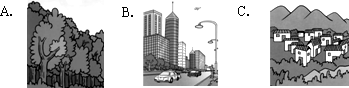
2.What was David doing when the telephone rang?

3.What is the girl's favorite fruit?
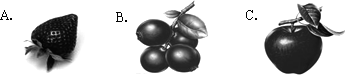
4.What is the girl going to be after graduation(毕业)?
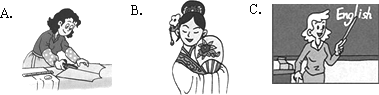
5.What did the boy want to borrow?
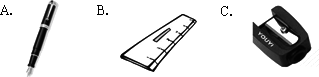
B、听对话:根据所听对话的内容回答每段对话后面的问题,在所给的三个选项中选出一个最佳答案。每段对话听两遍。(本题共10小题,每小题1分,共10分)
听第1段对话,回答第6小题。
6.Where does the girl think students should study in the future?
A.At home.
B.At school.
C.In the library.
听第2段对话,回答第7小题。
7.What was the matter with Sam?
A.He was ill.
B.He failed his test.
C.He lost his dog.
听第3段对话,回答第8小题。
8.Why doesn't Henry like driving a car to work?
A.Because he doesn't have a car.
B.Because he can't drive a car.
C.Because he thinks cars make much pollution.
听第4段对话,回答第9小题。
9.What does the boy tell the girl to do?
A.He tells her to ask the policeman for help.
B.He tells her to call her parents.
C.He tells her to ask her friends for help.
听第5段对话,回答第10小题。
10.What does the woman like to do better?
A.To see the new play.
B.To go shopping.
C.To visit the museum.
听第6段对话,回答第11~12小题。
11.Who went to Japan last summer?
A.Mary.
B.Tony.
C.Both Mary and Tony.
12.Has Mary been to America?
A.Yes, she has.
B.No, she hasn't.
C.Yes, only once.
听第7段对话,回答第13~15小题。
13.Where are the two speakers now?
A.On the street.
B.In front of a computer.
C.In a store.
14.When did the man begin shopping on the Internet?
A.Two months ago.
B.One year ago.
C.Two years ago.
15.What will the man do next?
A.Go out with the woman.
B.Show the woman how to shop on the Internet.
C.Buy some other things on the Internet.
C.听短文:根据所听短文的内容,在每小题给出的三个选项中,选出一个能回答问题的最佳选项。短文听两遍。(本题共5小题,每小题1分,共5分)
16.Where did Earth Hour star first?
A.In New York.
B.In Sydney.
C.In Hong Kong.
17.When did Earth Hour take place in 2008?
A.On March 28.
B.On March 29.
C.On March 30.
18.How many countries took part in the activity in 2009?
A.35.
B.55.
C.88.
19.When did China begin to take part in the activity?
A.In 2007.
B.In 2008.
C.In 2009.
20.Why do people all over the world celebrate Earth Hour?
A.To save food and improve the environment.
B.To save energy and improve climate(气候).
C.To spend more time with family and friends.
D、听填信息,请根据所听内容,填写正确的信息完成记录。短文听两遍。此题不是选择题。(本题共5小题,每小题2分,共10分)

One day, Miss White teaches the students to count from one to ten. Mike can count them. Miss White is happy and asks him, “How many people(人) are there(有) in your family, Mike?”
“Two, Miss White, ” Mike says.
“Who are they?”
“My father and mother.”
“Oh?” Miss White is surprised(吃惊地). She says, “But I think there are three people in your family—your father, your mother and you. Am I right?”
“No. I’m not at home now. I’m at school, you know!” Mike says.
根据短文内容,选择正确答案。
【小题1】Mike is years old.
A. 6 B. 7 C. 8
【小题2】Mike’s father is a .
A. teacher B. doctor C. driver
【小题3】Mike goes to school .
A. with his mother B. with his classmates C. in a car
【小题4】Mike is now.
A. at school B. at home C. in his father’s office
【小题5】The word “count” means (意思是)“ ” in Chinese.
A. 读 B. 数 C. 写 查看习题详情和答案>>