网址:http://m.1010jiajiao.com/timu3_id_2414469[举报]
乡村铁质
刘向民
①乡村是我永远的家园。在我全部的生活中,乡村是最重要的。
②虽然走进了城市,不可能与土地日日肌肤相亲,但我始终以农民的眼光审视乡村。乡村是城市的依托,没有乡村也就没有城市的存在,乡村是城市的母体,城市是乡村的延伸和延续。乡村是狗吠鸡鸣牛哞,是薄薄的晨雾和袅袅的炊烟,一条静静地流淌的小河,茂密的小草尖上晶莹的露珠闪耀着太阳的光彩。乡村的早晨是清新和鲜明的。
③走进田野,就走进了自我。一株株茂盛的高粱、谷子或者玉米,就是我们的兄长。闪着光芒的锄探进植物的根部,根系蔓延,锄的铁质意念就通过异常发达的根系蔓延了整个土地,广阔的原野处处闪耀着铁质的浑厚和沉重,所以我们收获的每一粒粮食、每一季粮食都包含着铁质。铁质沿着血管流动,扎根于我们的每一处神经,我们的脊梁才如此坚挺。
④粮食的存在,使乡村有了存在的充分理由。一茬一茬的庄稼,一茬一茬的人生,在乡村的蓝天下格外亮丽。已经死去多年的大树仍然直直地挺立,黑枯的树干直指青天,乡村中许多的构思和想象缘自树干的启迪。镰刀闪着铁质的锋利,农民的梦想始终与庄稼有关,一头牛与一架犁在土地深处探寻,浑黄或者黝黑的土壤蕴涵着无穷的力量,只要播下种子,幻想就无可阻挡地蓬勃起来了。土地时刻迸发着铁质的响声。
⑤土地养育了庄稼,也养育了整个乡村。乡人们的性格和作为,任何时候都充满着铁质,欢喜时会无所顾忌地畅心大笑,发怒时会打上一架,或者跑到村街上不明不白地骂上一场,悲哀时会痛痛快快淋漓尽致地大哭一场,然后又执著地走进田野,走进劳作,一切都毫无遮遮掩掩。嫉恶如仇,旗帜鲜明,高昂的气概和高亢的声音比得过任何烦琐深奥的说教。他们不怕风,不怕雨,不怕雷鸣;他们饮风露餐,吃得下千般苦,受得住万般罪,他们常说“没有吃不了的苦,没有受不了的罪”。年景的丰歉和日子的辛苦都是岁月的点缀,他们从不怨天尤人,总是日出而作,日落而息。沿着太阳的方向走进田野,走进庄稼地里,走进乡村深处的每一个细节,使乡村的每一刻都充充实实和铿锵有声。哪怕只是一声劳动的号子,也如雷鸣一般响亮;哪怕只是向前迈出一步,也如山一般稳重;哪怕只是一个耕或者种的手势,也都是乡村的经典动作。乡村,处处铁质,铁质处处。
⑥乡村是农民的部落。城里人已经厌烦的事情,乡村还在喜欢或者也早已厌烦,喜欢的是一种没有丢失的乡村质朴,厌烦的是曾经生活在乡村里的城里人的矫作。城里人始终也在吃着乡村的粮食,但缺少了乡村的铁质。铁质似乎已被城里人丢失殆尽。我们是否要寻找乡村的铁质,使乡村铁质在城市里闪烁,应该是我们思考的问题。
⑦乡村是我们生存的依托,也是城市生活的依据,没有了乡村就没有城市。是否有人为城市一天天侵占乡村沾沾自喜呢?如果缺少了乡村,缺少了乡村铁质,我们将会更加颓废,城市也将因此而变的莫名其妙地失去方向。因此,不论生活在乡村还是城市里的人们,都不能忘记永远的乡村铁质,它是我们永远的支撑,我们永远的方向。
【小题1】下列对散文的分析,不正确的两项是(5分) ( )( )
| A.文章开篇作者说:“乡村是我永远的家园。在我全部的生活中,乡村是最重要的。”这一行文的好处是开门见山,直接抒发了作者对乡村的热爱之情。 |
| B.在第三段作者运用比喻的手法把高粱、谷子、玉米等农作物比作了自己的兄弟,细致入微地描写了它们正在健康成长的模样。 |
| C.第五段作者运用排比修辞,使文章的行文充满气势,生动地写出了在充满铁质的乡村中生活的农人们旺盛的生命力和他们坚强、直率、质朴的性格。 |
| D.作者用饱含深情的笔墨,描绘了乡村生活的图景以及在乡村中生活着的人们,凸显了乡村“处处铁质,铁质处处”的风貌。 |
【小题2】结合全文谈谈乡村具有怎样的意义?作者在行文中着重描写了乡村的土地,有怎样的目的?(6分)
【小题3】谈谈你对文中划线句的理解。(6分)
①只要播下种子,幻想就无可阻挡地蓬勃起来了。(3分)
②走进乡村深处的每一个细节,使乡村的每一刻都充充实实和铿锵有声。(3分)
【小题4】文章的最后一段有什么作用?文章中的“铁质”具有其特殊的象征意义,根据你对文章的品读,谈谈对“铁质”象征意义的理解。(8分) 查看习题详情和答案>>
听力理解(共24分)
一、听对话,从下面各题所给的A、B、C三幅图片中选择与对话内容相符的图片。每段对话读两遍。(共4分,每小题1分)
1.
A.
B.
C.
2.
A.
B.
C.
3.
A.
B.
C.
4.
A.
B.
C.
二、听对话和独白,根据对话和独白的内容,从下列各题所给的A、B、C 三个选项中选择最佳选项。每段对话或独白读两遍。(共12分,每小题1分)
请听一段对话,完成第5至第6小题。
5.What will the weather be like tomorrow?
A.It’ll be snowy.
B.It’ll be rainy.
C.It’ll be windy.
6.What does the man plan to do tomorrow?
A.To have a picnic.
B.To have a walk.
C.To have a rest.
请听一段对话,完成第7至第8小题。
7.Who is Betty going to see?
A.Her uncle.
B.Her mother.
C.Her grandparents.
8.What will Betty take to Bill tomorrow ?
A.Tickets.
B.Books.
C.Photos.
请听一段对话,完成第9至第10小题。
9.Why doesn't the woman take the green T-shirt?
A.It's too small.
B.It's too dark.
C.It's too expensive.
10.What does the woman buy in the end?
A.A yellow T-shirt.
B.A blue T-shirt.
C.A pink T-shirt.
请听一段对话,完成第11至第13小题。
11.What are the man and woman talking about?
A.Mr.Brown’s son.
B.Mrs.Smith’s son.
C.Mike’s school.
12.How long does Mike stay with his classmates a day?
A.About 8 hours.
B.About 6 hours.
C.At least 10 hours.
13.How does Mike usually go to school?
A.By bus.
B.In his father’s car.
C.On foot.
请听一段独白,完成第14至第16小题。
14.How will students feel about high school life at the beginning?
A.Excited and tired.
B.Excited and worried.
C.Happy and excited.
15.What is necessary for the students to do at first?
A.Making new friends.
B.Walking around the school.
C.Making a plan.
16.According to the speaker, what is the most important for the new students?
A.Ways of learning.
B.Time of learning.
C.Results of learning.
三、请听一段独白,根据所听到的内容和提示词语,记录关键信息。独白读两遍。(共8分,每小题2分)

听力理解(共24分)
一、听对话,从下面各题所给的A、B、C三幅图片中选择与对话内容相符的图片。每段对话读两遍。(共4分,每小题1分)
1.
A.
B.
C.
2.
A.
B.
C.
3.
A.
B.
C.
4.
A.
B.
C.
二、听对话或独白,根据对话或独白的内容,从下面各题所给的A、B、C三个选项中选择最佳选项。每段对话或独白读两遍。(共12分,每小题1分)
请听一段对话,完成第5至第6小题。
5.Who are talking on the phone?
A.Tom and Jack.
B.Jack and Mrs Brown.
C.Tom and Mrs Brown.
6.What are Tom and his friends going to do this Sunday morning?
A.Plant trees.
B.Have a party.
C.See a film.
请听一段对话,完成第7至第8小题。
7.What’s wrong with Peter?
A.He had a bad cold.
B.His arm was broken.
C.His leg was broken.
8.How long does Peter have to stay in hospital?
A.A few days.
B.A few weeks.
C.A few months.
请听一段对话,完成第9至第10小题。
9.How does Steven usually go to London?
A.By train.
B.By bus.
C.By taxi.
10.How much does a travel card for a year cost?
A.Sixteen pounds.
B.Thirty-two pounds.
C.Sixty pounds.
请听一段对话,完成第11至第13小题。
11.Where are the boy and the woman talking?
A.At home.
B.In the shop.
C.In the office.
12.Who does the boy want to buy a present for?
A.His friend.
B.His mother.
C.His father.
13.How much money does the boy just have with him?
A.$10.
B.$15.
C.$25.
请听一段独白,完成第14至第16小题。
14.Which floor do they start from?
A.The first floor.
B.The second floor.
C.The fourth floor.
15.What can they see on the second floor?
A.Technology in the old days.
B.Inventions in different centuries.
C.Modern inventions in the 20th century.
16.Who is the speaker?
A.The monitor.
B.The teacher.
C.A student.
三、听独白,根据所听到的独白内容和提示词语,记录关键信息。独白读两遍。(共8分,每小题2分)

听力测试(30分)
听力Ⅰ(20分)
Ⅰ、听1-5共五个对话,选择与所听对话内容相符的图画。每个句子读两遍。(5分)
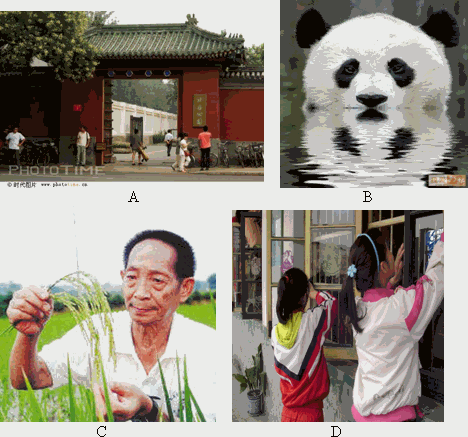
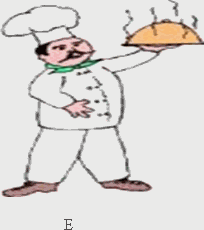
1._________ 2.__________ 3.__________ 4.__________ 5._________
Ⅱ、听五个句子,分别选择其相应的应答语。每个句子读两遍。
(5分)6.A.Kunming is the Spring City.
B.I’d like to go to Kunming
C.I’ve been to Kunming twice.
7.A.English, of course.
B.Reading story-books.
C.Playing basketball.
8.A.By bike
B.Let’s go there by bike.
C.Because my bike is broken.
9.A.Mountain Emei.
B.Mountain Tai.
C.Mountain Fanjing.
10.A.Twice a week.
B.On foot
C.I like skating there.
Ⅲ、听五段对话,根据其内容及各小题的问题选择正确选项。每段对话读两遍。
(5分)11.A.In a park.
B.In a library.
C.In a bookstore.
12.A.It’s too hot.
B.It’s very hot and nice.
C.It’s very delicious.
13.A.The Foggy City.
B.The Mountain City.
C.The Foggy City and the Mountain City.
14.A.He’s in Guilin.
B.He’s in Guiyang.
C.He’s in Guangzhou.
15.A.He doesn’t like it at all
B.He likes it very much.
C.He likes it a little.
Ⅳ、听一篇短文,根据短文内容和所提问题选择正确答案。短文读两遍。
(5分)16.What class are the girls in?
A.In Class 8, Grade 2.
B.In Class 2, Grade 8.
C.In Class 3, Grade 8.
17.Who does well in singing and dancing?
A.Wang Hui.
B.Li Hong.
C.Yang Fang.
18.What does Li Hong enjoy?
A.She enjoys writing.
B.She enjoys drawing.
C.She enjoys reading novels.
19.What’s Yang Fang’s favorite sport?
A.Playing table tennis.
B.Playing basketball.
C.Playing volleyball.
20.What does Zhang Mei usually do at the weekend?
A.She usually plays games with her friends.
B.She usually does some shopping with her mother.
C.She usually helps her parents do the housework at home.
听力Ⅱ(10分)(听一篇短文,根据所听到的短文内容填写表格。每空一词。答案务必另书写于答题卡卷II各小题规定的位置。)
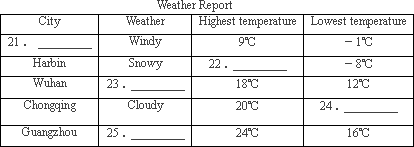
补全对话(每空1分,共5分)。
根据对话内容,补全对话,使其完整﹑通顺。每空一词。
A. we have many rules at school.
B. ( 1 )do we .For example ,we have to ( 2 )school uniforms every school day .
A. We usually do, too. We are not allowed to play soccer at school because we don’t have a soccer field
B. Oh, we are lukier than you. We have a big soccer field but we can only ( 3 )it in P.E.
A. our teachers are very ( 4 )to us but sometimes they are strict. I think it’s good for us.
B. I ( 5 )with you.I’ll miss them when I graduate.
查看习题详情和答案>>