网址:http://m.1010jiajiao.com/timu3_id_2414264[举报]
---Mum, can I do the homework tomorrow? ---You _____ finish it today.
| A.had better | B.had rather | C.had better not | D.had rather not |
I won’t go to the concert this evening. I ________ watch the NBA on TV. It’s more exciting.
| A.had better | B.would rather | C.prefer | D.have to |
I won’t go to the concert this evening. I ______ watch the NBA on TV. It’s more exciting.
A.had better B.would rather C.ought to D.have to
查看习题详情和答案>>
The Mayan(玛雅的)Indians lived in Mexico for thousands of years before the Spanish arrived in the 1500s. The Mayan achievements were many. They had farms, beautiful palaces, and cities with many buildings. The Mayan people knew a lot about nature and the world around them. This knowledge helped them to live a better life than most people of that time, because they could use it to make their lives more comfortable and rewarding(值得的). Knowledge about tools and farming, for example, made their work easier and more productive.
The Maya believed in many gods, including rain gods, sun gods, and corn gods. The people built large temples to honor the Mayan gods. Skillful workers built cities around these temples. It was difficult for them to build these cities, because they had no horses to carry the heavy stone they used to build with. Workers had to carry all of the building materials themselves. Today, many of these ancient Mayan cities and temples are still standing.
Although the cities that the Maya built were beautiful, and the people worked hard to build them, very few of the people lived in them. Usually, only the priests(牧师)lived in the cities.
The other people lived in small villages in the forests. Their houses were much simpler than the elaborate buildings in the cities. They lived in small huts(小屋)with no windows. The walls were made of poles covered with dried mud, and the roof was made of grass or leaves. Most Maya lived a simple life close to nature.
The Mayan priests studied the Sun, the Moon, stars, and planets. They made a calendar from what they learned. The year was divided into 18 months of 20 days each with five days left over. The Mayan calendar was far more exact than the European calendars of the time.
Around the year 800, the Maya left their villages and beautiful cities, never to return. No one knows why this happened. They may have died from some disease. They may have left because the soil could no longer grow crops. Archaeologists(考古学家)are still trying to find the lost secrets of the Maya.
1.What does the underlined word “elaborate’’ mean?
A. easily built B. carefully made C. slowly fixed D. quickly designed
2.From the passage we can infer(推理)that .
A. most Maya lived in beautiful cities
B. many Mayan cities and temples are still standing
C. the Maya were intelligent and culturally rich people
D. the Mayan calendar was the same as European calendars
3.Why it is said that the Mayan people lived a better life than most people of that time?
A. They had better building skills and housing conditions.
B. They believed in many gods, and honored the Mayan gods.
C. They had knowledge about tools and faming.
D. They studied about nature and the world around them.
4.What can be the best title for this article?
A. Mayan Gods B. Mayan Buildings
C. Productive Maya D. Mysterious(神秘的)Maya
查看习题详情和答案>>
One bag, that’s it.
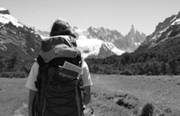
The importance of packing light cannot be overemphasized(过度强调). Limit yourself to 20 pounds in a carry-on bag. A 9’× 22’ ×14’ bag fits under most airplane seats. And after you enjoy that sweet mobility and freedom, you’ll never go any other way.
You’ll walk with your luggage(行李) more than you think you will. Before leaving home, give yourself a test. Pack up completely, and practice being a tourist for an hour. Fully loaded, you should enjoy window-shopping. If you can’t, go home and thin things out.
Packing light isn’t just about the trip over and back—it’s about your traveling lifestyle. Too much luggage marks you as a typical tourist. It slams the back door shut. Changing locations becomes an important operation. With only one bag, you’re mobile and in control. Take this piece of advice seriously. Pack light, and pack smart. These days, you can’t bring anything possibly dangerous—such as knives, lighters or large amounts of liquid (液体)—in your bag.
What to bring?
How do you fit a whole trip’s worth of luggage into a small backpack or suitcase(衣箱)? The answer is simple: bring very little.
Bring out everything you think you might need on the floor. Pick up one item(件) at a time and check it. Ask yourself—not “Will I use it?”, but—“Will I use it enough to feel good about carrying it all the way? The world is getting really small—you can buy Colgate toothpaste, Nivea cream and Gillette razors in almost every country.
Think about what you can do without—not what will be convenient on your trip. When in doubt, leave it out.
1.What do the last two paragraphs mainly talk about?
A. Packing light is a kind of travelling lifestyle.
B. Packing light can give you mobility and freedom.
C. How to find out what to take and what not to take on a trip.
D. How to find out if your luggage is too heavy.
2.You are allowed to take _______with you when you travel according to the passage.
A. Colgate toothpaste B. Lighters C. Knives D. a great deal of liquid
3.The underlined part “thin things out” possibly means________.
A. make things thin to bring
B. make your luggage lighter
C. take out dangerous things
D. throw useless things away
4.The author seems to believe that _________.
A. people had better bring nothing when they travel
B. people can use Nivea cream only in their home town
C. the importance of packing light is overemphasized now
D. you will be easily seen as a tourist with a lot of luggage
5.What is the best title for the passage?
A. Dying for a trip
B. Things to take on a trip
C. Pack light and pack right
D. Travelling: a typical way of life
查看习题详情和答案>>