网址:http://m.1010jiajiao.com/timu3_id_2384632[举报]
根据汉语提示完成下面短文中所缺单词,(注意词形变化)(每空一词)。
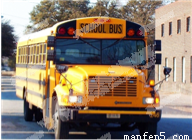
Today, just as the school was over, my father came to pick me up and go 1.(家). Just then, an old bus appeared behind our car. I used to ride this bus every __2._(天) to school in 6th grade, and 3. (多么) a good time we had!
I _4. (花费)a lot of my time on that bus, whether laughing and talking, or _5._(恰好) enjoying the fine scenery of the city, as the bus took its daily route over the hills,6.__(穿过) the valleys(山谷), onto the highway, and finally, into the parking lot of my school.
That bus was a big part of my everyday ___7.__(生活). And that old and always cheerful bus driver would take us on the long way to school to view beautiful places, like the ___8.__(海滩), parks, even towns we had never seen _9._(以前). Our school teachers wouldn’t mark us as being late, even if we were an ___10.__(小时) or so late to school.
Anyway, when I saw that bus, I recognized it right now. I told my dad that that was the bus I used to ride in.
查看习题详情和答案>>
We know good manners are important. Today I am going to tell you something about manners in different countries. I think you already know that people in different countries usually have different ways of doing things. Something that is rude in one country may be quite polite in another. For example, in Britain you mustn’t lift your bowl to your mouth when you are having liquid food. That is considered bad manners in Britain. But in Japan you needn’t worry about making a noise when you drink something. It shows that you are enjoying it. In Britain we try not to put our hands on the table at all during a meal. In Mexico, however, guests are expected to keep their hands on the table throughout a meal. In Arabic countries we must be careful with our hands. You see, in Arabic countries you mustn’t eat with your left hand. This is considered to be very impolite. So, what should you do if you visit a foreign country? Well, you needn’t worry. You can ask the native people there to help you and you can just watch carefully and try to do what they do.
( ) 67. In Arabic countries you must be careful with your _____.
A. feet B. mouth C. eyes D. hands
( ) 68. What’s the meaning of the underlined word “throughout ”?
A.穿过 B. 贯穿 C. 通过 D. 横过
( ) 69. Which of the following is true?
A. In different countries, the manners are the same.
B. Manners are different in different countries.
C. Good manners are not important.
D. In Arabic countries we mustn’t be careful with our hands.
查看习题详情和答案>>
| |||||||||||||||||||||||||||||||||||||||||||||||||||||||||||||||||||||||||||||||||||||||||||||||||||||||||||||||||||||||||||||||||||||||||||||||
LABORATORYRULES
Throughout the lesson
·Do not enter the science lab without the teacher’s permission.·No food or drinks are to be alowed in the science lab.
Before the Experiment
·Read al instructions carefuly before every experiment.
·Prepare al apparatus(仪器)and arrange them so that you wil not knock them over while doing the experiment.
During the Experiment
·If you are unsure of how to use any apparatus or how to operate, ask your teacher for help.·Never smel or taste chemicals unless your teacher gives permission.
After the Experiment
·Wash al apparatus after use and return them to the places where they were.
·Throw waste materials in proper waste baskets. First Aid
·Report al accidents to your teacher immediately.
·If you spil( 溅 出 )any chemicals onto your body or clothing, wash with plenty of water and report to your teacher.
【小题1】 Your teacher wil probably tel you the rules above _____ the first lab lesson.
| A.before | B.since | C.during | D.after |
| A.taste the chemicals first |
| B.clean al the apparatus |
| C.read al instructions carefuly |
| D.report al the accidents to the teacher |
A. try them on your own
B. read the rules carefuly
C. ask your teacher for help
d. put them back
【小题4】 It is clear that you can _____.
| A.bring food into the lab | |
| B.enter the lab anytime | |
| C.smel chemicals as you like | D.learn science directly in the lab |
| A.Before the Experiment |
| B.First Aid |
| C.During the Experiment |
| D.After the Experiment |