网址:http://m.1010jiajiao.com/timu3_id_2368448[举报]
在A、B、C、D四个选项中, 选出划线部分读音与其余三个不同的选项,并将该选项填入答题卷上相应的空格内。(本大题共10分,每小题1分)
1.A. age B. again C. grade D. radio
2.A. when B. very C. she D. help
3.A. tennis B. slim C. dinner D. cousin
4.A. office B. shop C. hero D. volleyball
5.A. use B. student C. usually D. under
6.A. room B. cook C. school D. food
7.A. each B. breakfast C. heavy D. head
8.A. borrow B. show C. know D. now
9.A. balls B. comics C. maps D. weeks
10.A. thankB. threeC. thoseD. thirty
查看习题详情和答案>>
How to talk to a foreigner? Students often want to practice their English outside class.One of the best ways to practice your English is to speak to a foreigner.This week's question comes from a student who is eager to start a conversation with the foreigners he sees every day.He asks, “Is it okay to talk to foreigners I see in the street? The answer is yes and no, but probably no.If you see a foreigner who looks lost,it is polite to ask him。”May I help you? But,otherwise(除此之外),you should probably let him get on with his business.Situations,however, do exist where it is quite all right to talk to foreigners.If a foreigner enters year school,classroom,office,shop or restaurant,for instance,feel free to ask them (for example):
--May I know your name,please?
--Where do you come from?
--What do you think of Beijing?
--How long will you stay in Beijing?
There are also situations where it's okay to talk to foreigners in public places.If you see a foreigner alone in a restaurant,bar or care, it may be appropriate(恰当的)to ask him or her:
--Is this seat free?
--Do you mind if I talk to you in English?
--You pan probably help them if they are new to China and if they are alone,you may be able to make them feel more welcome.After a few such questions, you should know whether this person wants to talk to you or not.If they ask you similar questions, or if they give long, informative(提供有用信息的)answers, you're in luck.If not,then give them their privacy(独处).Talking to strangers is fun if you choose the right time and place.
1、One way to practice your spoken English is to try to talk with .
A、your friends B、foreigners C、your classmates D、your teacher
2、When you first meet a foreigner,you should probably say .
A、Where are you going? B、Have you eaten your dinner?
C、Can you help me with my English? D、How do you do?
3、The writer suggests that we should .
A、follow foreigners when we meet them in the street
B、talk with a foreigner at a good time
C、have a meal with foreigners in a restaurant
D、move to a place where a foreigner lives
查看习题详情和答案>>听力理解
A)听句子(本大题共5小题,每小题1分,共5分)
根据句子的内容和所提的问题,选择符合题意的图画回答问题。每小题听一遍。
1.How does Li Yang improve his English?

2.Where did the girl's grandma use to live?

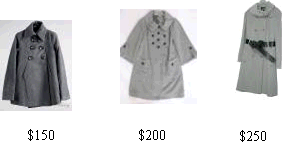
3.Which coat did the girl probably buy?
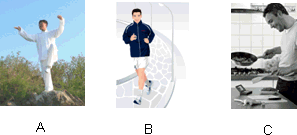
4.How does Jim often do to keep healthy?
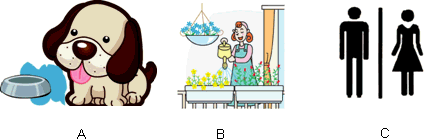
5.What does the speaker reuse the water to do?
B)听对话(本大题共10小题,每小题1分,共10分)
回答每段对话后的问题,在各题所给的选项中选出一个最佳答案。每段对话听两遍。
听第一段对话,回答第6小题。
6.Where will the beach party be?
A.By the trees.
B.By the boats.
C.At the coffee shop.
听第二段对话,回答第7小题。
7.What are they talking about?
A.Buying a birthday present.
B.Learning English.
C.Having a birthday party.
听第三段对话,回答第8小题。
8.Where does this dialogue happen?
A.In a clothes shop.
B.In a restaurant.
C.In a tea house.
听第四段对话,回答第9小题。
9.What color is Kathy's bedroom now?
A.Green.
B.Blue.
C.Yellow.
听第五段对话,回答第10小题。
10.What can we learn from the dialogue?
A.The girl has finished her science homework.
B.The boy has finished his math homework.
C.The boy has finished his English exercises.
听第六段对话,回答第11-12小题。
11.When is Jack's father's birthday?
A.This Sunday.
B.This Thursday.
C.This Saturday.
12.What are they going to do for Jack's father's birthday?
A.They're going to have a party.
B.They're going to have a picnic.
C.They're going to have a big dinner.
听第七段对话,回答第13-15小题。
13.What are the man and woman doing?
A.They are talking on the phone.
B.They are listening to the weather report on the radio.
C.They are watching the weather report.
14.What's the weather like in Sanya now?
A.Hot and dry.
B.Hot and wet.
C.Wet and cool.
15.Where are Mike's family going to spend their holiday?
A.In Guangdong.
B.In Guangxi..
C.In Hainan.
C)听短文(本大题共5小题,每小题1分,共5分)
在每小题给出的三个选项中,选出一个能回答所提问题的最佳选项。本题听两遍。
16.Where did Peter work?
A.In a school
B.In an office
C.In a hospital.
17.Why did Peter make mistakes in his work two weeks ago?
A.Because he was bad at his work
B.Because he couldn't sleep well at night.
C.Because the doctor gave him wrong medicine.
18.When did Peter go to the hospital?
A.Last Tuesday
B.Last Friday
C.Last Monday.
19.Did Peter have a good sleep after he took the medicine?
A.Yes,he did
B.No,he didn't
C.No,he was even worse.
20.Who was angry with Peter?
A.Peter's boss
B.Peter's mother
C.Peter's father
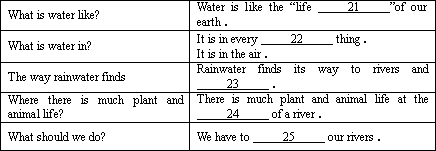
D).听填信息(本大题共5小题,每小题2分,共10分)你将听到一段有关水的文章。请根据你所听到的内容,填写信息,完成有关记录。本题听两遍。
For many American teenagers, having a part-time job is an important part of growing up. A part-time job can teach teenagers important skills like responsibility(责任), independence(独立),teamwork and leadership.
Young people can expand(扩大) their social circles beyond their classmates by making friends with co-workers. And many teenagers find that earning their own money gives them a sense of pride and freedom.
The US Department of Labor allows teenagers to apply for jobs at the age of 14. Popular part-time jobs include working in ice cream stores, coffee shops, and clothing stores. During the school year, teenagers may go to work a few times a week after their classes get out, then work for longer on the weekends.
In the summer, top jobs for teens include working at camps, swimming pools and amusement parks. These jobs are great for young people who want to be active and have fun while making money.
A favorite job for many teens is babysitting(临时替人看小孩), and they can start before 14 if the parents agree. After the children are sleeping and before the parents come home, babysitters have lots of freedom.
As long as they stay in the house and make sure the kids are okay, babysitters can do their homework, enjoy a snack, watch TV, or talk on the phone with friends.
It can be stressful to balance school, homework, and a part-time job. Still, many American teenagers value their work experience and the skills they gain on the job.
【小题1】The author thinks a part-time job can teach teenagers many skills except _____.
| A.responsibility | B.teamwork | C.leadership | D.organization |
| A.fourteen | B.thirteen | C.twelve | D.eleven |
| A.At a shop. | B.In the office. | C.At a camp. | D.At a clothing store. |
| A.can start before 14 | B.can make more money |
| C.like to play with children | D.have lots of freedom |
| A.enjoy working more |
| B.hate going to school |
| C.don’t have much homework |
| D.think that skills are important |
Young people can expand(扩大) their social circles beyond their classmates by making friends with co-workers. And many teenagers find that earning their own money gives them a sense of pride and freedom.
The US Department of Labor allows teenagers to apply for jobs at the age of 14. Popular part-time jobs include working in ice cream stores, coffee shops, and clothing stores. During the school year, teenagers may go to work a few times a week after their classes get out, then work for longer on the weekends.
In the summer, top jobs for teens include working at camps, swimming pools and amusement parks. These jobs are great for young people who want to be active and have fun while making money.
A favorite job for many teens is babysitting(临时替人看小孩), and they can start before 14 if the parents agree. After the children are sleeping and before the parents come home, babysitters have lots of freedom.
As long as they stay in the house and make sure the kids are okay, babysitters can do their homework, enjoy a snack, watch TV, or talk on the phone with friends.
It can be stressful to balance school, homework, and a part-time job. Still, many American teenagers value their work experience and the skills they gain on the job.
小题1:The author thinks a part-time job can teach teenagers many skills except _____.
| A.responsibility | B.teamwork | C.leadership | D.organization |
| A.fourteen | B.thirteen | C.twelve | D.eleven |
| A.At a shop. | B.In the office. | C.At a camp. | D.At a clothing store. |
| A.can start before 14 | B.can make more money |
| C.like to play with children | D.have lots of freedom |
| A.enjoy working more |
| B.hate going to school |
| C.don’t have much homework |
| D.think that skills are important |