网址:http://m.1010jiajiao.com/timu3_id_2364693[举报]
People have used pigeons to carry messages to one another for hundreds of years. In the 12th century, the royal palaces of Iraq and Syria included pigeon houses so the kings could be kept informed of their generals’ victories and defeats on the battlefield. In fact, pigeons were a common way to send messages right up through World War II.
Many countries, such as the United States, England, France, Germany, and Italy, in both World War I and World War II, used carrier pigeons. Not only were the birds often the fastest, most reliable way to send messages, they could also be used to reach soldiers far behind enemy lines, where radios and field telephone lines were useless. Since they could easily be released (释放) from airplanes or ships, every branch of the armed services used the birds. In World War II, more than 3,000 soldiers and 150 officers were needed to care for and train the tens of thousands of birds in the U.S. Pigeon Service.
Carrying messages could be a dangerous job. Some pigeons performed with such bravery that they became famous and were even awarded medals, such as England’s Dicken Medal of Gallantry. In a few cases, pigeons even became prisoners of war. In 1918 American forces captured a pigeon named Kaiser, which had been trained to fly special missions for Germany during battle. He was taken to America, where he lived to the age of 32. The most famous pigeon of all may have been Cher Ami. Stationed in France during World War I, he carried twelve important messages for American forces. On his last mission, though wounded, he carried a message that saved the lives of 194 American soldiers. For his extraordinary service, he was awarded the French “Croix de Guerre.”
Carrier pigeons are a slightly different breed (品种) from the kind of pigeons you see on city streets. They are much thinner and taller, with longer legs. Many people find carrier pigeons ugly because of their big wattle, a bent buildup of skin on the beak(鸟嘴); however, people who raise pigeons often enjoy this strange appearance and consider carriers the best of their breed.
Today, modern communication methods can carry information from one place to another hundreds of times faster than a pigeon could do. However, few people would argue with the fact that carrier pigeons—especially those that served in the military—have earned their place in history. Stories about brave pigeons such as Cher Ami, President Wilson, and Colonel’s Lady have the power to inspire us as no fax machine or high-speed Internet connection could ever do.
1.Many countries used carrier pigeons in the war because_______.
A.they could be believed in
B.they were easily raised
C.they could reach the enemy lines
D.they could hardly be found by airplanes
2.Which is the best example to show the bravery of carrier pigeons?
A.Carrier pigeons could fly to places where radios and telephone lines were useless.
B.For his extraordinary service, Cher Ami was awarded the French “Croix de Guerre”.
C.In World War II, more than 3,000 soldiers were needed to care for and train the pigeons.
D.In the 12th century, kings in Iraq were kept informed of the victories and defeats by pigeons.
3.From the passage, we can learn _________.
A.how carrier pigeons developed in history
B.how to train carrier pigeons to get victory
C.carrier pigeons played an important role in the wars in the old days
D.pigeons inspired soldiers to fight before high-speed Internet invented
查看习题详情和答案>>

People have used pigeons to carry messages to one another for hundreds of years. In the 12th century, the royal palaces of Iraq and Syria included pigeon houses so the kings could be kept informed of their generals’ victories and defeats on the battlefield. In fact, pigeons were a common way to send messages right up through World War II.
Many countries, such as the United States, England, France, Germany, and Italy, in both World War I and World War II, used carrier pigeons. Not only were the birds often the fastest, most reliable way to send messages, they could also be used to reach soldiers far behind enemy lines, where radios and field telephone lines were useless. Since they could easily be released (释放) from airplanes or ships, every branch of the armed services used the birds. In World War II, more than 3,000 soldiers and 150 officers were needed to care for and train the tens of thousands of birds in the U.S. Pigeon Service.
Carrying messages could be a dangerous job. Some pigeons performed with such bravery that they became famous and were even awarded medals, such as England’s Dicken Medal of Gallantry. In a few cases, pigeons even became prisoners of war. In 1918 American forces captured a pigeon named Kaiser, which had been trained to fly special missions for Germany during battle. He was taken to America, where he lived to the age of 32. The most famous pigeon of all may have been Cher Ami. Stationed in France during World War I, he carried twelve important messages for American forces. On his last mission, though wounded, he carried a message that saved the lives of 194 American soldiers. For his extraordinary service, he was awarded the French “Croix de Guerre.”
Carrier pigeons are a slightly different breed (品种) from the kind of pigeons you see on city streets. They are much thinner and taller, with longer legs. Many people find carrier pigeons ugly because of their big wattle, a bent buildup of skin on the beak(鸟嘴); however, people who raise pigeons often enjoy this strange appearance and consider carriers the best of their breed.
Today, modern communication methods can carry information from one place to another hundreds of times faster than a pigeon could do. However, few people would argue with the fact that carrier pigeons—especially those that served in the military—have earned their place in history. Stories about brave pigeons such as Cher Ami, President Wilson, and Colonel’s Lady have the power to inspire us as no fax machine or high-speed Internet connection could ever do.
【小题1】Many countries used carrier pigeons in the war because_______.
| A.they could be believed in |
| B.they were easily raised |
| C.they could reach the enemy lines |
| D.they could hardly be found by airplanes |
| A.Carrier pigeons could fly to places where radios and telephone lines were useless. |
| B.For his extraordinary service, Cher Ami was awarded the French “Croix de Guerre”. |
| C.In World War II, more than 3,000 soldiers were needed to care for and train the pigeons. |
| D.In the 12th century, kings in Iraq were kept informed of the victories and defeats by pigeons. |
| A.how carrier pigeons developed in history |
| B.how to train carrier pigeons to get victory |
| C.carrier pigeons played an important role in the wars in the old days |
| D.pigeons inspired soldiers to fight before high-speed Internet invented |
"Sure!" Ginny smiled and hugged him with all the she had in her heart,
"WOW!" he shouted. "That is the best hug I've had all day!"
Then the young man looked at me and asked, 'How about a hug?"
"You got it!" I walked into his arms. We held a hug briefly(简短地)and parted at once.
Ginny and I stepped back and watched the "free huggers" hug those who them. All of the young people offered hugs to them.
Not all the people accepted their offers, but the fact was that those who opened their arms in return, walked away with on their faces.
I felt warmth in my heart. So warm that it seemed as if it were not a cold winter day. At that time, Ginny and I were going through times. We had little money and were heavily in debt(负债). We were stressed and , but that afternoon, for a short moment, we ___ all our problems because of a hug with love.
It took a simple hug to make everyone smile and make everything better.
小题1: A. out B. down C. round
小题2:A. strength B. feelings C. love
小题3:A. open B. warm C. strong
小题4:A. accepted B. attracted C. admired
小题5:A. kindness B. shyness C. smiles
小题6:A. busy B. lonely C. difficult
小题7:A. bored B. worried C. surprised
小题8:A. forgot B. solved C. met
意义相符的单词。
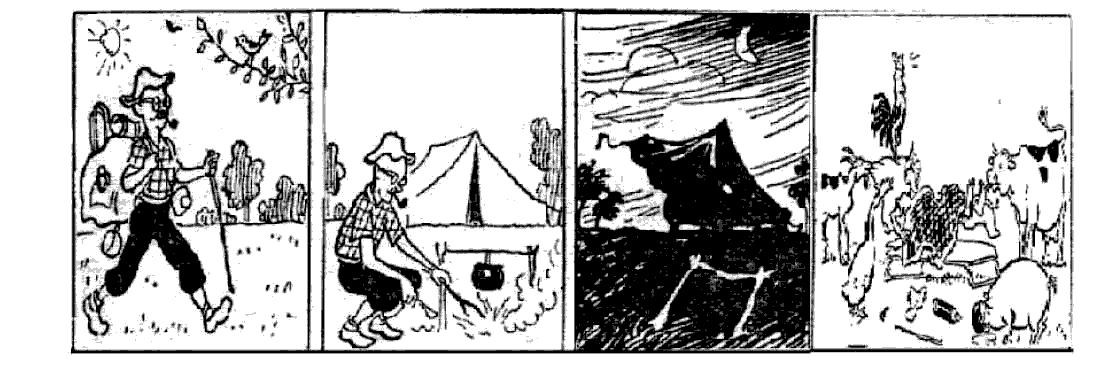
Mr. Smith loves sports. He often goes to different places to enjoy the beautiful countryside scenery.
On a 1.___________ Saturday afternoon, Mr. Smith went hiking in the country. He carried a backpack
on his back, with a 2._____________ in his hand. In the evening, he decided to stop for a rest. He
began to put up a 3. _____________ near a village. Then he made a 4. ______________ not far from
the tent and placed a pot over the fire to 5. _____________ something to eat. After supper, he spent the
night in the tent. Because he kept walking a whole day, he was very 6. _____________ and fell asleep
soon.
At mid-night the weather began to turn bad. A strong 7.______________ began to blow. At that time,
Mr. Smith was still 8.______________ heavily. The next morning, when he 9._____________ up, he
found 10._____________ lying in the open air. And to his surprise, there was a pig, a cow, a
goose, a sheep and a cock running around him!
People have used pigeons to carry messages to one another for hundreds of years. In the 12th century, the royal palaces of Iraq and Syria included pigeon houses so the kings could be kept informed of their generals’ victories and defeats on the battlefield. In fact, pigeons were a common way to send messages right up through World War II.
Many countries, such as the United States, England, France, Germany, and Italy, in both World War I and World War II, used carrier pigeons. Not only were the birds often the fastest, most reliable way to send messages, they could also be used to reach soldiers far behind enemy lines, where radios and field telephone lines were useless. Since they could easily be released (释放) from airplanes or ships, every branch of the armed services used the birds. In World War II, more than 3,000 soldiers and 150 officers were needed to care for and train the tens of thousands of birds in the U.S. Pigeon Service.
Carrying messages could be a dangerous job. Some pigeons performed with such bravery that they became famous and were even awarded medals, such as England’s Dicken Medal of Gallantry. In a few cases, pigeons even became prisoners of war. In 1918 American forces captured a pigeon named Kaiser, which had been trained to fly special missions for Germany during battle. He was taken to America, where he lived to the age of 32. The most famous pigeon of all may have been Cher Ami. Stationed in France during World War I, he carried twelve important messages for American forces. On his last mission, though wounded, he carried a message that saved the lives of 194 American soldiers. For his extraordinary service, he was awarded the French “Croix de Guerre.”
Carrier pigeons are a slightly different breed (品种) from the kind of pigeons you see on city streets. They are much thinner and taller, with longer legs. Many people find carrier pigeons ugly because of their big wattle, a bent buildup of skin on the beak(鸟嘴); however, people who raise pigeons often enjoy this strange appearance and consider carriers the best of their breed.
Today, modern communication methods can carry information from one place to another hundreds of times faster than a pigeon could do. However, few people would argue with the fact that carrier pigeons—especially those that served in the military—have earned their place in history. Stories about brave pigeons such as Cher Ami, President Wilson, and Colonel’s Lady have the power to inspire us as no fax machine or high-speed Internet connection could ever do.
小题1:Many countries used carrier pigeons in the war because_______.
| A.they could be believed in |
| B.they were easily raised |
| C.they could reach the enemy lines |
| D.they could hardly be found by airplanes |
| A.Carrier pigeons could fly to places where radios and telephone lines were useless. |
| B.For his extraordinary service, Cher Ami was awarded the French “Croix de Guerre”. |
| C.In World War II, more than 3,000 soldiers were needed to care for and train the pigeons. |
| D.In the 12th century, kings in Iraq were kept informed of the victories and defeats by pigeons. |
| A.how carrier pigeons developed in history |
| B.how to train carrier pigeons to get victory |
| C.carrier pigeons played an important role in the wars in the old days |
| D.pigeons inspired soldiers to fight before high-speed Internet invented |