题目内容
—______ you pass the examination on the first attempt?
—Of course. You know, I have been preparing for it for a long time.
|
A.Can |
B.May |
C.Shall |
D.Could |
A
【解析】略


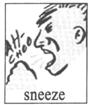 When you cough or sneeze, you’d better turn your head away from others and cover your mouth with the full part of your hand. And then, you should say, “Excuse me.”
This seems so simple, but it is surprising how many kids have never been told to do this. Actually, I notice adults all the time who cough and sneeze in public without placing a hand over the mouth. One important thing I point out to the kids is that after they sneeze or cough on their hands, they should wash their hands as soon as possible. If not, they will be passing those germs (细菌) a
 long to everyt
 hing and everyone they touch.
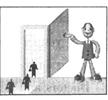
If you come to a door and someone is following you, hold the door. If the door opens by pulli ng, pull it open, stand to the side, and allow the other person to pass through first, then you can walk through. If the door opens by pushing, hold the door after you pass through.
After a few weeks of seeing kids try to get through doors in the school and watching them enter restaurants as the door hit other people, I knew I had to discuss the problem with my students. Teaching them small acts of kindness, such as letting someone else go through a door first as they hold it open, may seem unimportant, but it can go along way toward helping students realize hot to be polite and thank others. Once they’ve been told, they’re halfway there.
When we have to go up moving stairs, we will stand to the right. That will give others who are in a hurry a choice of walking up the left-hand side of the moving stairs. When we are going to enter a lift, the underground, or a doorway, we will wait for others to exit before we enter.
After college when I moved to London, I was surprised at how polite everyone was in the subways. I was even more touched when I traveled to Japan. In both places, people made efforts to make way for others. On moving stairs, everyone stood to the right and walked to the left. On lifts, everyone would stand over to the side and allow others to exit before they would begin to enter.
【小题1】When you cough or sneeze, you should ________.
| A.touch everything | B.cover your mouth |
| C.point out to the kids | D.pass the germs to others |
| A.hold the door | B.pass through | C.close the door | D.stand to the side |
A. doctor doctor | B.traveler | C.parent | D.teacher |
A. the rules of behavior in public B. the easy of communication
C. the acts of kindness among people D. the knowledge of social life
Imagine this situation. You pass a group of people. The people are talking to each other. You cannot hear what they are saying. But suddenly they start laughing. What would you think? Would you think they were laughing at something funny that one of them said? Or -- be honest with yourself -- would you think they were laughing at you? Yes, you.
Being laughed at is a common fear. But a major study published in two thousand and nine found that this fear is not the same around the world. It differs from culture to culture.
People in Finland were the least likely to believe that people laughing in their presence were making fun of them. Less than ten percent of Finns in the study said they would think that, compared to eighty percent of people in Thailand.
Some people in the study said they felt unsure of themselves in social situations but hid their feelings of insecurity. Others said they avoided social situations where they had been laughed at before.
The study found that people in Turkmenistan and Cambodia were more likely to be in the first group. They would hide their feelings of insecurity if they were around other people's laughter. But people in Iraq, Egypt and Jordan were more likely to try to avoid such situations if they felt they had been laughed at before.
Shy people often avoid situations that would force them into close contact with other people. They worry that something they say or do will make other people laugh at them. But some people worry much more than others. They may have a disorder called gelotophobia. Gelos is a Greek word. It means laughter. Phobia means fear. This fear of laughter can be truly sad for those who live with it. It can affect how they lead their lives.
In the study, a team from the University of Zurich led more than ninety researchers from around the world. They wanted to understand the difference between normal shyness and true gelotophobia. Another purpose of the study was to compare the levels of fear of being laughed at in different cultures. The researchers surveyed more than twenty-two thousand people in forty-two different languages. The findings appeared in the scientific journal Humor.
【小题1】People in Finland don’t believe other people are making fun of them if _________________.
| A.they suddenly start to laugh. |
| B.they keep on laughing |
| C.they laugh in their presence |
| D.they stop laughing suddenly. |
| A.They wanted to study the difference between normal shyness and true gelotophobia. |
| B.They wanted to compare the levels of fear of being laughed at in different cultures. |
| C.They did such a survey in order to prevent people from being laughed at in public. |
| D.They surveyed more than 22 thousand people coming from different cultures. |
| A.an advertisement | B.a science magazine |
| C.a science fiction | D.a storybook |
| A.care more about being laughed at by others |
| B.shouldn’t hide their feelings of insecurity |
| C.should avoid having close contact with other people |
| D.will lead a happy life so long as they care |