题目内容
B. hand out
C. work out
D. keep out

While I was waiting to go into university, I saw in a newspaper a teaching job wanted at a school about ten miles from where I 16 . Because I was in great need of 17 and wanted to do something useful, I applied(申请).
Three days later, a letter 18 . It asked me to see the 19 at Croydon. It proved to be a(n) 20 journey —a train to Croydon station, a ten-minute bus ride and then a walk of 21 a quarter of a mile. As a result I arrived there, feeling too hot to be nervous. Clearly, the principal 22 opened the door. He was 23 and round.
“The school” he said, “has a group of twenty-four boys between seven and thirteen.”
I should have to teach all the 24 except art, which he taught himself. I should have to divide the class into 25 groups and teach them at three different 26 , and I was not 27 at the thought of teaching maths —a subject which I didn’t do very well in at school. It was 28 that I had to teach them on Saturday afternoon 29 most of my friends would be 30 themselves at that time.
Before I had time to ask about my salary(薪水), he got up to his feet. “Now,” he said. “you’d better meet my wife. She is the one who really runs this school.”
| 【小题1】 |
|
| 【小题2】 |
|
| 【小题3】 |
|
| 【小题4】 |
|
| 【小题5】 |
|
| 【小题6】 |
|
| 【小题7】 |
|
| 【小题8】 |
|
| 【小题9】 |
|
| 【小题10】 |
|
| 【小题11】 |
|
| 【小题12】 |
|
| 【小题13】 |
|
| 【小题14】 |
|
| 【小题15】 |
|
|
broadcast1/'brɔ:dkɑ:st||ˈbrɔdˌkæst/n[C] a programme on the radio or on television: a radio news broadcast | live broadcast ( = a programme that you see or hear at the same time as the events are happening) broadcast2 v past tense and past participle, broadcast 1 [ I,T] to send out radio or television programmes: The interview was broadcast live across Europe. 2 [T] to tell something to a lot of people: There was no need to broadcast the fact that he lost his job. broadcaster /ˈbrɔːdkɑːstə || ˈbrɔːdkæstər/ n [C] |
curious/ ˈkjʊəriəs || 'kjur-/ adj 1 wanting to know about something: When I mentioned her name everyone was curious. | [ +about] I’m incurious about this book she's supposed to be writing. |curious to see/hear/know etc: Mandy was curious to hear what Peter had to say himself.—opposite INCURIOUS 2 strange or unusual: a curious noise coming from the cellar | curious that It's very curious that she left without saying goodbye. curl1 /kɜ:l|| kɚrl/ n 1[C] a small mass of hair |
|
flask / flɑ:sk || flæsk/n [C] I BrE a special type of bottle that you use to keep liquids either hot or cold, for example when travelling 2 a flat bottle usually used to carry alcohol 3 a glass bottle with a narrow top, used in a LABORATORY flat1/ flæt / adj flatter, flattest 1▶ SURFACE◀ smooth and level, without raised or hollow areas, and not sloping or curving: a flat-bottomed boat |a perfectly flat sandy beach | flat as a |
pollute / pə'lu:t/ v [T] 1 to make air, water, soil etc dangerously dirty and not suitable for people to use: beaches polluted by raw sewage | industrial emissions that pollute the air 2 pollute sb’s mind to give someone immoral thoughts and spoil their character: fears that Lawrence's novels would pollute young minds--polluted adj: polluted rivers--polluter n [C] pollution / pəˈlu:ʃn /n [U] 1 the process of making |
1.The pronunciation of the word "broadcast" is ____ or/ˈbrɔdˌkæst /.
A. /'brɔ:dkɑ:st/ B. /'brəud'sɑ:st/ C. /bræd'kɔst/ D. /'bru:dkɑ:st/
2.The word"____ "can be used as an adjective (形容词).
A. pollute B. pollution C. curious D. curiously
3.Which of the following is a flask?

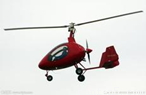

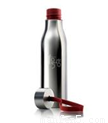
A. B. C. D.
4. The word "pollute" means "______".
A. to tell something to a lot of people B. wanting to know about something
C. a programme on the radio or on TV D. to make air. water, soil, etc dirty
5.These texts are probably from ______.
A. a magazine B. a dictionary
C. a newspaper D. an advertisement