题目内容
In the forest, there is an elephant and a monkey. They’re friends. But one day they want to know who is stronger(更强壮). One of them says, “Who can get apples over there, who is stronger. ”
There’s a river over there. The monkey says, “I can’t swim. ”The elephant says, “I can swim. Please sit on my back. ”They go across the river. The apple trees are very high. The elephant can’t reach(够着)the apples. The monkey climbs(爬)up the tree and gets many apples.
Now they know they should help each other.
1. The elephant and the monkey want to know______ .
A. who is smarter B. who is higher
C. who can swim D. who is stronger
2. ______ can’t swim.
A. The elephant B. The monkey
C. The big animals D. The small animals
3. ______ can’t reach the apples.
A. The elephant B. The monkey
C. The high animals D. The short animals
4. At last the monkey goes across the river with the help of______ .
A. the elephant B. the monkey
C. an animal D. a boat
5. From the story we know that______ .
A. we should learn from the elephant
B. we should learn from the monkey
C. A and B
D. we should help each other
DBAAD

 阅读快车系列答案
| 【小题1】 |
|
| 【小题2】 |
|
| 【小题3】 |
|
| 【小题4】 |
|
| 【小题5】 |
|
| 【小题6】 |
|
| 【小题7】 |
|
I noticed that the little boy was paying mostly with change(零钱). It seemed that he had robbed his pig bank(猪形储蓄罐) to do this shopping. However, the cashier told him he was short after counting all the money. The boy thought for a moment and said, “Please keep the shirt and I will come back with more money. “
It was clear that he had already used all the money he had and he was $ 8.00 short. The lady in front of me said, “Well, I could pay half of that. “I told the boy that I could pay the other half. We dug into our handbags. However, both of us only had ten-dollar bills(纸币) and we needed the cashier to get the change for us. Other shoppers began digging into their pockets to find some change. It was amazing and touching(令人感动的) as all these strangers seemed to react(反应) with the same mind. All wanted to be of help. Within minutes the cashier said, “I have too much money.” The cashier didn’t need our ten-dollar bills. Then the lady in front of me, who had been the first to offer help, said, “Wait! I didn’t even get a chance to give anything!”
I smiled at her and said, “You did your share, because it was your idea and you started all this. “ The little boy smiled and thanked us. We wished him the best and he left. I was left with a good feeling. I had seen the love and goodness of others all around me. The woman in front of me smiled and said, “It sure feels good to give, doesn’t it?” I smiled back and said, “Yes !”
【小题1】What is this passage mainly about?
| A.Love and goodness. | B.Culture and tradition. |
| C.Friendship and honesty. | D.Communication and understanding. |
| A.Because the boy had saved some money. |
| B.Because they both didn’t need to give anything. |
| C.Because the cashier didn’t look down on the boy. |
| D.Because all the shoppers around were willing to help the boy. |
a. The cashier got enough money for the boy’s shirt.
b. The cashier counted the boy’s money.
c. The shoppers looked for some change in their pockets.
d. The boy went to the line to pay.
| A.b, a, c, d | B.b, c, a, d | C.d, b, c, a | D.d, c, a, b |
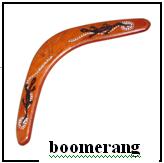 The Aborigines (澳洲土著) have lived in Australia for about 60,000 years. They painted pictures inside caves, and these are the rock paintings that have given us so much information about Aboriginal life. For example, some of the paintings that are about 10,000 years old show men with boomerangs. From this we know that the Aborigines started using boomerangs for hunting at that time. Other pictures show kangaroos, so we know that there were kangaroos at that time.
The Aborigines believed that spirits made people, animals and plants, and that these spirits still live in the earth. For Aborigines, no one can own the earth—the earth belongs to the spirits.
In 1700, there were many Aboriginal groups with a population of 750,000 all over Australia, and there were probably more than 240 different Aboriginal languages. The groups did not have a leader. Instead, things were decided by the older men in a group. People from different groups often travelled hundreds of miles to meet each other.
Aboriginal life changed when an English boat arrived in Australia in 1770. Many Aborigines were killed in the wars that they had with the English. More Europeans came, and they started taking land from the Aborigines. The Europeans also brought new illnesses that killed the Aborigines. The result is that today there are only about 300,000 Aborigines in Australia.
【小题1】The Aborigines painted pictures .
| A.on animals’ fur | B.on the land |
| C.on the tree | D.on the rock |
| A.To paint. | B.To hunt. | C.To fight. | D.To play. |
| A.people | B.animals | C.spirits | D.plants |
| A.the older men | B.the leader |
| C.the English | D.the Europeans |
| A.because their living condition was very bad |
| B.because the English killed a lot of them in the wars |
| C.because of the new illnesses the Europeans brought them |
| D.because of the wars and the new illnesses |
Animals grow up in different ways. They have lots of lessons to learn.
Some animals are born helpless but their mothers protect them. A newborn kangaroo is the size of a bee. She stays in her mother’s safe pouch. She doesn’t open her eyes for at least five months. A newborn monkey cannot walk. He is carried by his mother.
Other baby animals can walk soon after they’re born. They learn to run with their mother when danger is near. A baby zebra(斑马)can run an hour after she is born.
Some baby animals are born in a place that is safe. Other baby animals are born in the open. Baby wolves are born in large holes. A baby elephant is born on open, grassy land. Other elephants make a circle(圈)to protect her.
Animals that drink their mothers’ milk are called mammals. A mother bear’s milk is fatty and rich. Baby bears need lots of fat to keep warm in winter. They have milk for six months. Baby zebras drink milk for six months or more! As baby animals grow they need solid(固体的)food. Baby lions eat what their mother can catch.
【小题1】Which baby animals don’t open their eyes for at least five months?
| A.Lions. | B.Zebras. | C.Kangaroos. | D.Elephants. |
| A.Drink milk. | B.Walk by herself. |
| C.Run with her mother. | D.Make a circle to protect herself. |
| A.Baby wolves are born in the open. |
| B.Newborn lions only eat solid food. |
| C.Newborn monkeys can walk but can’t jump. |
| D.Baby bears need lots of fat to keep warm in winter. |
“Start out at that end,” she said. “Just go along the line and 45 what you want. At the other end they’ll tell you how much you have to pay.”
“I soon learned that’s how everything works in the US,” the old man later told a friend. “ 46 is a cafeteria here. You can get anything you want 47 you are willing(自愿的) to pay the price. You can even get success, but you’ll never get it if you wait for someone to 48 it to you. You have to get up and get it yourself.”
49 , life everywhere is like a cafeteria. Don’t wait for things to happen to you. Success lies in your own 50 .
| 【小题1】 |
|
| 【小题2】 |
|
| 【小题3】 |
|
| 【小题4】 |
|
| 【小题5】 |
|
| 【小题6】 |
|
| 【小题7】 |
|
| 【小题8】 |
|