题目内容
看图写话:根据图示和提示词,写出恰当的句子,每图一句(每小题2分,计8分)
要求:1、使用全部的提示词;2、写出完整的句式结构。
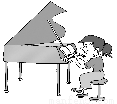
1.be weak in
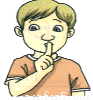
2.tell, not
3.fly, next month

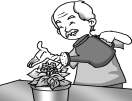
4.water, by
1.The girl is weak in playing the piano.
2.Tell him not to talk loudly.
3.We are flying to Canada next month.
4.The flowers are watered by grandpa every day.
【解析】
试题分析:
1.句意:这个小女孩在弹钢琴方面很差。根据句意,故填The girl is weak in playing the piano.
2.句意:告诉他不要大声地说话。故填Tell him not to talk loudly.
3.句意:我们下个月要飞往加拿大。根据句意,故填We are flying to Canada next month.
4.花每天被祖父浇。根据句意,故应该填The flowers are watered by grandpa every day.
考点:看图写话。
考点分析: 考点1:看图写话 看图说话:这是常见的考试题型之一。一般主要有两种形式:给出提示词语,只给图画不给提示词。这种题型的解题要点在于:
(1)弄清图画内容,把握情节线索,根据图画在脑海中串联出完整的故事,注意图画中的细节。
(2)结合提示词,明确考查意图。所给提示词可帮助理解画面内容,也是组成句子的必用材料。有时还会给出起始句(这就给出了时态),学生运用正确的时态,运用所给或所学的词语,尽量运用熟悉的句型,作适当展开,联想,就能比较完整地表达出画面的意思了。
(3)切忌堆砌词语,句子,注意运用适当的连词使句子流畅,连贯。
(4)注意书写的规范:大小写,标点符号等的正确运用。
(5)注意检查:单词拼写,语法,动词时态,语序,主谓一致等。
试题属性
- 题型:
- 难度:
- 考核:
- 年级:

 每课必练系列答案
“Vocabulary” means the words of a language. To learn vocabulary, you need to check four things.
Spelling To learn a word, you need to how to spell it. You can try the LCWC(look, cover, write, check)method(方法). First, look at the word and read it out loud. Next, cover the word so it can’t be seen. Then, write the word down. Finally, uncover the word and check if you’ve spelt it correctly. |
Pronunciation How do you pronunciation a word? Do you pronounce it the same way as you spell it? If so, you may pronounce it wrong. For example, the pronunciation of “ough” is different in each of these words: “through”, “bough” and “rough”. You also need to know where the stress(the strong sound) is in a word. |
Meaning You need to keep in mind that words often have more than one meaning in English. Take the word “dust” for example. If you dust the bedroom, you are removing the dust. The first “dust” is a verb meaning “to clean”; the second “dust” is a noun meaning “the things being cleaned away”. |
Use How do you use a word? D o you know if it is formal? Do you know what other words it can use with and when? An example is “ yours”. You can use it to show possession(拥有), as in “ This book is yours.” And you can also use it at the end of a less formal letter, e.g. “ Yours, Peter Brown.” At the end of a formal letter you can use it with “Sincerely”, though generally in America the use is “Sincerely yours,” and in the UK, it is “Yours sincerely”. |
根据以上信息,选择最佳答案。
1.Which of the following shows the right order of the LCWC method?
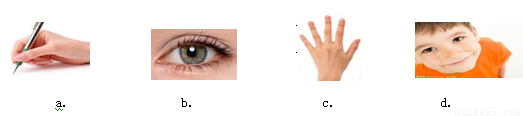
A. c→b→d→a B. d→b→c→a
C. b→c→a→d D.a→b→d→c
2.What can we learn from the part “Pronunciation”?
A. We should pronounce a word the same way as we spell it.
B. We need to know the stress when we pronounce a word.
C. “Ough” has the same pronunciation in “through” and “rough”.
D. We don’t need to know the stress when we pronounce a word .
3.The underlined word “removing” means “__________” in Chinese.
A. 回收 B. 搬家 C. 抛洒 D. 去除
4.Englishmen like to use “___________” at the end of a formal letter.
A. Your B. Yours sincerely
C. Sincerely yours D. Yours
5.From the passage, we know that ____________.
A. how to learn vocabulary
B. the importance of learning vocabulary.
C. why we like English
D. why we learn English