网址:http://m.1010jiajiao.com/timu3_id_3141843[举报]
.
Part Ⅰ starts with a brief introductory chapter and then takes up Style and Organization, covering them in that order because skill or lack of skill in style affects all writing, while much technical writing is so short as to offer no problems of organization. These chapters are followed by one on Mechanics, covering matters of form that are peculiar(独有) to technical writing or else crop up in it with abnormal frequency.
The chapter on Special Problems, which follows, performs a double function. It provides writing assignments that may be used while the study of style, organization, and mechanics is still under way, and it explains ways of handling certain problems that may arise during the writing of reports, proposals, and other longer forms. We have also expanded the treatment of technical articles — recognizing the potential contribution of article writing to the career of the writer and the value of the article to science and technology.
In Part Ⅱ, a change of emphasis at one point is reflected in the new title for Chapter 8, Nonformal Reports — Their Variation in Form and Purpose, which was formerly called Special Types of Reports. Though certain special types of reports are still discussed, additional emphasis is given to the fact that there does not exist any universally accepted set of types, under which all reports can be classified.
Two other extensive changes have been made in Part Ⅱ: The chapter on Proposals, which first appeared in the second edition, has been rewritten and substantially expanded so as to cover that important subject more thoroughly. Also, an entirely new chapter, Oral Presentation of Technical Information, has been added. Though a study of this chapter is no substitute for training in public speaking, we believe that its recommendations can nevertheless be of substantial assistance to those who use this book on the numerous occasions when they will be called upon to present their ideas in person before a small group or a large audience.
?1.The passage is most probably a preface to ____.
?A. a technical writing handbook B. a handbook on composition
?C. a book on a literary writing D. a scientific paper
2. In Part I, the writer arranges the chapters in the order of ____.
? A. Introduction—Organization—Special Problems—Style—Nonformal Reports
? B. Introduction—Style—Organization—Special Types of Reports—Mechanics
? C. Introduction—Style—Organization—Mechanics—Special Problems
? D. Introduction—Style—Proposals—Special Problems—Mechanics
?3.You can find some writing exercises in ____.
? A. the chapter on Organization B. the chapter on Style
? C. the chapter on Special Problems D. the chapter on Proposals
?4. According to the passage, the chapter on Oral Presentation of Technical Information appears in ____ of the book.
? A. Part Ⅰ of the first edition
? B. Part Ⅱ of the second edition
? C. Part Ⅰ of the second edition
? D. Part Ⅱ of the third edition
?5. Which of the following is not true of Part Ⅱ of the new edition?
? A. There isn’t the chapter on Special Types of Reports.
? B. The chapter on Oral Presentation of Technical Information is rewritten and expanded.
? C. The chapter on Proposals is a revised chapter.
? D. There is a change of the title of Chapter 8.
All plant cells are capable of taking up(吸收)water. Even dead ones do to a certain degree. Absorption(吸收)of water by dead cell walls makes wood become larger.
In common land plants, the living cells of roots take upmost of the water. Land plants without roots do exist, however. Those greenish-yellow lichens(苔藓)you see on rocks in the high mountains have no roots. Half a billion years ago, when water plants started to enter the land, the first land plants did not have roots.
Even among the flowering plants, one finds rootless forms. These flowering plants are “the higher plants” because they evolved(进化)recently and are thus considered higher on the evolutionary scale(进化度).
In the Peruvian desert, there grows one of these rootless higher plants, a bromeliad. It is a relative of the pineapple. Even if this plant had roots, they would be of no use, because where the plant grows, it never rains. The plant gets its water only from the dew(露水)it collects at night, when its leaves cool off. Such rootless plants, of course, can be moved with ease, but they will only grow when they are placed out in the open. If they are placed too near a house, the radiation from the heat of the house prevents the leaves from cooling and so prevents dew from forming, and the plant dies.
In the southern United States and in Puerto Rico, one sees bromeliads growing high above the streets on the insulation(绝缘物)of electric wires. These plants get their water from rain, and the only soil they ever come in contact with is the dust that may blow on their leaves.
1.Wood becomes larger because of .
A.dead cell walls B.water entering dead cells
C.the growth of cells D.the death of cells
2.From the passage we know that the evolutionary scale is graded according to .
A.evolutionary cycles B.heights and depths
C.time D.kinds
3.The “bromeliad” is a plant that .
A.has no roots B.is a pineapple
C.can grow anywhere D.takes up water through its leaves
4.The most suitable title for this passage is “ ”.
A.Absorption of water by plants B.Rootless plants in America
C.Plants in the desert D.Higher plants
查看习题详情和答案>>
第三部分阅读(共两节,满分40分)
第一节:阅读理解(共15小题;每小题2分,满分30分)
阅读下列短文,从每题所给的四个选项(A、B、C和D)中,选出最佳选项。
(A)
In 2008, the main candidates(候选人)for President each used this expression: “You can put lipstick(口红)on a pig, but it is still a pig.” This means that it is a waste of time to change something from ugly or unpleasant–looking to beautiful.
There are other expressions about improving a pig’s appearance, like this one: “A hog in a silk waistcoat is still a hog.” Hogs are similar to pigs, only bigger. Americans use many other expressions about pigs, hogs and female hogs called sows, like this one, “You cannot make a silk purse out of a sow’s ear.” This means you cannot create something valuable from something that has no value. Then there is the expression “Cast pearls before swine(猪).” That means wasting something valuable on someone who will not be thankful or care about it.
Hogs, which are very large animals, take up a lot of space but people should not take up more than their share. If one of your children is taking up too much space sitting in front of the television, other children might say: “Do not hog the couch.” And a road hog is a driver who uses more than his share of the road. Such a driver increases dangers for other drivers.
Pig terms are also used in American politics. Farmers mark their pig’s ears to identify them. In politics, earmarks are money set aside for projects in a congressman’s home state.
In many areas, pigs provide ham, bacon and other pork products to eat. All Americans want to be able to bring home the bacon because they want to earn enough money to provide the necessities of life. Experts say this term was first used in the 1920s. But it is believed to come from the much older game of catching a greased(涂了油的)pig. This was a popular event at country fairs in which the winner was awarded the pig.
41. The author writes this passage mainly to _________.
A. express his support for the Presidential Election
B. introduce some expressions used in Americans’ daily life
C. criticize the bad influence caused by expressions about pigs
D. discuss some problems caused by expressions about pigs
42. If you give a good book to a person who can’t read, which of the following is the most suitable to describe it?
A. Cast pearls before swine.
B. You can put lipstick on a pig, but it is still a pig.
C. A hog in a silk waistcoat is still a hog.
D. You cannot make a silk purse out of a sow’s ear.
43. A driver who takes up too much space on the road is often referred to as _________.
A. a greased pig B. a couch hog
C. a road hog D. a road earmark
44. How many words which refer to the same animal are mentioned in this passage?
A. Three B. Four C. Five D. Six
45. Which of the following expressions are similar to “You cannot make a silk purse out of a sow’s ear.”?
A. When pigs fly! B. To eat like a pig
C. To sell a pig in a pork. D. To sweat like a pig.
查看习题详情和答案>>
The passengers on the bus watched sympathetically as the attractive young woman with the white cane made her way carefully up the steps. She 1 the driver and, using her hands to feel the 2 of the seats, walked down and found the 3 which the driver had told her was empty. Then she settled in.
It had been a year since Susan, 34, 4 a medical misdiagnosis (误诊), was suddenly thrown into a world of 5 . Mark, her husband, was an Air Force officer and he loved Susan with all his heart. He 6 her how to rely on her other 7 , specifically her hearing, to determine where she was and 8 to adapt herself to the new environment. He helped her befriend the bus drivers who could 9 for her, and save her a seat.
10 , Susan decided that she was ready to try the 11 on her own. Monday morning, she said good-bye and for the first time, they went their 12 ways.
On Friday morning, Susan took the bus to work as usual. As she was 13 the bus, the driver said, “Boy, I 14 envy you.” Susan had no 15 what the driver was talking about, and asked, “What do you 16 ?”
The driver answered, “You know, every morning for the 17 week, a fine-looking gentleman 18 a military uniform has been standing across the corner 19 you as you get off the bus. He 20 you cross the street safely and he watches until you enter your office building. You are one lucky lady.”
Tears of gratitude poured down Susan’s cheeks.
1. A. thanked B. asked C. discovered D. paid
2. A. location B. shape C. size D. cost
3. A. ticket B. bus C. seat D. bag
4. A. according to B. instead of C. thanks to D. due to
5. A. anger B. darkness C. happiness D. light
6. A. asked B. encouraged C. taught D. praised
7. A. feelings B. sights C. senses D. abilities
8. A. how B. when C. where D. who
9. A. make out B. watch out C. find out D. work out
10. A. Finally B. Luckily C. However D. Besides
11. A. visit B. trip C. bus D. work
12. A. opposite B. separate C. difficult D. usual
13. A. getting on B. getting in C. getting off D. getting up
14. A. must B. may C. will D. do
15. A. idea B. opinion C. way D. thought
16. A. want B. mean C. say D. suggest
17. A. next B. old C. past D. following
18. A. by B. on C. with D. in
19. A. searching B. watching C. calling D. noticing
20. A. looks out B. takes up C. believes in D. makes sure
查看习题详情和答案>>阅读下列应用文及相关信息,并按照要求匹配信息。请在答题卡上将对应题号的相应选项字母涂黑。下面是几部荣获奥斯卡奖的著名电影,首先请阅读它们的海报信息:
A. 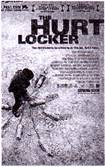 The
Hurt Locker
The
Hurt Locker
US Army ordnance disposal teams disarm improvised
explosive device (IED)placed by Iraqi guerrilla fighters. B. 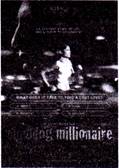 Slumdog
Millionaire
Slumdog
Millionaire
TV game—show success fuels one man’s escape from poverty in this Bollywood-tinged romantic drama.
C. 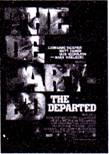 The
Departed
The
Departed
A policeman and a criminal go undercover and
infiltrate(渗透) each Other’s worlds in this crime
thriller. D. 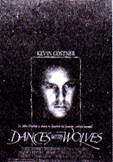 Dances
With Wolves
Dances
With Wolves
A nineteenth—century soldier learns to respect and then love the Lakota(拉科他族人) way of life
E. 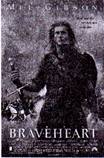 Brave
heart
Brave
heart
Thirteenth—century Scot Sir William Wallace takes up
the sword to defend his people against the English. F. 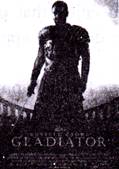 Gladiator
A slave in ancient Rome finds dignity and a reason to live in gladiatorial combat.
下面是对这几部影片的简要介绍,请把它们对应的海报找出来:
1.Sergeant First Class William James,a battle.tested veteran,arrives as a new team leader in Bravo company of a U.S. Army Explosive Ordnance Disposal (E.O.D.) unit to disarm improvised explosive device in Iraq in 2004,replacing Staff Sergeant Matthew Thompson, who is killed by a radio—controlled improvised explosive device in Baghdad.
2.In AD 180,the dying Roman emperor wishes to grant temporary leadership to Maximus, but was killed by his son,Commodus, Maximus realizes the truth,but unfortunately, he is taken to Zucchabar, a Roman city in North Africa,by slave traders。There,he iS bought by Proximo, and forced to fight for his life as a gladiator in arena tournaments.
3.In the 13th century,after several years of political unrest,Scotland is invaded and conquered by King Edward I of England.Young witnesses the treachery of Longshanks, survives the death of his father and brother.Twenty or so years later, he led the people to fight against the English army, but finally he was killed.1eaving a shout“Freedom!”
4.In Mumbai,India,eighteen-year-old Jamal Malik, a former street child from the Juhu slum, is a contestant on the TV show of Who Wants to Be a Millionaire.and is one question away from the grand prize.However,he is detained and interrogated by the police,who suspect him of cheating because of the impossibility of a simple“slumdog”knowing all the answers.Jamal recounts the incidents in his life which provided him with each answer.
5.Colin is introduced to organized crime by Irish mobster Costello.Costello trains him to become a mole inside the Massachusetts State Police.Colin is accepted into the Special Investigations Unit,which focuses on organized crime.Before Billy graduates from the police academy,he is asked by Captain Queenan to go undercover, as his family ties to organized crime make him a perfect infiltrator.
查看习题详情和答案>>