网址:http://m.1010jiajiao.com/timu3_id_3051340[举报]
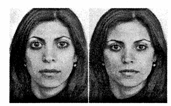
Is the woman pictured on the right more attractive than the woman on the left?
The photograph on the right was changed using a new "beauty making" computer program, which uses a mathematical formula involving 234 measurements of distances between facial features to get a theoretically more attractive version, while keeping the basic appearance of the face unchanged. Unlike changes done in fashion magazine photos, wrinkles were not smoothed and hair color was not changed.
The program is the latest attempt to combine beauty and science, a subject that has drawn increasing academic interest in the last decade.
Studies have shown there is surprising agreement among people of different cultures about what makes a face attractive. Most important is symmetry (匀称), along with youthfulness, skin smoothness and vivid eyes and hair color. Yet, like the many other scientific or mathematical attempts to define beauty, this software program raises complex and difficult questions about the understanding of beauty.
"How can they prove something is more or less beautiful?" said Lois Banner, a history professor at
After viewing "before" and "after" photographs of different people, Banner said the original faces were more attractive. "Irregular beauty is the real beauty," said Banner, adding that attempts to measure beauty are driven by the media’s efforts to define beauty and who is beautiful.
Martina Eckstut, the woman whose photo was beautified for this article, said she was struck by how different she looked. "I think the “after” picture looks great, but it doesn’t really look like me at all." She added, "I would like to keep my original face."
For centuries people have tried to define a universal ideal of beauty. "The first reaction we have to faces will be based on face symmetry." said Alexander Nehamas, a professor who has written about beauty. "But in real life we don’t just see a face. We see faces as people express their emotions and ideas, and all those aspects of the face are essential to our deciding whether a face or a person is beautiful."
46. How does the program work to beautify a face?
A. It changes the distances between facial features.
B. It smoothes the skin and softens the color of the hair.
C. It digitally repairs some obvious facial faults.
D. It replaces the original face with a similar one.
47. Banner believes that .
A. there is no such thing as beauty
B. efforts to develop a beauty measure should be encouraged
C. the media is to blame for the failure to agree on beauty standards
D. it is impossible to show that one thing is more beautiful than another
48. When seeing the "after" picture, Martina Eckstut was .
A. pleasantly surprised but thought she could look even better
B. eager to get her face changed although it didn’t look like her at all
C. amazed by the attractiveness but preferred not to have a different face
D. confused by how different she looked and had no idea what to do
49. According to the passage, which of the following statements is TRUE?
A. Beauty is mainly based on face symmetry.
B. There is no single standard or definition of beauty.
C. The program is likely to encourage people to change their appearance.
D. Mathematics should be used to help us create beauty.
50. The purpose of the passage is to .
A. oppose the attempts to create artificial beauty
B. introduce a beauty program and a discussion about beauty
C. discuss what makes a person beautiful
D. show how a beauty engine can beautify a person
查看习题详情和答案>>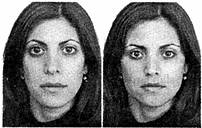
Is the woman pictured on the right more attractive than the woman on the left?
The photograph on the right was changed using a new “beauty making” computer program, which uses a mathematical formula involving 234 measurements of distances between facial features to get a theoretically more attractive version, while keeping the basic appearance of the face unchanged. Unlike changes done in fashion magazine photos, wrinkles were not smoothed and hair color was not hanged.
The program is the latest attempt to combine beauty and science, a subject that has drawn increasing academic interest in the last decade.
|
“How can they prove something is more or less beautiful?” said Lois Banner, a history professor at Chicago University, who studies changing beauty standards. “There can never be a single standard of beauty because so much of it is culturally influenced.”
After viewing “before” and “after” photographs of different people, Banner said the original faces were more attractive. “Irregular beauty is the real beauty,” said Banner, adding that attempts to measure beauty are driven by the media’s efforts to define beauty and who is beautiful.
Martina Eckstut, the woman whose photo was beautified for this article, said the was struck by how different she looked. “I think the ‘after’ picture looks great, but it doesn’t really look like me at all.” She added, “I would like to keep my original face.”
For centuries people have tried to define a universal ideal of beauty. “The first reaction we have to faces will be based on face symmetry.” said Alexander Nehamas, a professor who has written about beauty. “But in real life we don’t just see a face. We see faces as people express their emotions and ideas, and all those aspects of the face are essential to our deciding whether a face or a person is beautiful.”
1.How does the program work to beautify a face?
A.It changes the distances between facial features.
B.It smoothes the skin and softens the color of the hair.
C.It digitally repairs some obvious facial faults.
D.It replaces the original face with a similar one.
2.Banner believes that .
A.there is no such thing as beauty
B.efforts to develop a beauty measure should be encouraged
C.the media is to blame for the failure to agree on beauty standards
D.it is impossible to show that one thing is more beautiful than another
3.When seeing the “after” picture, Martina Eckstut was .
A.pleasantly surprised but though she could look even better
B.eager to get her face changed although it didn’t look like her at all
C.amazed by the attractiveness but preferred not to have a different face
D.confused by how different she looked and had no idea what to do
4.According to the passage, which of the following statements is TRUE?
A.Beauty is mainly based on face symmetry.
B.There is no single standard or definition of beauty.
C.The program is likely to encourage people to change their appearance.
D.Mathematics should be used to help us create beauty.
5.The purpose of the passage is to .
A.oppose the attempts to create artificial beauty
B.introduce a beauty program and a discussion about beauty
C.discuss what makes a person beautiful
D.show how a beauty engine can beautify a person
查看习题详情和答案>>Is the woman pictured on the right more attractive than the woman on the left??
The photograph on the right was changed using a new "beauty making" computer program, which uses a mathematical formula involving 234 measurements of distances between facial features to get a theoretically more attractive version, while keeping the basic appearance of the face unchanged. Unlike changes done in fashion magazine photos, wrinkles were not smoothed and hair color was not changed.?
The program is the latest attempt to combine beauty and science, a subject that has drawn increasing academic interest in the last decade.?
Studies have shown there is surprising agreement among people of different cultures about what makes a face attractive. Most important is symmetry (匀称), along with youthfulness, skin smoothness and vivid eyes and hair color. Yet, like the many other scientific or mathematical attempts to define beauty, this software program raises complex and difficult questions about the understanding of beauty.?
"How can they prove something is more or less beautiful?" said Lois Banner, a history professor at Chicago University, who studies changing beauty standards. "There can never be a single standard of beauty because so much of it is culturally influenced."?
After viewing "before" and "after" photographs of different people, Banner said the original faces were more attractive. "Irregular beauty is the real beauty," said Banner, adding that attempts to measure beauty are driven by the media’s efforts to define beauty and who is beautiful.?
Martina Eckstut, the woman whose photo was beautified for this article, said she was struck by how different she looked. "I think the “after” picture looks great, but it doesn’t really look like me at all." She added, "I would like to keep my original face."?
For centuries people have tried to define a universal ideal of beauty. "The first reaction we have to faces will be based on face symmetry." said Alexander Nehamas, a professor who has written about beauty. "But in real life we don’t just see a face. We see faces as people express their emotions and ideas, and all those aspects of the face are essential to our deciding whether a face or a person is beautiful."?
1. How does the program work to beautify a face??
A. It changes the distances between facial features.?
B. It smoothes the skin and softens the color of the hair.?
C. It digitally repairs some obvious facial faults.?
D. It replaces the original face with a similar one. ?
2. Banner believes that .?
A. there is no such thing as beauty?
B. efforts to develop a beauty measure should be encouraged?
C. the media is to blame for the failure to agree on beauty standards?
D. it is impossible to show that one thing is more beautiful than another ?
3. When seeing the "after" picture, Martina Eckstut was .
A. pleasantly surprised but thought she could look even better?
B. eager to get her face changed although it didn’t look like her at all?
C. amazed by the attractiveness but preferred not to have a different face?
D. confused by how different she looked and had no idea what to do
4. According to the passage, which of the following statements is TRUE??
A. Beauty is mainly based on face symmetry.?
B. There is no single standard or definition of beauty.?
C. The program is likely to encourage people to change their appearance.?
D. Mathematics should be used to help us create beauty. ?
5. The purpose of the passage is to .?
A. oppose the attempts to create artificial beauty?
B. introduce a beauty program and a discussion about beauty?
C. discuss what makes a person beautiful?
D. show how a beauty engine can beautify a person
查看习题详情和答案>>
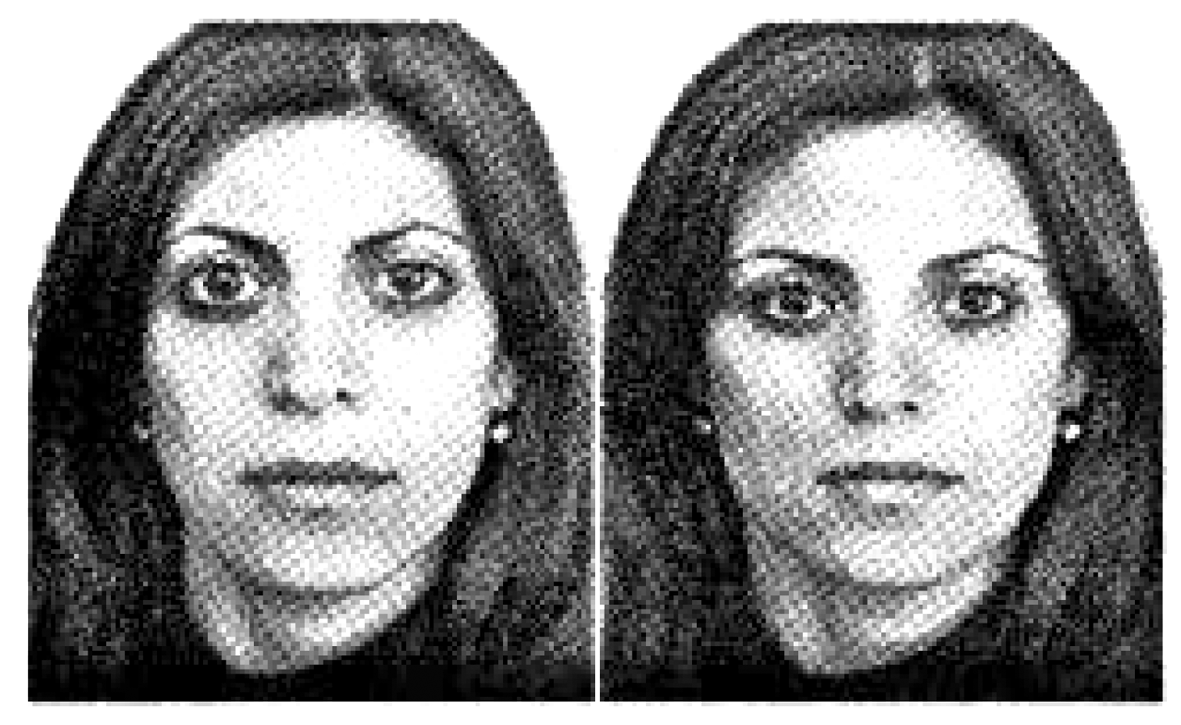
Is the woman pictured on the right more attractive than the woman on the left?
The photograph on the right was changed using a new "beauty making" computer program, which
uses a mathematical formula involving 234 measurements of distances between facial features to get a
theoretically more attractive version, while keeping the basic appearance of the face unchanged. Unlike
changes done in fashion magazine photos, wrinkles were not smoothed and hair color was not changed.
The program is the latest attempt to combine beauty and science, a subject that has drawn increasing
academic interest in the last decade.
Studies have shown there is surprising agreement among people of different cultures about what
makes a face attractive. Most important is symmetry (匀称), along with youthfulness, skin smoothness
and vivid eyes and hair color. Yet, like the many other scientific or mathematical attempts to define
beauty, this software program raises complex and difficult questions about the understanding of beauty.
"How can they prove something is more or less beautiful?" said Lois Banner, a history professor at
Chicago University, who studies changing beauty standards. "There can never be a single standard of
beauty because so much of it is culturally influenced."
After viewing "before" and "after" photographs of different people, Banner said the original faces
were more attractive. "Irregular beauty is the real beauty," said Banner, adding that attempts to measure
beauty are driven by the media's efforts to define beauty and who is beautiful.
Martina Eckstut, the woman whose photo was beautified for this article, said she was struck by how
different she looked. "I think the 'after' picture looks great, but it doesn't really look like me at all." She
added, "I would like to keep my original face."
For centuries people have tried to define a universal ideal of beauty. "The first reaction we have to
faces will be based on face symmetry." said Alexander Nehamas, a professor who has written about
beauty. "But in real life we don't just see a face. We see faces as people express their emotions and
ideas, and all those aspects of the face are essential to our deciding whether a face or a person is
beautiful."
B. It smoothes the skin and softens the color of the hair.
C. It repairs imperfect facial appearance by using a mathematical formula.
D. It replaces the original face with a similar one.
B. irregular beauty is more attractive than symmetrical beauty in every culture
C. the media is to blame for measuring beauty
D. it is impossible to show that one thing is more beautiful than another
B. prefer to get her face changed although it didn't look like her at all
C. amazed by the attractiveness but refused to change her face in reality
D. confused by how different she looked and had no idea what to do
B. There is no single standard or definition of beauty.
C. People of different cultures can hardly reach any agreement on beauty.
D. Science should be used to help us create beauty.
B. introduce a beauty program and a discussion about beauty
C. discuss what makes a person beautiful
D. to encourage people to change their appearance
A disheveled (头发凌乱的) man appeared in court Thursday on charges of murdering a Chinese woman whose fight with her attacker was seen on webcam(摄像头) by her boyfriend in China. Police refused to release any details about the crime or its possible motive.
The body of York University student Liu Qian, 23, of Beijing, was found Friday in her apartment in Toronto a few hours after her boyfriend witnessed the attack, police said.
She was found undressed from the waist down but there were no obvious signs of sexual attack or trauma (创伤) severe enough to kill her. Police say it may be weeks before the results of an autopsy (尸体解剖) are known.
Brian Dickson, 29, stood before the court in a wrinkled white shirt and blue jeans as a charge of first- degree murder was read out. He did not enter a plea. His case was held over until April 26.
Dickson was arrested Wednesday. Police only announced his name and his age and asked the media not to publish any photos of Dickson, saying it could compromise the investigation. Toronto police spokesman Tony Vella declined to respond to the request further.
Liu’s father, Liu Jianhui, who arrived from China after being informed of his daughter’s death, thanked authorities for their quick action.
“I sincerely thank the people concerned with my daughter’s case,” he told reporters after the arrest. “Our daughter was studying very hard.”
Police released no motive or details about Dickson, but one friend described the Toronto man as an aspiring actor.
Patricia Tomasi, a friend of Dickson’s, told The Associated Press that she acted in a play at a local theater in Toronto with Dickson in 2007.
“He doesn’t seem like the type but that’s what they always say,” Tomasi said. “He’s tall with boyish good looks. I don’t know much about him except that he wanted to be an actor.”
Dickson attended York University where he studied global politics, but did not earn a degree from there.
He later worked for the Atlantic Council of Canada (ACC), where he served as an assistant to the president Juilie Lindhout. According to his biography on a newsletter from the Atlantic Council of Canada, Dickson has also been a running instructor and has been involved with Developments in Literacy, a Pakistani aid organization that raises money for children in Pakistan.
A statement from the Atlantic Council of Canada on Thursday said it was not council policy to comment on staff, but it confirmed that Dickson had been an intern(实习生) with the council from September 29, 2008, until March 27, 2009.
Liu was chatting with her boyfriend, Meng Xianchao, by webcam at about 1 am. Friday when a man knocked on the door, police said.
Meng reported seeing a struggle break out between the two before Liu’s webcam was shut off. Meng contacted other friends in Toronto who in turn called police.
The victim’s father, Liu Jianhui, said his daughter studied at Beijing City University before moving to Canada, where she met Meng.
Liu Qian’s laptop computer, webcam and mobile phone were taken from the apartment the night of the attack, police said. Police said the online chat was on a live streaming camera and was not recorded, though investigators were trying to figure out if there was any way they could recover it.
York University, whose campus is located near one of Toronto’s rougher neighborhoods, is one of Canada’s largest universities with more than 53,000 undergraduate and graduate students. About 3,200 of York’s students come from more than 150 foreign countries, the university’s website says.
【小题1】Which of the following statements is NOT true according to the passage?
| A.York University students come from over 150 foreign countries. |
| B.Dickson was a graduate of York University where he studied global politics. |
| C.The passage does not mention the reason why Dickson murdered Liu Qian. |
| D.ACC wouldn’t make any comments on staff even if they committed a crime. |
| A.a successful actor | B.a gifted actor |
| C.a common actor | D.an ambitious actor |
| A.Worrying about bad influences on the investigation. |
| B.Not intending to give out any information about Dickson. |
| C.Not confirming whether Dickson had killed Liu Qian. |
| D.Wanting to protect their citizen for fear of losing face. |
| A.Developments in Literacy raises money for all children |
| B.Seeing the struggle, Meng contacted Toronto police. |
| C.Dickson had no bad records before the murder. |
| D.Investigators could recover the chat record online. |