网址:http://m.1010jiajiao.com/timu3_id_3050549[举报]
第二节: 完形填空 (共20小题;每小题1分, 满分20分)
请认真阅读下面短文, 从短文后各题所给的A、B、C、D四个选项中, 选出最佳选项, 并在答题纸上将该项涂黑。
My friend Michelle is blind, but you’d never know it. She makes such good use of her other 36 , including her “sixth sense”, that she seldom gives the impression (印象) that she’s 37 anything. It’s really amazing.
Michelle 38 her children pretty much like the rest of us, except that she isn’t too hard on them. Her children really benefit a lot from her 39 attitude. She knows when to clean the house, and she moves around so fast that 40 often don’t realize she’s blind. 
I 41 this the first time after my six-year-old daughter, Kayla, went to play there. When Kayla came home, she was very 42 about her day. She told me they had baked cookies, played games and done art projects. But she was 43 excited about her finger-painting project.
“Mom, guess what?” said Kayla, all smiles. “I learned how to 44 colors today! Blue and red make purple, and yellow and blue make green! And Michelle 45 with us”.
To my great 46 , my child had learnt about color from a blind friend! Then Kayla continued, “Michelle told me my 47 showed joy, pride and a sense of accomplishment (成就). She really 48 what I was doing!” Kayla said she had never known how good finger paints felt 49 Michelle showed her how to paint without looking at her paper.
I realized Kayla didn’t know that Michelle was blind. It had just never come 50 in conversation. When I told my daughter Michelle was blind, she was 51 for a moment. At first, she didn’t believe me. “But Mommy, Michelle knew exactly what was in my picture!” Kayla 52 . I knew my child was 53 because Michelle had listened to Kayla describe her art work. Michelle had also “heard” Kayla’s 54 in her work.
We were silent for a minute. Then Kayla said slowly, “You know, Mommy, Michelle did ‘see’ my picture. She just used my 55 .” Indeed, she uses a special type of “vision” that all mothers have.
36. A. ways B. means C. methods D. senses
37. A. enjoyed B. found C. missed D. held
38. A. comes across B. looks after C. picks out D. learns from
39. A. relaxed B. nervous C. anxious D. secret
40. A. parents B. family C. guests D. friends
41. A. realized B. heard C. forgot D. witnessed
42. A. sad B. calm C. excited D. puzzled
43. A. especially B. seldom C. frequently D. hardly
44. A. paint B. draw C. create D. mix
45. A. stayed B. painted C. talked D. competed
46. A. excitement B. encouragement C. delight D. surprise
47. A. attitude B. color C. picture D. paper
48. A. touched B. considered C. saw D. understood
49. A. after B. unless C. until D. if
50. A. up B. down C. back D. on
51. A. curious B. quiet C. angry D. worried
52. A. whispered B. insisted C. introduced D. informed
53. A. right B. wrong C. worried D. uncertain
54. A. shortcomings B. difficulties C. pride D. disappointment
55. A. paper B. pens C. hands D. eyes
B
TaIL Spin
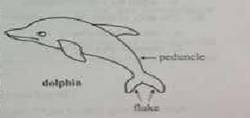 Two dolphins race around in a big pool in the Ocean Park. The smaller dolphin Grace, shown off a few of her tricks, turning around and waving hello to the crowd. The most amazing thing about her, however, is that she’s even swimming at all. She doesn’t have a tail.
Grace lost her tail as a baby when she got caught up in a fish trap.
When the dolphin arrived at the Ocean Park in December 2005, she was fighting for her life. “Is she going to make it?” Her trainer, Abbey Stone, feared the worst. Grace did make it --- but her tail didn’t. She ended up losing her flukes and the lower part of her peduncle.
Over the past six years, she has learned to swim without her tail. Dolphins swim by moving their flukes and peduncle up and down. Grace taught herself to move another way---like a fish! She pushed herself forward through the water by moving her peduncles from side to side.
The movement put harmful pressure on Grace’s backbone. So a company offered to create a man-made tail for her. The tail had to be strong enough to stay on Grace as she swam but soft enough that it wouldn’t hurt her.
The first time Grace wore the artificial tail. She soon shook it off and let it sink in the bottom of the pool. Now, she is still learning to use the tail. Some days she wears it for an hour at a time, others not at all. “The tail isn’t
necessary for her to feel comfortable,” says Stone, “but it helps to keep that range of motion(动作) and build muscles(肌肉).”
Now, the dolphin is about to get an even happier ending. This month, Grace will star in Dolphin Tale, a film that focus on her rescue and recovery. Her progress has inspired more than just a new movie. Many people travel from near and far to meet her. Seeing Grace swim with her man-made tail gives people so much courage.
60. When Grace first arrived at the Ocean Park, her trainer worried about her ______.
A. physical build B. potential ability
C. chance of survival D. adaptation to the surroundings.
61. A man-made tail is created for Grace to ______.
A. let her recover faster B. make her comfortable
C. adjust her way of swimming D. help her perform better tricks
62. The story of Grace inspires people to ______.
A. stick to their dreams B. treat animals friendly
C. treasure what they have D. face difficulties bravely
查看习题详情和答案>>
I had an experience some years ago, which taught me something about the ways in which people make a bad situation worse by blaming themselves. One January, I had to hold two funerals on successive days for two elderly women in my community. Both had died “ full of years”, as the Bible would say. Their homes happened to be near each other, so I paid condolence(吊唁) calls on the two families on the same afternoon.
At the first home, the son of the deceased(已故的)woman said to me, “ If only I had sent my mother to Florida and gotten her out of this cold and snow, she would be alive today. It’s my fault that she died.” At the second home, the son of the other deceased woman said, “ If only I hadn’t insisted on my mother’s going to Florida, she would be alive today.. that long airplane ride, the sudden change of climate, was more than she could take. It’s my fault that she’s dead.”
You see that any time there is a death, the survivors will feel guilty. Because the course of action they took turned out bad, they believe that the opposite course—keeping Mother at home, putting off the operation—would have turned out better. After all, how could it have turned out any worse?
There are seem to be two elements involved in our willingness to feel guilty. The first is our pressing need to believe that the world makes sense, that there is a cause for every effect and a reason for everything that happens that leads us to find patterns and connections both where they really exist and where they exist only in our minds.
The second element is the view that we are the cause of what happens , especially the bad things that happen. It seems to be a short step from believing that every event has a cause to believe that every disaster is our fault. The roots of this feeling may lie in our childhood.
A baby comes to think that the world exists to meet his needs, and that he makes everything happen in it. He wakes up in the morning and summons the rest of the world to its tasks. He cries, and someone comes to attend to him. When he is hungry, people feed him , and when he is wet, people change him. Very often, we do not completely outgrow that childish view that our wishes cause things to happen.
1.What is said about the two diseased elderly women?
A.They lived out a natural life
B.They died of exhaustion after the long plane ride
C.They weren’t used to the change in weather.
D.They died due to lack of care by family members.
2.The author had to conduct the two women’s funerals probably because ______.
A.he wanted to comfort the two families
B.he was an official from the community
C.he had great pity for the deceased
D.he was minister of the local church
3.People feel guilty for the deaths of their loved ones because _____.
A.they couldn’t find a better way to express their sorrow
B.they believe that they were responsible
C.they had neglected the natural course of events
D.they didn’t know things often turn in the opposite direction
4.According to the passage, the underlined part in paragraph 4 probably means that_____.
A.everything in the world is predetermined
B.the world can be interpreted in different ways
C.there is an explanation for everything in the world
D.we have to be sensible in order to understand the world
5.What’s the idea of the passage?
A.Life and death is an unsolved mystery.
B.Every story should have a happy ending.
C.Never feel guilty all the time because not every disaster is our fault.
D.In general, the survivors will feel guilty about the people who passed away.
查看习题详情和答案>>
I had an experience some years ago, which taught me something about the ways in which people make a bad situation worse by themselves. One January, I had to hold two funerals on successive days for two elderly women in my community. Both had died “full of years”, as the Bible would say .Their homes happened to be near each other, so I paid condolence(吊唁)calls on the two families on the same afternoon.
At the first home, the son of the deceased woman said to me, ”If only I had sent my mother to Florida and gotten her out of this cold and snow, she would be alive today. It’s my fault that she died. ”At the second home, the son of the other deceased woman said, “If only I hadn’t insisted on my mother’s going to Florida, she would be alive today .That long airplane ride, the sudden change of climate ,was more than she could take.It’s my fault that she’s dead.”
You see that any time there is a death, the survivors will feel guilty. Because the course of action they took turned out bad, they believe that the opposite course------keeping mother at home, putting off the operation----would have turned out better. After all, how could it have turned out any worse?
There seem to be two elements involved in our willingness to feel guilty. The first is our pressing need to believe that the world makes sense, that there is a cause for every effect and a reason for everything that happens. That leads us to find patterns and connections both where they really exist and where they exist only in our minds.
The second element is the view that we are the cause of what happens, especially the bad things that happen. It seems to be a short step from believing that every event has a cause to believing that every disaster is our fault. The roots of this feeling may lie in our childhood.
A baby comes to think that the world exists to meet his needs,and that he makes everything happen in it. He wakes up in the morning and summons the rest of the world to his tasks. He cries, and someone comes to attend to him. When he is hungry, people feed him,and when he is wet, people change him. Very often, we don not completely outgrow that childish view that our wishes cause things to happen.
【小题1】The author had to conduct the two women’s funerals probably because_______.
| A.he was minister of the local church |
| B.he wanted to comfort the two families |
| C.he was an official of the community |
| D.he had great pity for the deceased |
| A.they can’t find a better way of express their sorrow |
| B.they have neglected the natural course of events |
| C.they believe that they were the reason |
| D.the don’t know things often turn in the opposite direction |
| A.everything in the world is predetermined |
| B.there’s an explanation for everything in the world |
| C.the world can be interpreted in different ways |
| D.we have to be sensible in order to understand the world |
A .Life and death is an unsolved mystery.
B. Never feel guilty all the time because not every disaster is our fault.
C Every story should have a happy ending.
D. In general, the survivors will feel guilty about the people who passed away. 查看习题详情和答案>>
SINGAPORE - Singapore on Thursday stuck to its I8-year ban on the import and sale of chewing gum (口香糖), which has become an international symbol of the city-state's image as a strict society.
"The government stands by its decision to ban chewing gum. Chewing gum has not been a significant problem since that ban took effect, there have been concerns that lifting the ban on chewing gum could result in chewing gum litter and weaken ongoing efforts to control littering." Maliki Osman, parliamentary secretary at the Ministry of National Development, told parliament.
Osman said as the reason for the imposition (强迫接受) of the ban is still suitable, "the government's position is that the ban shall remain." He was responding to a question in parliament from Denise Phua, a fellow member of the ruling People's Action Party who argued that the ban had been used to criticize its tough governance laws.
"I think this ban ... now needs a re-thinking. Surely Singapore will not consider banning sweets because of sweet wrapper litter or ice-cream stick litter," she said.
Singapore, known worldwide for its high-quality clean image, banned the import and sale of chewing gum in 1992 in a bid to cope with the problem of people sticking the gum on chairs, tables, lifts and other public areas.
One of the key reasons for the ban had been the disturbance of services on Singapore's subway train system because of chewing gum being stuck on the doors and causing delays. Singapore partially lifted the ban in 2004 by allowing the sale of chewing gum used for health reasons, such as dental health gum, after the conclusion of a US-Singapore Free Trade Agreement.
Australian tourist Hazel Lane, 48, said keeping the ban on chewing gum was sure Singaporeans wouldn't want to spoil their "ridiculous" and she told AFP that she's own environment and their own image. Angel Wong, 34, a tourist from Hong Kong, however, welcomed the news. She said, "I come from a country that doesn't have the ban and there's always chewing gum all over the floor, To me the ban doesn't change my image of Singapore so it’s a good thing because it keeps the environment clean."
1. The ban on the import and sale of chewing gum was started in 1992 ______.
A. when people began to buy the gum everywhere
B. to bid to stop people sticking the gum in the public
C. because the gum delayed the subway
D. when the country was in a bid to show its city-state's clean image
2. What can we learn about the ban according to Maliki Osman?
A. The government will keep it ongoing forever.
B. It will lead to littering the chewing gum everywhere.
C. More and more concerns about the ban will make chewing gum out of control
D. Banning chewing gum is still one of the important jobs of the government now.
3. According to what Denise Phua said in paragraph 4, we can know that she ______.
A. would say yes to the ban
B. would think more about the ban again
C. would like the government to take the ban on second thought
D. argued that the ban should be cancelled
4. It can be inferred from the passage that ______.
A. whether the ban needs changing or not has become a problem to be discussed
B. Singapore's subway train system was delayed by chewing gum
C. chewing gum will soon be banned in many countries
D. only the ban has led to the friendly environment in Singapore
5. What's the main idea of the last paragraph?
A. There is such a ban in China and Australia.
B. Different people have their own ideas about the ban.
C. The ban is either welcomed by China or by Australia.
D. The ban does good to keep the environment clean.
查看习题详情和答案>>