网址:http://m.1010jiajiao.com/timu3_id_3004575[举报]
每段播放两遍。各段后有几个小题,各段播放前每小题有5秒钟的阅题时间。请根据各段播放内容及其相关小题,在5秒钟内从题中所给的A、B、C项中,选出最佳选项,并在答题卡上将该项涂黑。
听第一段对话,回答第1—3题。
1.Why doesn't the man choose Japanese: food?
A. He doesn't like Japanese food.
B. He ate Japanese food last night.
C. He thinks Japanese food is expensive.
2.What does the man really want to eat?
A. Buffet.
B. Fast food.
C. Chinese food.
3.Where will the man probably eat?
A. In a steak house.
B. In the shopping center.
C. Outside the shopping center.
听第二段对话,回答第4。6题。
4.Why is the man proud of his daughter?
A. Because she's going to college.
B. Because she's going to leave home.
C. Because she'll save money on food.
5.What does the man remind his daughter to do?
A. Take some food.
B. Register for food.
C. Eat instant noodles.
6.What is the man surprised to hear?
A. His daughter decides to change her major.
B. His daughter has a discussion with her Mom.
C. Business administration is a great major.
听第三段独白,回答第7~9题。
7.Who is the speaker?
A. A college student in China.
B. A Chinese student in the US.
C. An American student in the US.
8.How do Chinese students learn in class?
A. They study textbooks.
B. They listen and take notes.
C. They review before exams.
9.What does the American professor want to know?
A. The class's opinion.
B. The student's research.
C. The student's opinion.
听第四段对话,回答第10~12题。
10.Where did the woman buy her new computer?
A. From a store.
B. From the Internet.
C. In a shopping center.
11.What makes it cheaper to buy online?
A. The seller has to rent a store.
B. The seller must pay its staff.
C. The seller can save money.
12.Why do many people still buy things in the store?
A. They think it's easy.
B. They think it's cheap.
C. They think it's safe.
听第五段独白,回答第13~15题。
13.How does the wide use of plastic help in daily life?
A. It makes life convenient.
B. It makes life wonderful.
C. It makes life enjoyable.
14.What does the speaker think of things made of plastic?
A. They are cheaper.
B. They don't last long.
C. They appear attractive.
15.How do stores promote using reusable bags?
A. By selling plastic bags.
B. By banning plastic bags.
C. By charging for plastic bags.
第二节 听取信息(共5小题;每小题1分,满分5分)
听下面一段独白,请根据题目要求,从所听到的内容中获取必要的信息,填入答题卡标号为16~20的空格中。听录音前,你将有10秒钟的阅题时间,录音读两遍。你将有60秒钟的作答时间。
The National Flower Festival
|
Event |
Date |
Time |
Location |
Activity |
Ticket |
|
Parade |
16. |
|
National Building Museum |
Cultural events |
|
|
Parade |
April 4 |
10 a.m. –noon |
Along the streets |
Parading with a lot of balloons, 11 marching bands and many 17. |
Admission to reviewing booths is 18.; standing is free. |
|
19. |
|
11 a.m. -6 p.m. |
Six blocks of streets |
Singing and dancing performance, tasting different drinks and dishes |
|
|
Closing |
April 11 |
|
On the 20. |
Walking past festival artwork, speetacular fireworks display |
|
查看习题详情和答案>>
第一节:听独白或对话(共5小题;每小题1.5分,满分22.5分)
听下面5段对话或独白。每段对话或独白后有几个小题,从题中所给的A、B、C三个选项中选出最佳选项,并标在试卷的相应位置,听每段对话或独白前,你将有时间阅读各个小题,每小题5秒钟;听完后,各小题将给出5秒钟的作答时间。每段对话或独白读两遍。
听第1段对话,回答第1-3题。
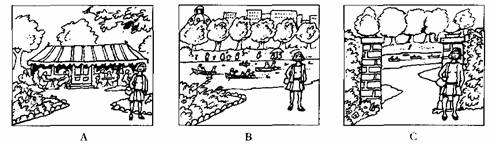
1.Where does Jane ask Tom to meet her at first?
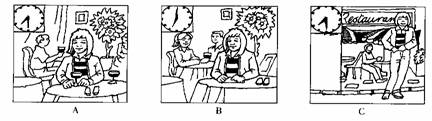
2.When and where do they agree to meet finally?
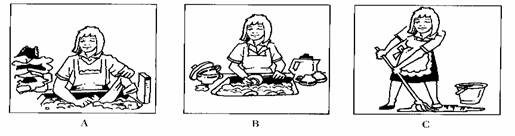
3.What does Jane have to do before going out to meet Tom?
听第2段对话,回答第4-6题。
4.According to Peter, what is the problem with the building?
A. The air-conditioning is too strong.
B. The air-conditioning is out of order.
C. The air-conditioning stops working sometimes.
5.Why did Peter miss the breakfast yesterday morning?
A. He overslept.
B. He couldn't fall asleep the night before.
C. He talked with his roommates late into the night.
6.How many students will be staying in this room?
A. Two. B. Three. C. Four.
听第3段对话,回答第7-9题。
7.Which subject (s) does David find particularly difficult?
A. Math. B. English. C. The sciences.
8.What does David do to help his uncle with the cows?
A. He milks the cows on Sundays and cleans the cowshed sometimes.
B. He drives the tractor on Sundays and does the milking sometimes.
C. He cleans the cowshed on Sundays and drives the tractor sometimes.
9.What is David going to do now?
A. He is going to work on his own farm.
B. He is preparing to attend an agricultural college.
C. He is going to study hard to pass the exams.
听第4段对话,回答第10-12题。
10.What is the probable relation between the man and woman?
A. A research student and a stranger.
B. A social worker and a businessman.
C. A businessman and a research student.
11.What made the woman begin to smoke at the age of 17?
A. Her boyfriend offered her a cigarette.
B. She often went to parties with her friends.
C. She wanted to follow her friends’ example.
12.What was the result of the woman's first attempt to stop smoking?
A. She stopped smoking for a while.
B. She managed to give up smoking completely.
C. She began to smoke fewer cigarettes than before.
听第5段对话,回答第13-15题。
13.What do the students come to the school for?
A. Visiting the school.
B. Attending summer courses.
C. A sightseeing tour of the area.
14.How long has the school been open?
A. Twenty years. B. Five years. C. Twenty-five years.
15.What could the students do in the study center if they were out late the night before?
A. Talk to the teachers. B. Use the equipment. C. Do the homework.
第二节:听取信息(共5小题;每小题1.5分,满分7.5分)
听下面1段对话。请根据题目要求,从所听到的内容中获取必要的信息,填入答题卡 标号为16—20的空格中。听录音前,你将有10秒钟的阅题时间,录音读两遍。你有80秒钟的作答时间。
|
Caller information |
|
|
Name of caller |
John Smith |
|
Where to go |
London |
|
When to go |
(16.) |
|
What to do there |
(17.) |
|
How long to stay |
A week or so |
|
Ticket information |
||||
|
Class |
Airline |
Price |
When to leave |
When to arrive |
|
Economy |
(18.) |
RMB 5600 |
7:40 a.m. |
In the morning |
|
Pacific Airline |
(19.) |
11:40 a.m. |
(20.) |
查看习题详情和答案>>
第一节 听力理解(5段共15小题;每小题2分,满分30分)
每段播放两遍。各段后有几个小题,各段播放前每小题有5秒钟的阅题时间。请根据 各段播放内容及其相关小题,在5秒钟内从题中所给的A、B、C项中,选出最佳选项,并在答题卡上将该项涂黑。
听第一段对话,回答第1—3题。
1.What does the girl want her father to buy7
A. A ruler. B. High-tech things. C. Pencils and erasers.
2.Which of the following does the father consider buying for his daughter?
A. A calculator. B. A computer. C. An MP3.
3.Which of the following could be a reason for her father to buy what she wants7
A. She volunteers to use some of her own money.
B. She asks her father to buy a cheap one online.
C. She tells her father she is the best in school.
听第二段对话,回答第4—6题。
4.What do the speakers think of San Francisco?
A. It is a big city. B. They both love the city. C. It isn't so expensive to live there.
5.What does the woman think of cell phone interruption?
A. She likes it. B. She doesn't mind it. C. She considers it rude.
6.What reason does the man give to answer his cell phone?
A. He feels like answering.
B. He wants to know who's calling.
C. He thinks that it could be something important.
听第三段对话,回答第7—9题。
7.What is the man complaining about?
A. Not accepting any gift from his friend.
B. Not receiving any answer from his friend.
C. Not hearing any good news from his friend.
8.According to the woman, when should you write a thank-you card?
A. You receive a gift from your friend.
B. You are invited to a birthday party.
C. You spend a holiday with your friend.
9.What's the speakers' attitude towards writing thank-you cards?
A. They think it out-dated. B. They think it inconvenient.
C. They think it good to keep the custom.
听第四段独白,回答第10—12题。
10.What does the speaker imply about traffic in big cities?
A. Buses are slow, but comfortable.
B. Parking in the rush hour is very difficult.
C. All the people use private transport instead of public transport.
11.What does the speaker recommend to do to improve the situation?
A. To enlarge city centers.
B. To move to the areas outside the city.
C. To make good use of existing space.
12.How many aspects of our lives does the speaker mention as affected by overcrowding?
A. Two. B. Three. C. Four.
听第五段对话,回答第13—15题。
13.Why does the man like The Times?
A. It has 20 pages every day.
B. It carries a lot of sports news.
C. It doesn't devote 5 pages every day to baseball results.
14.In what way is the jobs section on The Times useful to the local people?
A. It carries job ads from the local businesses.
B. It is the place where local businesses hire people.
C. It provides much information about local economy.
15.What does the woman think will happen to job ads if The Times closes down?
A. The other two newspapers will open a local jobs newspaper.
B. The local economy will be much affected but not destroyed.
C. The job ads will be carried in either of the other two newspapers.
第二节 听取信息(共5小题;每小题1分,满分5分)
听下面一段独白,请根据题目要求,从所听到的内容中获取必要的信息,填入答题卡 标号为16.—20.的空格中。听录音前,你将有10秒钟的阅题时间。录音读两遍,你将有80秒钟的作答时间。
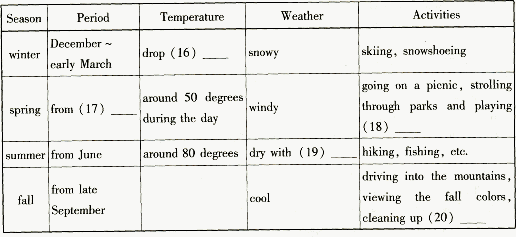
|
Season |
Period |
Temperature |
Weather |
Activities |
|
winter |
December~early March |
Drop (16.) |
snowy |
skiing, snowshoeing |
|
spring |
from(17.) |
around 50 degrees during the day |
windy |
going on a picnic, strolling through parks and playing (18.) |
|
summer |
from June |
around 80 defrees |
rry with (19.) |
hiking, fishing, etc. |
|
fall |
from late September |
|
cool |
rriving into the mountains, viewing the fall colors, cleaning up (20.) |
查看习题详情和答案>>
第一节:听对话或独白
听下面5段对话或独白。每段对话或独白后有几个小题,从题中所给的A,B,C三个选项中选出最佳选项,并标在试卷的相应位置。听每段对话或独白前,你将有时间阅读各个小题,每小题5秒钟;听完后,各小题将给出5秒钟的作答时间。每段对话或独白读两遍。
听下面一段对话,回答第1-3小题。
1.Why was the man late for class?
A.He got up late.
B.Due to the heavy traffic.
C.He didn’t catch the bus.
2.What can we know from the dialogue?
A.A car pool is a kind of organization that owns cars and sends people to work.
B.Car pool is the name of a company that helps people hire cars.
C.People who join a car pool live nearby and ride in one car.
3.How does the woman know so much about the car pool?
A.She has joined a car pool.
B.She has read about it in the paper.
C.She works in it.
听下面一段对话,回答第4-6小题。
4.Which of the following is true about the car?
A.It’s new and small.
B.It’s old and bought in America.
C.It’s second-hand and from another country.
5.Why does Mike’s friend want to sell the car?
A.She needs money to buy a new house.
B.She can’t afford to keep it in the city.
C.She lives near her workplace.
6.How much does the man agree to pay for the car?
A.More than 5,000 dollars.
B.Less than 5,000 dollars
C.Not mentioned.
听下面一段对话,回答第 7-9小题。
7.Where does the conversation most probably take place?
A.In the post office.
B.In a shopping center.
C.At the railway station.
8.What can we learn from the dialogue?
A.The man has to write down the return address as required.
B.The man bought two sets of glasses.
C.The man has to pay more than $8.20.
9.Which statement of the following is true according to the dialogue?
A.The man has to fill in a form.
B.If the man chooses the second class, it will take ten days to arrive.
C.It is a rule to write down the return address.
听下面一段对话,回答第 10-12小题。
10.What is the telephone number of Blue Travel Agency?
A.7489932.
B.7389932.
C.7489942.
11.When does Jill want to go to New York?
A.In May.
B.In April.
C.In March.
12.In what way will Jill return?
A.
B.
C.
听下面一段独白,回答第13-15小题。
13.Why did the man lose his temper?
A.Because the bird couldn’t repeat his master’s name.
B.Because the bird screamed all day long.
C.Because the bird failed to say the name of the town.
14.Who killed the three chickens?
A.The man in the kitchen.
B.The pet bird.
C.The fourth chicken.
15.Why was the man shocked at the scene the next morning?
A.The bird had finally understood his threat to kill it.
B.The bird managed to escape from the chicken house.
C.The bird had learned to scream back at him.
第二节:听取信息
听下面一段独白,请根据题目要求,从听到的内容中获取必要的信息,填入答题卷上标号为16-20的空格中。听录音前你将有10秒钟的阅题时间,录音读两遍,你将有80秒钟的作答时间。

听力(共两节,满分35分)
第一节:听力理解(5段共15小题;每小题2分,满分30分)
每段播放两遍.各段后有几个小题,各段播放前每小题有5秒钟的阅题时间.请根据各段播放内容及其相关小题,在5秒钟内从题中所给的A、B、C项中,选出最佳选项.
听第一段对话,回答第1-3题.
1.What does the girl want her father to buy7
A.A ruler.
B.High-tech things.
C.Pencils and erasers.
2.Which of the following does the father consider buying for his daughter?
A.A calculator.
B.A computer.
C.An MP3.
3.Which of the following could be a reason for her father to buy what she wants7
A.She volunteers to use some of her own money.
B.She asks her father to buy a cheap one online.
C.She tells her father she is the best in school.
听第二段对话,回答第4-6题.
4.What do the speakers think of San Francisco?
A.It is a big city.
B.They both love the city.
C.It isn't so expensive to live there.
5.What does the woman think of cell phone interruption?
A.She likes it.
B.She doesn't mind it.
C.She considers it rude.
6.What reason does the man give to answer his cell phone?
A.He feels like answering.
B.He wants to know who's calling.
C.He thinks that it could be something important.
听第三段对话,回答第7-9题.
7.What is the man complaining about?
A.Not accepting any gift from his friend.
B.Not receiving any answer from his friend.
C.Not hearing any good news from his friend.
8.According to the woman, when should you write a thank-you card?
A.You receive a gift from your friend.
B.You are invited to a birthday party.
C.You spend a holiday with your friend.
9.What's the speakers' attitude towards writing thank-you cards?
A.They think it out-dated.
B.They think it inconvenient.
C.They think it good to keep the custom.
听第四段独白,回答第10-12题.
10.What does the speaker imply about traffic in big cities?
A.Buses are slow, but comfortable.
B.Parking in the rush hour is very difficult.
C.All the people use private transport instead of public transport.
11.What does the speaker recommend to do to improve the situation?
A.To enlarge city centers.
B.To move to the areas outside the city.
C.To make good use of existing space.
12.How many aspects of our lives does the speaker mention as affected by overcrowding?
A.Two.
B.Three.
C.Four.
听第五段对话,回答第13-15题.
13.Why does the man like The Times?
A.It has 20 pages every day.
B.It carries a lot of sports news.
C.It doesn't devote 5 pages every day to baseball results.
14.In what way is the jobs section on The Times useful to the local people?
A.It carries job ads from the local businesses.
B.It is the place where local businesses hire people.
C.It provides much information about local economy.
15.What does the woman think will happen to job ads if The Times closes down?
A.The other two newspapers will open a local jobs newspaper.
B.The local economy will be much affected but not destroyed.
C.The job ads will be carried in either of the other two newspapers.
第二节:听取信息(共5小题;每小题1分,满分5分)
听下面一段独白,请根据题目要求,从所听到的内容中获取必要的信息,填入答题卡标号为16-20的空格中.听录音前,你将有10秒钟的阅题时间.录音读两遍,你将有80秒钟的作答时间.