网址:http://m.1010jiajiao.com/timu3_id_2662650[举报]
You may go on a trip to someplace in the coming summer holiday. Please read the following passage carefully.
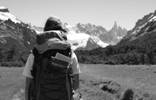 One bag, that’s it.
The importance of packing light cannot be overemphasized(过度强调). Limit yourself to 20 pounds in a carry-on bag. A 9’× 22’ ×14’ bag fits under most airplane seats. And after you enjoy that sweet mobility and freedom, you’ll never go any other way.
You’ll walk with your luggage(行李) more than you think you will. Before leaving home, give yourself a test. Pack up completely, and practice being a tourist for an hour. Fully loaded(全副武装), you should enjoy window-shopping. If you can’t, go home and thin things out.
Packing light isn’t just about the trip over and back—it’s about your traveling lifestyle. Too much luggage marks you as a typical tourist. Changing locations becomes an important operation. With only one bag, you’re mobile and in control. Take this piece of advice seriously. Pack light, and pack smart. These days, you can’t bring anything possibly dangerous—such as knives, lighters or large amounts of liquid (液体)—in your bag.
What to bring?
How do you fit a whole trip’s worth of luggage into a small backpack or suitcase(衣箱)? The answer is simple: bring very little.
Bring out everything you think you might need on the floor. Pick up one item(件) at a time and check it. Ask yourself—not “Will I use it?”, but—“Will I use it enough to feel good about carrying it all the way? The world is getting really small—you can buy Colgate toothpaste, Nivea cream and Gillette razors in almost every country.
Think about what you can do without—not what will be convenient on your trip. When in doubt, leave it out.
( )61. What do the last two paragraphs mainly talk about?
A. Packing light is a kind of travelling lifestyle.
B. Packing light can give you mobility and freedom.
C. How to find out what to take and what not to take on a trip.
D. How to find out if your luggage is too heavy.
( )62. You are allowed to take _______with you when you travel according to the passage.
A. Colgate toothpaste B. lighters C. knives D. a great deal of liquid
( )63. The underlined part “thin things out” possibly means________.
A. make things thin to bring B. make your luggage lighter
C. take out dangerous things D. throw useless things away
( )64. The writer seems to believe that _________.
A. people had better bring nothing when they travel
B. people can use Nivea cream only in their home town
C. the importance of packing light is overemphasized now
D. you will be easily seen as a tourist with a lot of luggage
( )65. What is the best title for the passage?
A. Dying for a trip B. Things to take on a trip
C. Pack light and pack right D. Travelling---a typical way of life
查看习题详情和答案>>
| |||||||||||||||||||||||||||||||||||||||||||||||||||||||||||||||||||||||||
| |||||||||||||||||||||||||||||||||||||||||||||||||||||||||||||||||||||||||||||||||||||||||||||||||||||||||||||||||||||||||||||||||||||||||||||||||||||||||||||||||||||||||||||||||||||||||||||||||||||||||||||||||||||
A good way to pass an exam is to work hard every day in a year. You may fail in an exam if you are lazy for most of the year and then work hard only a few days before the exam. If you want to be good at English, you have to read stories in English, and speak English as much as possible. A few days before the exam you should go to bed early. Do not go to bed late at night. Before you start the exam, read carefully over the question paper, and try to understand the exact meaning of each question. When you have at last finished your exam, read over your answers. Correct the mistakes if there are any and be sure that you have not missed anything out.
【小题1】 If people want to do well in an exam, they have to work hard_____
| A.every day in a year | B.for most of the month |
| C.for only a few days | D.late at night |
| A.only need to learn grammar | B.must often practice English |
| C.have to go to England | D.should go to bed early |
| A.play too much | B.have a good sleep |
| C.read the question papers | D.have a good drink |
| A.stand up and leave at once |
| B.answer a few more questions |
| C.make sure that they have not missed anything out |
| D.leave some mistakes on the question paper |
| A.An Important Exam | B.An Easy Exam |
| C.Get Ready for an Exam | D.How to Pass an Exam |
| 完形填空。 | ||||||||
| According to my experience, one of the first things you can do to make friends with others is to develop eye contact(接触). For many people, it's frightening to look people in their 1 . As soon as someone catches your eyes, do you find yourself quickly 2 away? Why not make a challenge (挑战) to yourself?Look at the next person you meet 3 in the eyes, smile and count to three before looking away. After you feel comfortable looking people in their eyes, it's time to say 4 . Often just a sirnple "Hello" 5 start a train of reaction (反应) ,and the next thing you know is that you may have a twenty-minute conversation. When you meet a person for the first time, the golden rule is to get his or her 6 and use it right away. It's pretty simple really. " Hi, I'm Marc, what's your name?" " Phil" " Nice to meet you, Phil. " I have a ten-year-old kid who is very shy and introverted, and a four-year-old one who 7 everyone in the restaurant in about ten minutes, so I've seen 8 sides. If you're not naturally(天生地) __9 ,it doesn't mean you can't become more extroverted. It just takes some time, but trust me the 10 is fun. You'll be glad you do it right away. | ||||||||
( )1. A. ears ( )2. A. running ( )3. A. straight ( )4. A. nothing ( )5, A. can ( )6. A, address ( )7. A. makes ( )8. A. all ( )9. A. shy ( )10. A. practice |
B. eyes B. going B. down B. anything B. must B. number B. leaves B. every B. introverted B. lesson |
C. mouths C. looking C. up C. everything C. have to C. name C. knows C. each C. outgoing C. conversation |
D. noses D. getting D. over D. something D. need D. age D. loses D. both D. comfortable D. kid | |||||