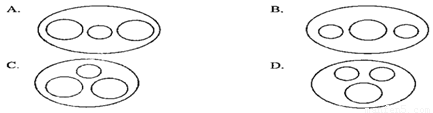
题目内容
Le Invitation: The first duty of the guest is to respond to the invitation within 48 hours. And no, the guest may not ask to bring a guest because the hostess has chosen her own—and where they will be seated.
Le Gift: Flowers sent in advance are the preferred gift. They may also be sent afterwards with a thank-you note. It is considered very bad form to arrive with a gift or flowers in hand, therefore forcing the hostess to deal with finding a vase when she is too busy to do that. Though the French love wine, you must never bring a bottle to a dinner party. Why, it’s as if you feared your hosts would not have enough wine on hand, and that’s an insult(凌辱). You may, however, offer a box of chocolates which the hostess will pass after dinner with coffee.
Le Arrival: If an invitation is for eight o’ clock, the considerate guest arrives at 8:15. Guests who arrive exactly on time or ---how terrible!---early, are mere thoughtless lout(乡巴佬)who are not giving the hostess those last minutes she needs to deal with details. The “correct” guest arrives between 15 to 20 minutes after the hour because dinner will be served exactly 30 minutes past the time on the invitation.
Le Table Manner: Don’t eat your bread before main course or hostess will fear you are ruining your appetite for what’s to come. And don’t pick up and pass the salt when asked. That’s right. Don’t, it’s considered bad luck. And you must eat everything you take from the serving dish lest you insult the hostess’ food. Also, the French abhor waste.
1.In which country, when you go to a dinner party , you are expected to do as what are required in the text_________.
A.America B.England C.France D.Spanish
2.You’d better not pick up and pass the salt when asked.Because _________.
A.it’s considered impolite
B.people believe it can bring bad fortune
C.it will destroy the dinner.
D.you should ask the hostess’ permission before you do it.
3.The underlined word “abhor” in the last paragraph can be replaced by ______.
A.hate B.ignore C.admire D.advocate
4.Which of the following is true?
A.The “correct” guest arrives between 15 to 20 minutes before the time on the invitation.
B.Flowers are the preferred gift.
C.A box of chocolates or a bottle of wine are good gifts.
D.It’s better for the guest not to bring another guest to attend the party.
CBAD

 阅读快车系列答案
Paris is the capital of France, a country in the west of Europe. It is also one of the most beautiful and most famous cities in the world.
Paris is called the City of Light. It is also an international fashion center. What modern women are wearing in Paris will soon be worn by many women in other parts of the world. Paris is also a famous world center of education. For instance, the headquarters of UNESCO, the United Nations Educational, Scientific, and Cultural Organization, is in Paris.
The Seine River divides the city into two parts. Thirty-two bridges cross this scenic river. The oldest and perhaps most well-known is the Pont Neuf, which was built in the sixteenth century. The Sorbonne, a famous university, is located on the Left Bank (south side) of the river. The beautiful white church Sacre Coeur lies on top of the hill called Montmartre on the Right Bank (north bank) of the Seine.
There are many other famous places in Paris, such as the famous museum the Louvre as well as the cathedral of Notre Dame. However, the most famous landmark in this city must be the Eiffel Tower.  Paris is named after a group of people called the Parisii. They built a small village on an island in the middle of the Seine River about two thousand years ago. This island, called the le de la Cite, is where Notre Dame is located. Today around eight million people live in the Paris area.
【小题1】 The best title for the text would be ______.
| A.The City of Paris | B.The French Language |
| C.Education and Culture in France | D.The Eiffel Tower, the Symbol of Paris |
 lined word “headquarters” (paragraph 2) means _______.
| A.buildings | B.research center | C.market | D.head office |
A.on the Right B ank ank | B.on the Left Bank | C.on neither bank | D.on both banks |
Coffee has a history dating back to at least the 9th century and has been a catalyst for social interaction across cultures and eras. Originally discovered in Ethiopia, coffee beans were brought into the Middle East by Arab traders, spreading to Egypt, Yemen, Persia, Turkey, and North Africa by the 15th century. Muslim merchants eventually brought the beans to the thriving port city of Venice, where they sold them to wealthy Italian buyers. Soon, the Dutch began importing and growing coffee in places like Java and Ceylon (largely through slave labor), and the British East India Trading Company was popularizing the beverage in England. Coffee spread across Europe and even reached America.
Where there has been coffee, there has been the coffeehouse. From the 15th century Middle Eastern establishments where men gathered to listen to music, play chess, and hear recitations from works of literature, to Paris' Cafe le Procope where luminaries of the French Enlightenment such as Voltaire, Rousseau, and Diderot came to enjoy a hot cup of joe, coffeehouses have traditionally served as centers of social interaction, places where people can come to relax, chat, and exchange ideas.
The modern coffee shop is modeled on the espresso and pastry-centered Italian coffeehouses that arose with the establishment of Italian-American immigrant communities in major US cities such as New York City's Little Italy and Greenwich Village, Boston's North End, and San Francisco's North Beach. New York coffee shops were often frequented by the Beats in the 1950's. It wasn't long before Seattle and other parts of the Pacific Northwest were developing coffee shops as part of a thriving counterculture scene. The Seattle-based Starbucks took this model and brought it into mainstream culture.
Although coffeehouses today continue to serve their traditional purpose as lively social hubs in many communities, they have noticeably adapted to the times. Rediscovering their purpose as centers of information exchange and communication, many coffee shops now provide their customers with internet access and newspapers. It has become extremely common to see someone sitting at a Starbucks listening to music or surfing the web on his or her laptop. Coffee stores today also maintain a fairly identifiable, yet unique aesthetic: wooden furniture and plush couches, paintings and murals drawn on walls, and soft-lighting combine to give coffee shops the cozy feeling of a home away from home.
Today, big business retail coffee shops are expanding quickly all over the world. Starbucks alone has stores in over 40 countries and plans to add more. Despite its popularity, Starbucks has been criticized and labeled by many as a blood-sucking corporate machine, driving smaller coffee shops out of business through unfair practices. This has even spawned an anti-corporate coffee counterculture, with those subscribing to this culture boycotting big business coffee chains. Increasingly popular coffee stores such as The Coffee Bean and Tea Leaf are also giving Starbucks some stiff competition. In any case, it seems pretty clear that coffee has weaved itself into the fabric of our consumer-oriented culture.
【小题1】
Which of the following is the correct order of coffee spreading in history?
①Egypt ②America ③the Middle East ④Netherlands ⑤Venice
| A.①③④②⑤ | B.③①⑤④② | C.①⑤④③② | D.③②⑤④① |
We can infer from the passage ________.
| A.Starbucks has beaten all the competitors |
| B.there are no changes in the development of coffee culture |
| C.the taste of coffee has changed a lot |
| D.Starbucks has some effect on the development of coffee culture |
The famous coffeehouse “Starbucks” originally come from _______.
| A.Seattle | B.Ethiopia | C.Java | D.France |
Nowadays, if you come to a coffeehouse, you can _______.
| A.play chess with other customers |
| B.enjoy delicious dishes from South America |
| C.surf the internet |
| D.watch a TV play |