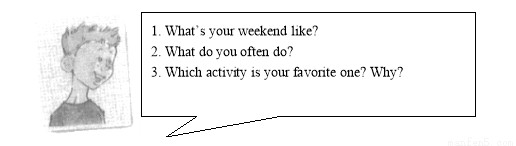
题目内容

Mobile phones help us 1. (容易)find people anywhere at anytime. However, using mobile phones too often may cause cancer(癌). It’s reported that people who used a mobile phone for 10 years or more were more likely to get 2. (大脑)cancer. Expects 3. (建议) you follow these tips which can reduce the risk of cancer:

◆When using your mobile phone, try to keep it away from your body as much as 4. (可能). Don’t put it under your pillow or 5.(在旁边) the bed when you go to sleep.

◆When you’re on the mobile phone, use the speaker. In this way, you have just l% of the contact with radiation (辐射) you have when you hold it to your ear. An earphone is also a good idea. Try to keep your 6.(谈话)short. If you need to talk longer, use an ordinary phone 7.(代替).

◆Change ears when you’ re using your mobile phone. Before putting it to your ear, wait 8.(直到) the person you are calling picks up the phone.

◆Your phone gives out radiation when you talk or text (发短信), but not when you’re listening or getting messages. Listening more and talking less can lower the risk of cancer.

◆Do not use your mobile phone when the signal is 9. (弱) or when moving at a high 10. (速度), for example in a car or train.

1.easily

2.brain

3.suggest/suggested

4.possible

5.beside

6.conversation/ conversations

7.instead

8.until

9.weak

10.speed

【解析】

1.考查副词修饰动词。句意:移动电话帮助我们在任何时间,容易得找到任何地点的人。

2.2】考查名词的记忆及拼写。句意:据报道使用手机10年或更长时间的人更有可能得脑癌。

3.3】考查动词时态。句意:专家建议你遵循以下建议就可以降低得癌症的风险。

4.4】考查形容词的记忆及拼写。句意:当使用你的手机时,努力的尽可能的让他远离你的身体。

5.5】考查介词的记忆及拼写。句意:当你睡觉时,别把它放在枕头下或者床的旁边。

6.6】考查名词的记忆及拼写。句意:尽力让谈话短一些。

7.7】考查副词的记忆及拼写。句意: 如果你需要长时间的谈话,使用普通电话。

8.8】考查状语从句连接词。句意:再放到你的耳朵旁边之前,一直等到接电话的人拿起电话。

9.9】考查形容词的记忆及拼写。句意:当信号弱时不要使用电话……

10.0】考查名词的记忆及拼写。句意:当移动速度很快时,不要打电话,如在汽车或者火车里。

练习册系列答案
相关题目

The smell of coffee wakes me. I run into the . There Pa is! Pa lifts me onto his shoulders. Ma says, “I’m going to bake a . Go down to the cellar(地窖), Jimmy, and bring me that jar of apples from the shelf.” That’s the last jar---the we’ve been saving and saving to welcome Pa home.

I take down the jar carefully and put both my hands around it. I can Pa and Ma laughing upstairs. I hurry up the steps. I take the steps two at a time but my

catches on the middle one. The jar slips(滑落) through my fingers and on the floor. Bits of apple fly everywhere.

“Are you hurt?” Ma comes . I look at her face. “Go on upstairs now. Don’t cut your feet.” I want her to be at me, but that’s all she says. Upstairs, Pa wipes my eyes. “Never mind, son, accidental happens.” I bury my face in Pa’s old jacket. I wish I hadn’t hurried.

Ma comes back. She kisses my cheek. “Now out of the kitchen,” Ma says. “I’m going to a special sugar pie, and it doesn’t need apples.”

Pa and I go out. I show him the place I caught a rabbit. He measures me against the back door and a new notch(刻痕) with his knife. I’ve grown a whole half-inch he’s been away. “Pa, are you home to stay now?” I ask him.

“Not yet, son. Got to till times get better. And they will. The sun will shine, rain will fall, and things will grow the way they’re supposed to.”

“I’ll Ma while you’re gone, Pa.”

“I know you will, son.”

1. A. bedroom B. kitchen C. living room D. cellar

2.A. cake B. biscuit C. cookie D. pie

3. A. it B. one C. that D. this

4. A. see B. feel C. hear D. smell

5.A. foot B. hand C. eye D. finger

6.A. opens B. stays C. breaks D. stops

7.A. quietly B. quickly C. slowly D. politely

8.A. excited B. mad C. pleased D. satisfied

9.A. something B. anything C. everything D. nothing

10.A. buy B. send C. find D. make

11. A. which B. where C. when D. what

12.A. makes B. cuts C. puts D. gets

13.A. since B. until C. before D. when

14.A. start B. stop C. wait D. leave

15.A. look for B. look up C. look over D. look after

Little Tommy was doing very badly in math. His parents had tried everything—tutors (家庭教师), cards, special learning centers—in short, everything they could think of. Finally they took Tommy to a catholic (天主教的) school.

After the first day, little Tommy came home with a very serious look on his face. He didn’t kiss his mother hello. Instead, he went straight to his room and started studying. Books and papers were spread (铺开) out all over the room and little Tommy was hard at work. His mother was surprised. She called him down

to dinner and as soon as he finished eating, he went back to his room, without aword. In no time he was back hitting the books as hard as before. This went on for some time, day after day while the mother tried to understand what was happening.

Finally, little Tommy brought home his report card. He quietly put it on the table and went up to his room and hit the books. His mom looked at it and to her surprise, little Tommy got an A in math. She could no longer hold her curiosity (好奇心). She went to his room and asked, “Son, what was it? Was it the nuns (修女)?”

Little Tommy looked at her and shook his head, “No. ”

“Well then,” she asked again. “WHAT was it?”

Little Tommy looked at her and said, “Well, on the first day of school, when I saw that man nailed (钉) to the plus sign (加号), I knew they weren’t joking. ”

1.Why did Tommy’s parents send him to a catholic school?

A. Because he could eat well there.

B. Because he could earn more about nuns.

C. Because his parents wanted him to do better in his math.

D. Because his parents didn’t want him to learn math any more.

2.Tommy’s mother felt surprised that his son _______.

A. was still the same as usual

B. ate so much at dinner

C. kissed her hello after school

D. worked hard but said little

3.“Hitting the books” means “_______” in Chinese.

A. 用功

B. 捶书

C. 发泄

D. 振作

4.The last sentence in the passage shows that _______.

A. Tommy felt sorry for the mail

B. Tommy was afraid of being nailed

C. Tommy didn’t like the plus sign

D. Tommy liked playing jokes on others

5. From the passage, we can infer (推断) that _______.

A. teachers should be strict with their students

B. mistaking (误解) might do good sometimes

C. a catholic school is much better than other ones

D. nuns are good at helping children with their math

违法和不良信息举报电话:027-86699610 举报邮箱:58377363@163.com

精英家教网